A-20 "Havoc/Boston", Douglas Bomber
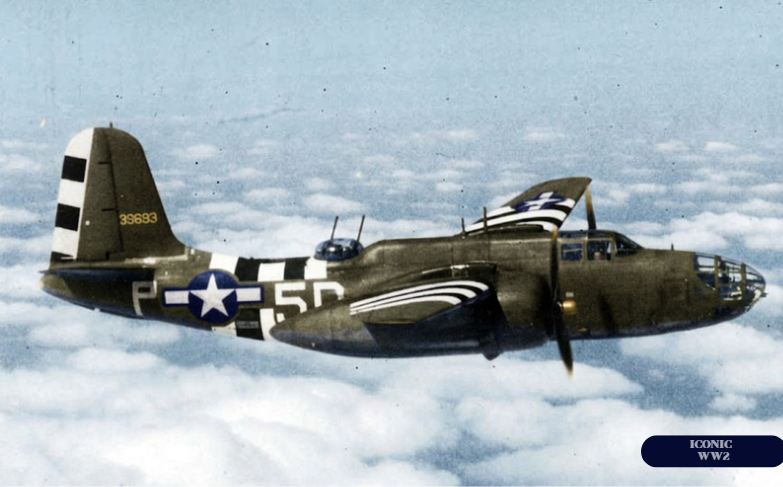
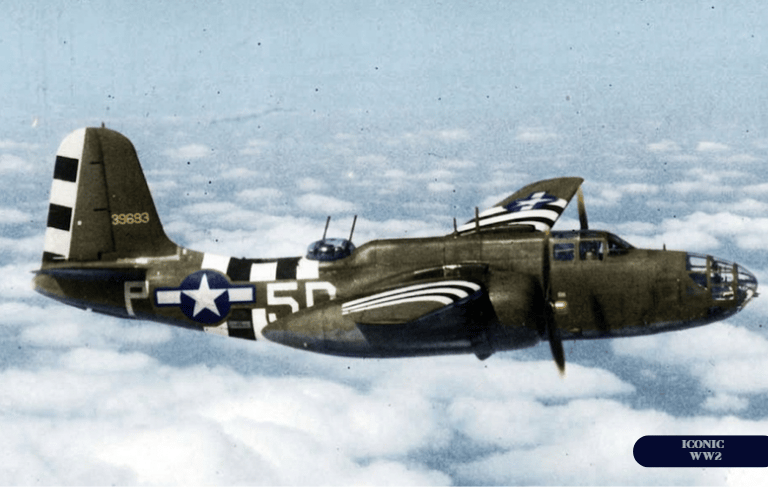
Developer: Douglas
Country: USA
First flight: 1943
Type: Attack Aircraft
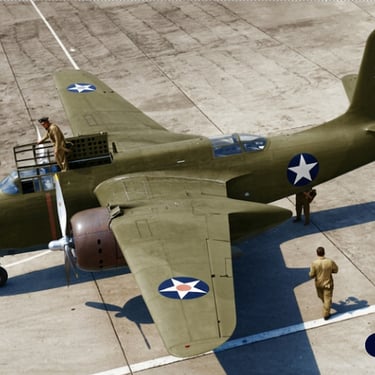
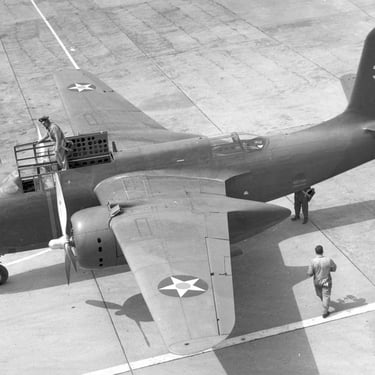
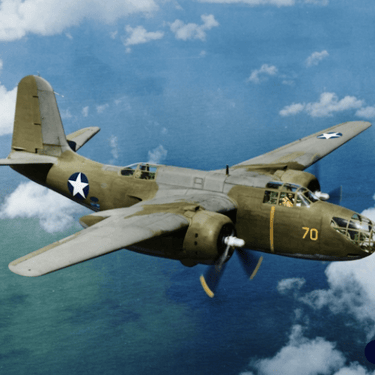
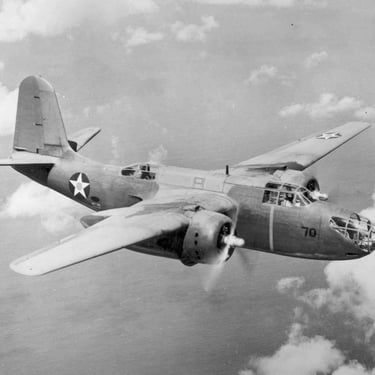
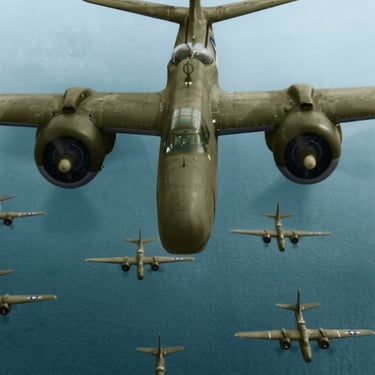
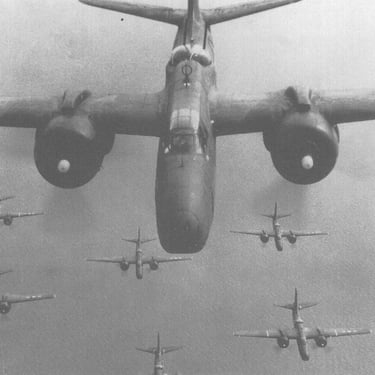
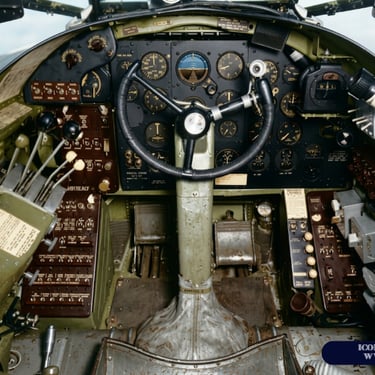
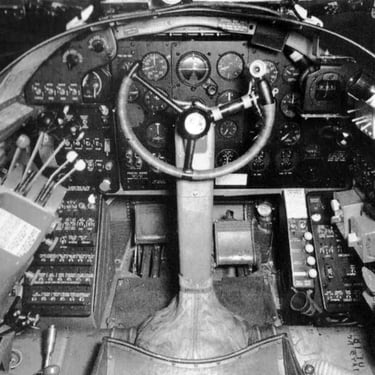
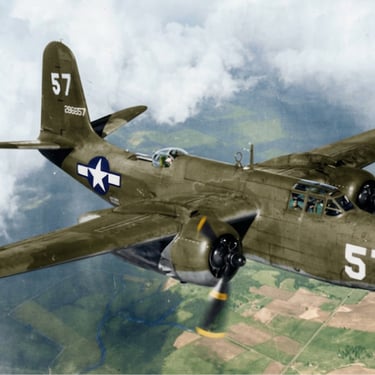
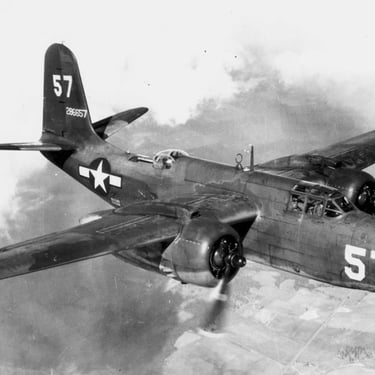
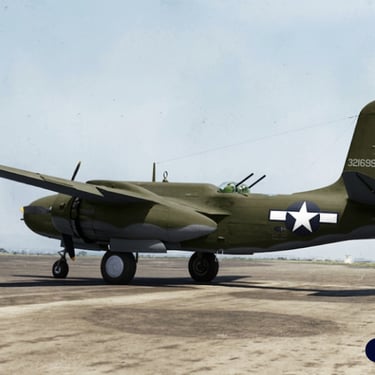
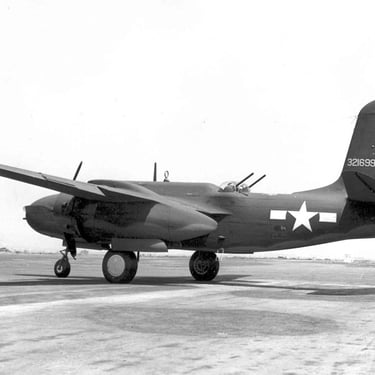
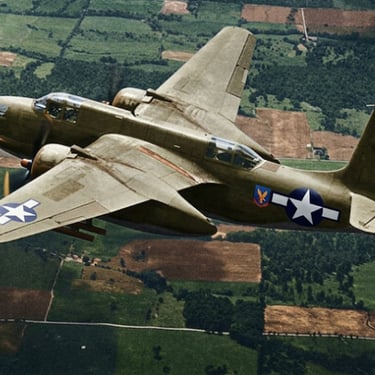
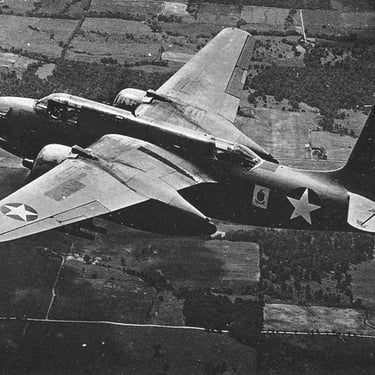
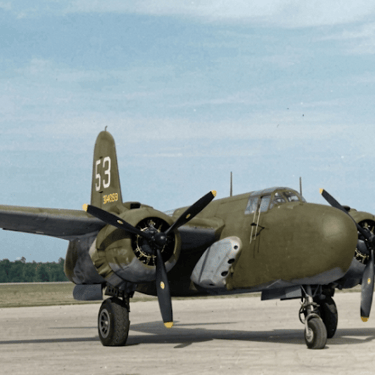
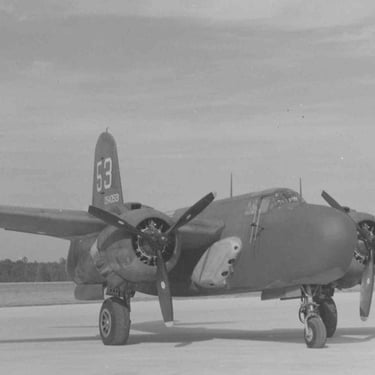
Medium bomber and heavy attack aircraft, a twin-engine all-metal monoplane with retractable landing gear with a nose wheel. Crew of 3-4 people. Design began at Northrop Aviation Corporation under the direction of J. Northrop and E. Heineman. Subsequently, the company was acquired by Douglas Aircraft and the aircraft was brought to the level of serial production under the direction of E. Weidenheimer. The prototype aircraft (model 7B) first took to the skies on October 26, 1938. Serial production began in October 1939. The bomber was built at the Douglas (Santa Monica) and Boeing (Seattle) plants. A total of 7,479 units were built. It was in service in France from November 1939, Great Britain from June 1940, the USA from December 1940, the Dutch East Indies from January 1942, the USSR and Australia from March 1942, the Union of South Africa from 1943, and Brazil from May 1944.
The first combat use was in southern France in June 1940. In the ranks of the French Air Force, DB-7B3s first fought against the Germans, then in the summer of 1940 they raided Gibraltar and served in the aviation of the Vichy government until November 1942, when they were used to strike the Anglo-American landings in Algeria. British Bostons began to be used in February 1942 in Europe, and in April 1943 in Africa. A-20s of the US Army Air Forces fought in New Guinea from August 1942, in Europe from June 1942, and in North Africa from December 1942. In the USSR, bombers first entered combat in May 1942 on the Southwestern Front and were then used on virtually all fronts until the end of the war in Europe and in combat operations against Japan in August 1945. From February 1943, they were also used by Soviet naval aviation (as bombers, reconnaissance aircraft, and torpedo bombers). Dutch A-20Cs fought briefly against the Japanese on Java in early 1942. Australian machines operated alongside American ones in New Guinea. The aircraft was taken out of production in September 1944. It was withdrawn from service in France and Australia at the end of 1944, in Great Britain in the autumn of 1945, in the Union of South Africa in 1946, in the USA in 1947 (it served as a combat aircraft until 1946), and in the USSR in 1952-53.
When modernizing the A-20, the Americans focused primarily on their own needs, drawing on their experience in the Pacific War. Therefore, the Havoc evolved less as a frontline bomber and more as a heavy attack aircraft. Clearly specifically for engaging unarmored or lightly armored targets from low altitudes, the Americans significantly enhanced the fixed forward-facing armament.
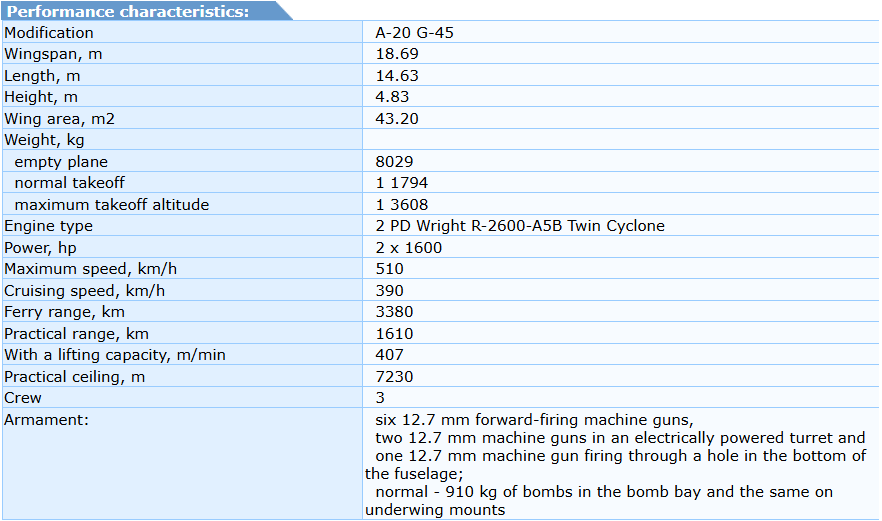
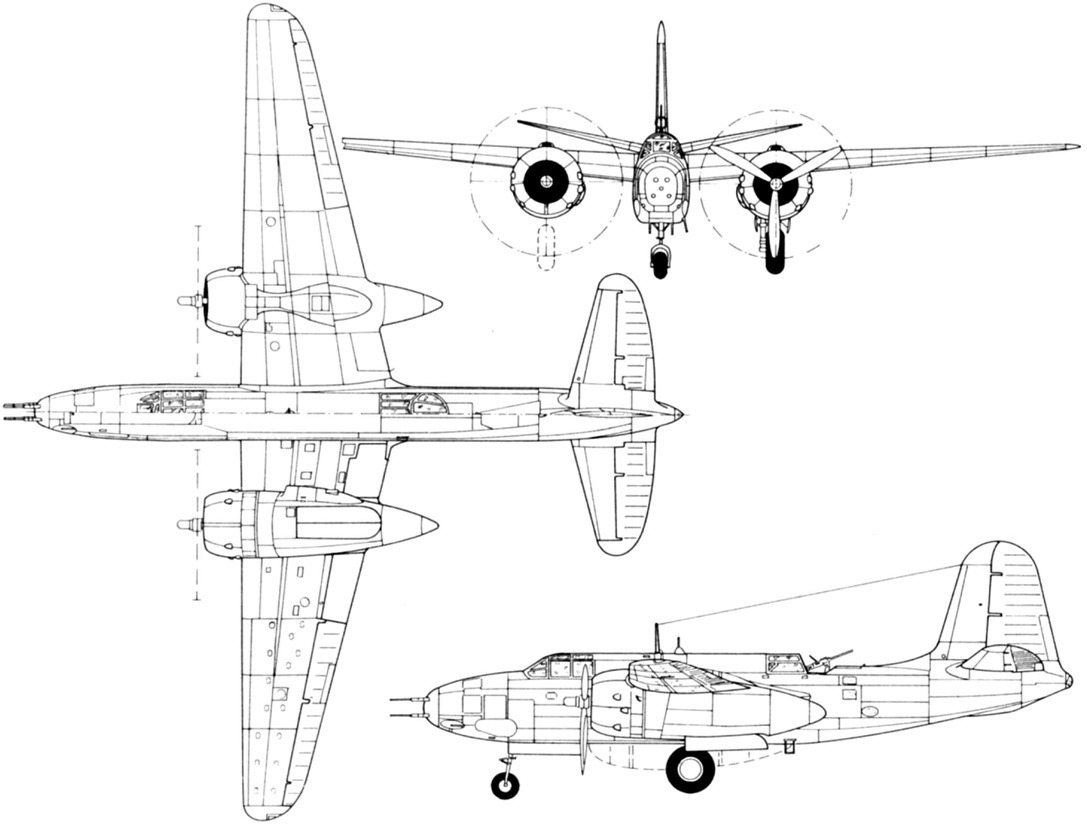
The A-20C was replaced in production by the A-20G . This was a purely ground-attack variant. The forward fuselage was now occupied by a battery of cannons and machine guns. The navigation cockpit was eliminated. The first series, the A-20G-1, featured four 20mm MI cannons with 60 rounds each and two 12.7mm Colt-Browning machine guns (with 400 rounds each) in the nose. The new nose was longer than the old one, increasing the overall length of the aircraft.
At the same time, the A-20G's armor protection was strengthened. However, by Soviet standards, it remained rather flimsy and only protected the crew. Its primary component was 10-12 mm thick aluminum alloy plates, which were also used as structural elements of the fuselage, primarily as bulkheads. Additionally, steel plates protected the pilot's head, shoulders, and lower portion of the gunner/radio operator. As on previous models, armored glass was installed in the canopy visor. Both machine gun mounts in the rear cockpit were also armored. Steel shields covered the machine gun itself and the belt feeder. The upper machine gun also had armored glass to protect the gunner's head.
At the same time, the aircraft's equipment was upgraded. Since its primary combat use appeared to be firing fixed weapons, the pilot was equipped with an N-3A collimator sight, leaving the primitive front sight ring as a "just in case" feature. These aircraft also differed externally in that they featured individual engine exhaust pipes instead of a common manifold, and a ring antenna for the MN-26Y radio compass mounted on top; the latter had a range of 280 km, quite sufficient for a frontline bomber. The SCR-274N radio control panel was located in the pilot's seat; the radio operator became a mere gunner. This meant that telegraph operation was no longer possible, and the effective communication range was slightly reduced.
The defensive armament was initially similar to that of the A-20B: a Colt-Browning heavy machine gun on a dorsal pintle mount (550 rounds) with a telescopic sight and a 7.62mm Browning (700 rounds) in a ventral hatch. Provision was made for four additional 644-liter fuel tanks to be suspended on underwing bomb racks. The aircraft became heavier (the empty weight increased by more than a ton), losing some speed and maneuverability and a significant reduction in ceiling, but its combat effectiveness, from the American military's perspective, increased. The per-second salvo was 6.91 kg/s; no Soviet aircraft had such a powerful armament. Placing the guns and their ammunition in the nose shifted the center of gravity forward. This provided a greater reserve of static stability for the already stable aircraft. However, on the other hand, the load on the elevators increased. Almost all of the 250 GI aircraft produced were sent to the USSR.
The nose guns were soon abandoned. Beginning with the G-5 series, six heavy machine guns with 350 rounds per gun were installed. This ensured greater standardization of armament and simplified ammunition supply. On the G-20, the rear fuselage was widened and an electric Martin 250GE turret with two 12.7mm machine guns was mounted there (this turret was first tested on a batch of 13 production A-20Cs). This significantly increased the aircraft's defensive capabilities. For starters, the salvo per second doubled. The gunner no longer had to open the canopy and arm the machine gun; simply unlocking the turret was enough. The practical rate of fire increased due to the fact that belt feed boxes no longer needed to be changed; the machine guns in the new turret were fed from large boxes rotating with it. The lateral firing angles increased significantly. The electric motor allowed the barrels to rotate almost 360°. Previously, the machine gun barrel could be elevated to 80°; now it could be elevated vertically. The gunner's visibility was improved, and drafts through the turret's round screen were prevented from entering the cabin. Overall, it was a solid advantage; there was only one drawback: the new mount weighed significantly more than the old one. The lower position, albeit in the old-style pintle-mounted position, now also housed a heavy machine gun.
When redesigning the fuselage to accommodate the new turret, the designers slightly strengthened the airframe. This allowed for an increased bomb load. To achieve this, the rear bomb bay was slightly enlarged, and new underwing bomb racks allowed for four 227 kg bombs to be carried. Starting with the 751st aircraft, the underwing drop tanks were abandoned, and a tight-fitting ventral tank with a capacity of 1,416 liters was added.
Thus, from series to series, the Havoc was equipped with increasingly effective armament, its bomb load increased, its armor protection improved, and its range increased. But the aircraft grew heavier, losing its performance. Its speed was already inferior to the latest Pe-2 series, but it remained a formidable frontline bomber.
In December 1943, the US Army Air Forces Headquarters sent a memo to factories abolishing camouflage paint on combat aircraft. This was entirely logical. In most theaters of war, the Allies had achieved air superiority, and hiding was no longer necessary. Eliminating the painting process simplified the technology, reducing costs and time. Furthermore, the aircraft became slightly lighter, and the fact that polished metal was smoother than enamel reduced aerodynamic drag. Both factors led to improved performance. However, an exception was made for the A-20; these aircraft continued to be painted. This was explained by the fact that most of the production went to the USSR, and Soviet standards required camouflage. However, minor changes were made to the bomber's paint scheme. This was due to the unification of color standards between the Army and Navy. As a result, the lower surfaces of the aircraft began to be covered with "sea gray" enamel, which had a bluish tint compared to the previous "neutral gray".
The A-20G became the most widely produced Havoc modification, with 2,850 units produced, all assembled at the Douglas plant in Santa Monica. Most of them went to the Soviet Union. As before, aircraft destined for the USSR were shipped from the factory to the modification center in Tulsa, where they were modified to meet customer requirements, including the installation of a fourth crew member—a gunner manning the ventral machine gun.
The British decided they didn't need a heavy attack aircraft. The Royal Air Force didn't order the A-20G. The US Army Air Forces took a few of these aircraft, using them as trainers and for combat operations in Europe and the Pacific. However, the vast majority of A-20Gs were sent to the Soviet Union.
Deliveries of these aircraft began in 1943 via two routes: Alaska and Iran. In the summer of 1943, the Americans brought the first A-20G attack aircraft to Fairbanks. We called them A-20G, hence the nickname "Bug."
As before, not all aircraft made it to the front. Among those wrecked on the Krasnoyarsk highway was an A-20G gifted to Soviet pilots by Hollywood actor Robert Skelton. This created an awkward situation from a propaganda standpoint. Mazuruk then ordered that the inscription "We dood it!", which had appeared on the gift, be painted on another identical aircraft. In this condition, the aircraft was sent on its way. Eventually, it was converted into a torpedo bomber, and one of the crews of the 51st Mine and Torpedo Regiment of the Baltic Fleet Air Force flew it.
The first A-20Gs appeared on the Soviet-German front in the summer of 1943. This type became a truly multirole aircraft in our aviation, performing a wide variety of roles—day and night bomber, reconnaissance, torpedo bomber, minelayer, heavy fighter, and even transport. It was rarely used as an attack aircraft—its primary purpose!
Naturally, the A-20G-1s were the first to arrive. They flew via Iraq and Iran. These aircraft were used for ground-attack bombing raids on enemy positions, road vehicles, trains, and airfields. It turned out that the "Bug" was very vulnerable to anti-aircraft gunners at low altitudes due to its considerable size and weak armor. Only by achieving surprise could one expect to achieve relative safety during an attack against well-established German air defenses. Nevertheless, our pilots periodically carried out ground-attack raids on convoys, trains, and ships. In such situations, the crews of the 449th Regiment typically attacked from an altitude of 300-700 meters, diving at an angle of 20-25 degrees. After a burst of 20-30 shells, they quickly retreated at low altitude. The Il-2 has firmly taken its place as the attack aircraft in our aviation, and the A-20G has been pushed into other areas of application.
According to feedback from the 321st Air Division, received by the Air Force Research Institute in September 1943, the new modification was generally well-received by our pilots. They emphasized the aircraft's superior firepower, reliability, and ease of firing day and night. The Air Force Research Institute even classified the A-20G as a fighter-bomber. Among its shortcomings, combat crews noted the lack of rigidity of the upper gun mount in the rear cockpit, which resulted in a wide dispersion of bullets. American oxygen masks worked well only in warm weather; cold temperatures led to clogging of the tubes with condensation.
Our A-20Zh engines ran on imported B-100 gasoline or domestic leaded 4B-78. However, the latter wasn't exactly Soviet—our low-grade gasoline was mixed with American alkyl gasoline. If absolutely necessary, 4B-70 could be used, but high boost was strictly prohibited, and the engines underperformed.
Technicians complained about the difficulty of disassembling the engines—it took up to a thousand man-hours. With additional fuel tanks in the bomb bay, access to many components became impossible.
But that was just the tip of the iceberg. A little later, the front fuselage began to deform due to recoil from the guns. The rear mounting brackets also broke.
But the overall conclusion was positive: "The noted defects of the A-20-Zh aircraft do not pose an obstacle to... the aircraft's operation at the front." However, the need for a navigator was particularly emphasized. But these aircraft were arriving in ever-increasing numbers. Therefore, attempts were made to equip them with navigator stations.
A modification carried out by the 244th Division under the direction of M.Z. Melamed is well-known. The four dorsal machine guns were removed from the nose, the nose was glazed, and a navigator's seat and all necessary equipment were installed. The change in center of gravity was compensated for by steel plates in the navigator's cabin, which also served as additional armor protection. The bomb armament was also modernized.
The defensive armament of the G-1, G-10, and G-15 series aircraft was also considered ineffective. Therefore, twin UBT machine guns were installed in the rear cockpit of this aircraft. This modified A-20G was sent to Moscow as a sample.
Subsequently, similar modifications were carried out at Plant No. 81, aircraft repair bases, and directly in the regiments. Aircraft converted in this manner were in the 218th and 244th Divisions, the 970th Regiment, and other units and formations. Since the modifications were carried out differently in different locations, many different versions of the nose glazing exist. In some places, for example, the nose cone of the Il-4 navigator's cockpit was used. An improper modification could shift the center of gravity rearward from the permissible range, resulting in a dangerous flat spin.
In August 1943, Factory No. 89 converted an A-20Zh to accommodate the navigator in the rear cockpit, along with a radio operator/gunner. He was equipped with an OPB-1R gunsight, an instrument panel (mostly featuring Soviet instruments), an A-4 compass, an ESBR-3 electric bomb release, and a radio compass control panel. To ensure the navigator had some visibility, windows were cut in the sides and floor. The armament in the rear cockpit was replaced with Soviet-made ones. A UTK-1 turret with an UBT machine gun (200 rounds) was mounted on top, and a Pe-2 LU mount with the same UBT and 200 rounds was mounted underneath. The bomb bay was refurbished with domestically produced KD2-439 bomb cassettes, an emergency mechanical bomb release system was added, and the oxygen system was redesigned (with four cylinders). The aircraft was lightened by removing not only the additional fuel tanks in the bomb bay, but also all associated wiring, valves, and pumps. Therefore, this "Bug" could no longer carry additional fuel tanks. On September 4, 1943, it was decided to consider this aircraft the benchmark for the refinement of other aircraft by the company. In October, this aircraft was transferred to the Air Force Research Institute for testing.
But the designers at Factory No. 89 weren't the only ones attempting to solve the problem of where to place the navigator on the A-20G. A.P. Golubkov's bureau was tasked with exploring the possibility of placing the navigator behind the pilot by shortening the forward bomb bay. In October 1943, Factory No. 456 modified one A-20G, presenting it in place of the mockup originally specified. The navigator was placed in a compartment in the forward bomb bay, partially removing the partition separating it from the cockpit. The resulting compartment was very cramped—approximately 70 by 70 centimeters. Its sides were lined with plywood. No armor was provided. The navigator sat on a folding seat, into which a parachute was stowed.
Next to it were the OPB-1 bombsight, the ESBR-6 bomb release device, a compass, a board with the main instruments, and a KPA-Zbis oxygen device. Three windows were cut into the sides of the cockpit.
Testing of the modification revealed numerous shortcomings. The reduction in the size of the bomb bay meant that instead of eight 100 kg bombs, it could only hold six. Furthermore, the gap between the front of the bomb and the wall was reduced. It became impossible to screw in the fuse for the top pair of bombs. The bomb had to be suspended with the fuse already in place, which was prohibited by safety regulations.
Forward visibility from the cockpit was virtually nonexistent, especially with the armored backrest fully raised. When operating the gunsight, the navigator stood with his legs bent and quickly tired. Nevertheless, on October 24, the modification was approved by a commission headed by Major General Arkhangelsky. The commission even agreed to allow the installation of bombs with fuses.
On November 15, Factory No. 456 presented two standard "Zhuchoks" with an additional navigator's cabin, bomb armament modified for our bombs, and domestic large-caliber machine guns.
There were several other options for constructing the navigator cockpit. In practice, each unit or formation contributed its own features depending on the availability of materials, parts from other aircraft, and equipment. The total percentage of converted A-20Gs is difficult to determine, as it was not specifically identified in the records, but the percentage of converted aircraft was quite high.
The prospect of significantly modifying all bombers arriving in our country was not welcomed by either the Air Force command or the People's Commissariat of the Aviation Industry. On November 26, 1943, Deputy Air Force Commander Nikitin and People's Commissar of the Aviation Industry A.I. Shakhurin sent a letter to People's Commissar of Foreign Trade A.I. Mikoyan, demanding the resumption of deliveries of A-20B bombers, specifically with modified bomb loadouts. Factory No. 43 had specially prepared drawings for a slightly modified standard American version, allowing for both an increased internal bomb load and the suspension of Soviet bombs of various calibers. But this move had no consequences. The Soviet Union continued to receive the same A-20G bombers.
There were two approaches to modifying the A-20G-1's armament. All the aforementioned converted "Bugs" were based on proposals from the Air Force Research Institute, which advocated maximum use of domestic machine guns. The Air Force Research Institute of Aviation Armament (NII AV), however, proposed replacing the mounts but retaining the American machine guns. This was motivated by a desire to standardize spare parts and ammunition supplies. According to the NII AV proposal, four 20mm cannons and one 12.7mm Colt-Browning were retained in the nose. The removed machine gun was mounted on the Pe-2's LU in the rear cockpit, and a similar dorsal machine gun was relocated to the UTK-1 turret. This option was approved and, on September 3, was ratified by the Air Force's chief engineer, but most of the modifications were still carried out according to the NII AV proposal.
Beginning in mid-1943, the A-20's earlier variants were gradually replaced at the front by the G type. However, earlier variants, including the B-3, also remained in service. For example, the aforementioned 221st Division, as of December 31, 1943, had four older B-3s (including one with dual controls, the UB-3), 44 A-20Bs, 11 A-20Cs, and only six A-20Gs. Not long before, one A-20G in this division had gone missing on a combat mission, and a second had crashed during takeoff at night. But by mid-1944, the "Zhuchok" had become the most widely used variant of the Boston, as all aircraft of this family were still commonly called, in the Soviet Air Force.
The delivery of G-20 and later aircraft normalized the situation with defensive armament. It was now considered quite adequate. No wonder—we didn't produce turrets similar to the Martin's. One of the A-20G-20s was tested at the Air Force Research Institute in October 1943 and earned high praise.
In the Soviet Union, Bostons served successfully until the very end of the war. They participated in all the major operations of the final period—Belorussia, Jassy-Kishinev, East Prussia, and many others—and fought in the skies over Poland, Romania, Czechoslovakia, and Germany. In August 1944, the 221st and 132nd Divisions operated in Poland. The enemy resisted stubbornly. For example, during a raid on a German stronghold in Dembe near Warsaw, the 221st Division lost 14 bombers and 43 aircrew. Bombs from A-20Gs helped halt the German counteroffensive in Hungary: their significant contribution was the fact that more than half of all tanks were destroyed by aircraft. During the Vienna Operation, the 244th Air Division alone destroyed 24 tanks and armored personnel carriers, 13 warehouses, 8 bridges and crossings, 886 vehicles and a large number of manpower.
In April 1945, Bostons appeared near Berlin. The 221st Division operated in the 8th Army's offensive zone, specifically supporting the assault on the Seelow Heights. The 57th Regiment flew even in poor visibility, while other units' aircraft were grounded. Twenty-three crews, despite low, overcast clouds, bombed artillery and mortar batteries near Gehlsdorf. On April 22, Soviet Bostons dropped bombs on Berlin for the first time. The following day, Lieutenant Gadyuchko's flight destroyed the crossing over the Spree.
As of May 1, 1945, the Soviet Air Force possessed 935 Bostons. More than two-thirds of these were G-model aircraft. However, it should be noted that a significant portion of these Bostons were transferred to naval aviation, as will be discussed below.
Douglas A-20 “Havoc”/”Boston”