A-24 / SBD "Dauntless", Douglas Bomber
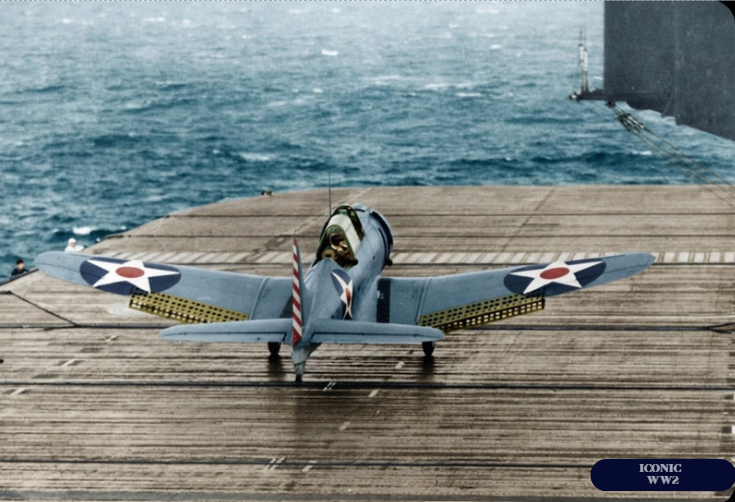
Developer: Douglas
Country: USA
First flight: 1938
Type: Carrier-based dive bomber reconnaissance aircraft
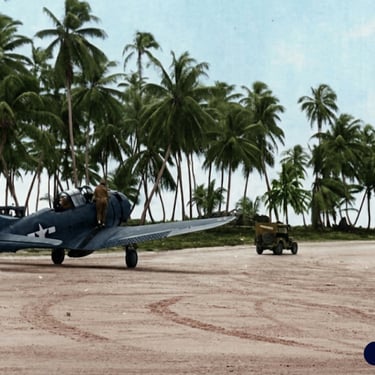
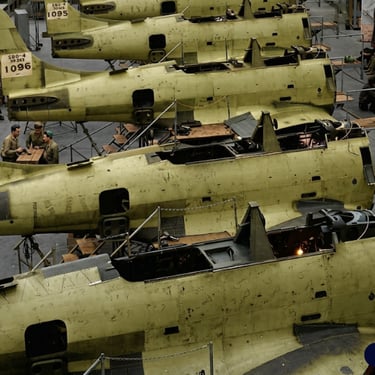
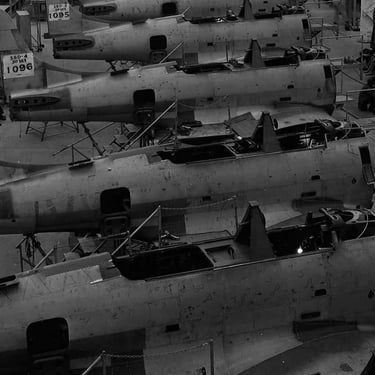
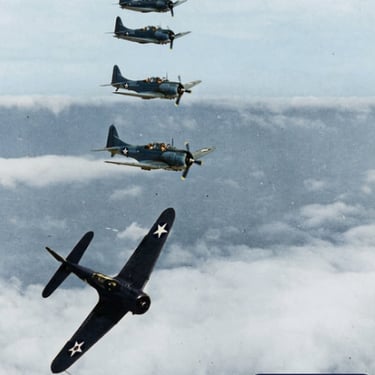
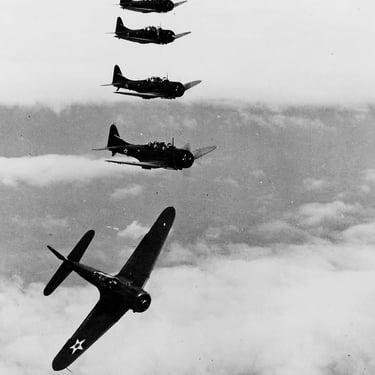
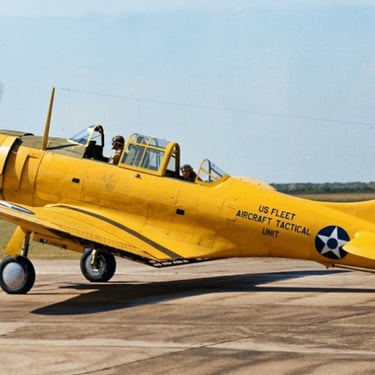
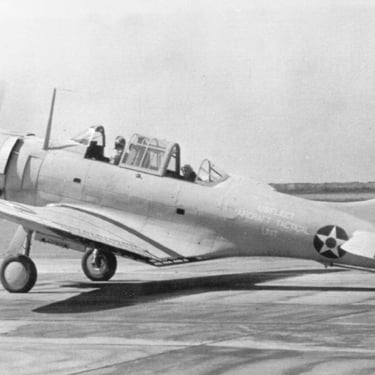
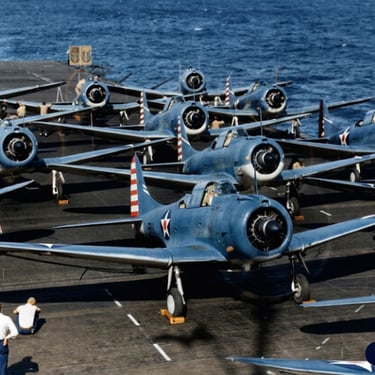
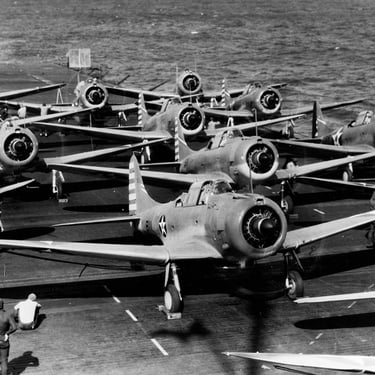
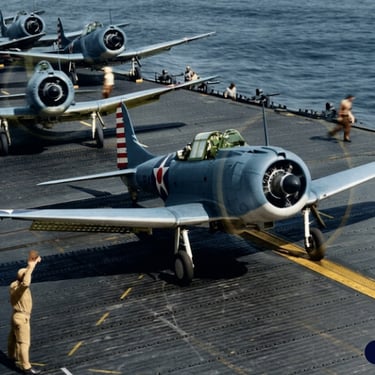
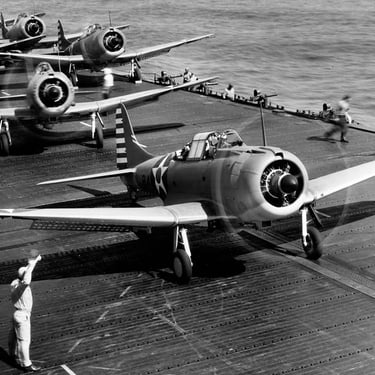
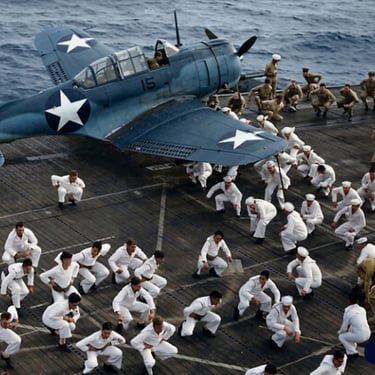
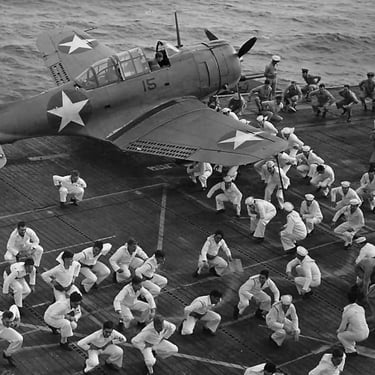
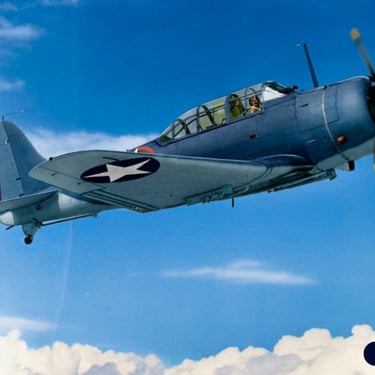
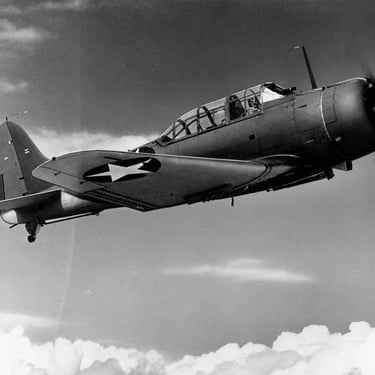
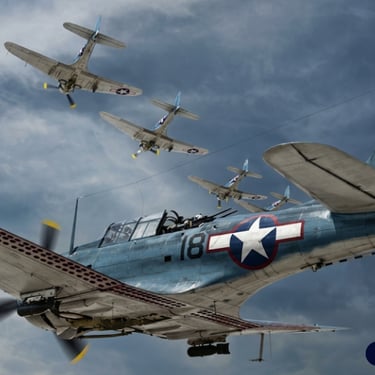
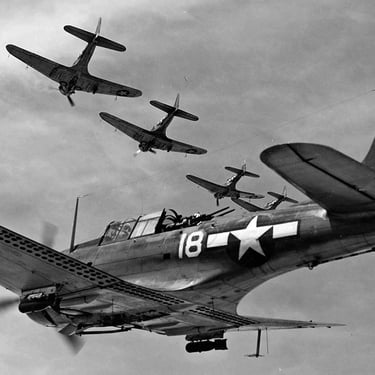
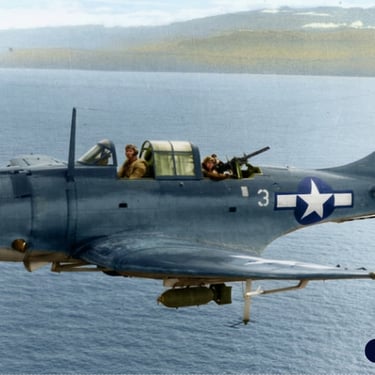
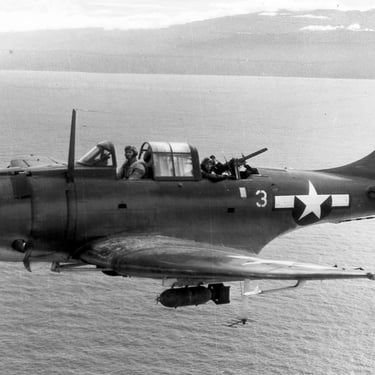
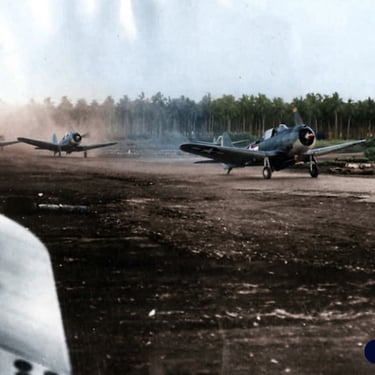
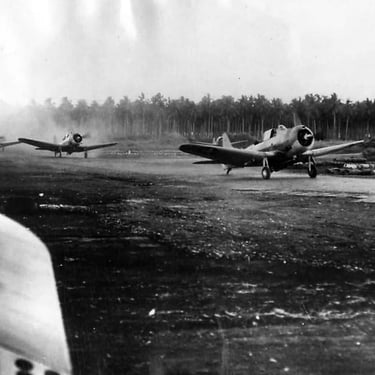
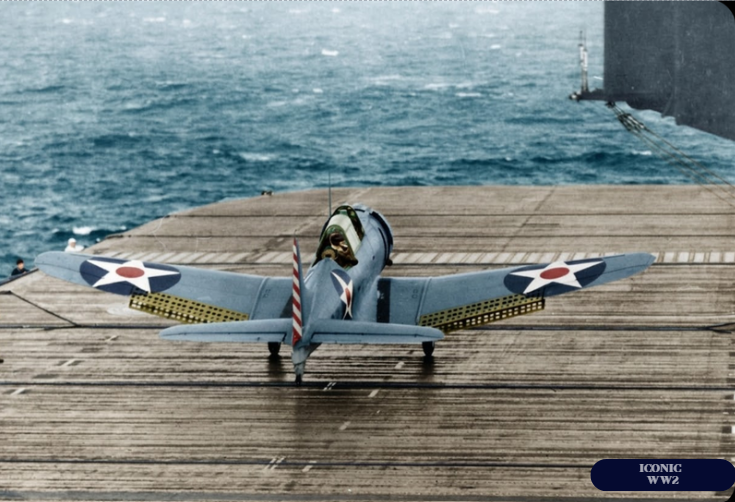
The Douglas SBD Dauntless (nicknamed "Slow But Deadly") was the most famous of the US Navy's World War II bombers, and arguably the most significant dive bomber of the war. However, the Dauntless began its combat career as a rather average dive bomber, significantly outdated by the time the United States entered the war. This obsolescence did not prevent the Dauntless from actively participating in all five major naval battles fought exclusively by carrier-based aircraft, and despite being decommissioned before the war began, the Dauntless sank more enemy ships in 1942 than all other naval aircraft combined. The Slow But Deadly destroyed the cream of the Japanese carrier force at the Battle of Midway, inflicting damage from which the Imperial Japanese Navy never recovered. "Of course, by the time the Heldiver appeared on the scene, the main air and sea battles had been fought and won mainly by the Dauntless/Avenger/Wildcat combination; in the period 1943-45 there were still operations to clear out and finish off the enemy that continued to resist."
The Dauntless story began in 1932, when aviation genius John Northrop left Douglas Aircraft to start his own company (with Douglas involvement) in El Segundo, California.
Over the next few years, Northrop created several remarkable aircraft designs, including the Alpha, the first monoplane with a lifting skin; the Beta fighter, which became the first aircraft with a 300-horsepower engine to reach speeds of 200 mph; and the Gamma mail monoplane, which could carry mail from one coast to the other in eleven and a half hours. In 1934, the Naval Bureau of Aeronautics (BNA) announced a competition to design a new, dedicated dive bomber to replace the numerous aircraft types the Navy used in this role. Northrop submitted a proposal for an all-metal monoplane with a lifting skin and a lower wing. BuAer chose Northrop's design, rejecting proposals from Brewster, Martin, and Vought (who had proposed biplanes rather than monoplanes, and proposals from Curtiss and Great Lakes were never finalized), and commissioned Northrop to build a prototype of the new aircraft, designated XBT-1 (registration number BuNo 9745).
Designed by Ed Heinemann under the direct supervision of John Northrop, the XBT-1 prototype featured many innovations and advanced solutions not previously used in aircraft design before 1934. The aircraft was an all-metal low-wing monoplane, with the main landing gear retracting into large fairings on the underside of the wing, leaving the undersides of the wheels partially exposed. Recognizing that strength was essential for a dive bomber, Heinemann employed a sparless, honeycomb-core wing structure, first pioneered by Northrop on the Alpha mail plane and later successfully adopted by Douglas on its early DC-series transport aircraft. The honeycomb wing was a revolutionary idea at the time, allowing for a clean monoplane wing without external struts or bracing. However, because the honeycomb wing structure precluded the use of a folding mechanism, the XBT-1 became the only aircraft with this wing design accepted by the Navy. To compensate for the lack of folding wings, Heinemann sought to reduce the aircraft's dimensions as much as possible. The prototype's wingspan was only 12.65 m (41 ft), and its other dimensions were also compressed to the limit: a length of 9.6 m (32 ft) and a height of 3.8 m (12 ft). The Pratt & Whitney R-1535-66 Twin Wasp Junior engine, producing 700 hp (550 kW), gave the prototype a top speed of 296 km/h (185 mph). The XBT-1's maiden flight took place on August 19, 1935, and demonstrated performance sufficient to warrant continued testing. In December 1935, the prototype was equipped with a new 825 hp (600 kW) Pratt & Whitney R-1535-94 Twin Wasp Junior engine, increasing its top speed to 341 km/h (213 mph). With the new engine, the aircraft could carry a 453 kg bomb at an altitude of 6,860 m. To eliminate buffeting during dives, the deploying flaps/brake flaps were perforated with round holes. This not only solved the buffeting problem but also allowed the flaps to be deployed wide enough to dampen dive speed without significantly reducing wing lift.
On September 18, 1936, satisfied with the test results, the Navy ordered a series of fifty-four aircraft, designated BT-1. These new dive bombers flew primarily with VB-5 on the carrier Yorktown and VB-6 on the carrier Enterprise, demonstrating a host of unsatisfactory flight characteristics, including directional instability at low speeds, poor aileron and rudder performance at low speeds, and a tendency to roll when engine speeds were increased sharply, leading to several crashes. Needless to say, the Bureau of Aeronautics declined to order any more BT-1s.
Fortunately for Northrop, however, the XBT-1 contract included funds for the development of a follow-on prototype, designated the XBT-2. Northrop, well aware of the BT-1's shortcomings, was confident, unlike the Bureau of Aeronautics, that he could solve the dive bomber's problems and secure the next production contract. He believed that most of the BT-1's problems stemmed from its insufficient thrust-to-weight ratio, and the first step toward solving them was installing a new engine. The Twin Wasp Junior was replaced with a 1,000-hp Wright XR-1820-32 Cyclone engine. The BT-1's two-bladed propeller was also replaced with a three-bladed variable-pitch propeller. A completely redesigned instrument panel and new instruments were also intended to address low-speed controllability. Flight tests of the XBT-2 in this configuration began on April 25, 1938, and showed only a slight improvement over the BT-1.
Disappointed with the results, Northrop flew the XBT-2 to Langley, where NASA had a wind tunnel large enough to test a full-size aircraft. Following the tests, NASA issued a series of recommendations for improvement, including converting the landing gear to fully retractable, adding a non-adjustable wing slot to increase aileron effectiveness, and increasing the vertical stabilizer and stabilizer area. Over the next six months, Heinemann conducted a series of intensive tests of 21 tailplane variants and 12 different aileron profiles before finding a satisfactory configuration.
Before the redesigned XBT-2 rolled out of the factory, John Northrop finally surrendered to Douglas (his company had operated as an independent aircraft manufacturer for several years, but was completely controlled by Douglas). The XBT-2 returned to Douglas and was redesignated the XSBD-1.
Following NASA recommendations, the dive bomber was aerodynamically refined. The key advancement was the fully retractable landing gear. The massive fairings of the semi-retractable landing gear disappeared from the underside of the wings, and the main landing gear now folded completely laterally, retracting the wheels into bays in the lower fuselage. The cockpit canopy was also redesigned. The modernized prototype was accepted by the Bureau of Aeronautics in February 1939, followed by an order for 144 SBD-1s on April 8. The change in designation from B (bomber) to SB (scout bomber) occurred due to the Bureau of Aeronautics' desire to retain the "bomber" designation for multi-engine aircraft. However, the redesignation did not alter the intended missions.
On production SBD-1s, the engine cowling was modified, with a convex, rounded carburetor intake added to its upper section. The propeller hub was covered by a spinner, and the radio antenna mast was moved from the cowling edge to the left side of the fuselage, in front of the canopy windshield. The SBD-1 was armed with a pair of 12.7mm synchronized machine guns, fixedly mounted on the upper fuselage in front of the cockpit and firing through the propeller arc. Recesses were made in the engine cowling in front of the machine gun barrels for firing, and their breech blocks protruded from under the cockpit instrument panel, allowing for easy reloading in flight in the event of a delay in firing. The Dauntless's main opponent, the Japanese Zero fighter, had its fuselage armament mounted in a similar manner. The radio operator/gunner's position was armed with a single 7.62mm machine gun mounted on a turret for firing at the rear hemisphere. The bomb load consisted of one bomb weighing up to 726 kg, suspended on a ventral pylon, and two bombs weighing up to 45 kg, or two depth charges, on wing pylons. During a dive release, the bomb on the ventral pylon was deployed by a boom forward and downward, beyond the propeller arc.
Although 144 SBD-1s were ordered, only 57 aircraft (registration numbers 1596 to 1631 and 1735 to 1755) were delivered to operational units, as the Bureau of Aeronautics considered the first Dauntless variant to be insufficiently combat-ready.
The aircraft carried onboard weapons, but lacked armor protection for the crew and fuel tanks, and its operational range was deemed too short. The 210 gallons (795 L) of fuel in four wing tanks—two main 90-gallon tanks and two auxiliary 15-gallon tanks—provided a combat radius with a bomb loaded of less than 900 nautical miles (1,667 km). Douglas promised the Bureau of Aeronautics that it would address this issue beginning with the 58th aircraft in the series. Thus, the Bureau of Aeronautics accepted 57 aircraft in their original configuration and, without waiting for them to meet its requirements, transferred them to the Marine Corps Air Arm.
SBD-1s entered service with MAG 11 (Marine Air Group) and MAG 21 during June 1940. SBD-1s assigned to MAG 11 were in Hawaii at the time of the Japanese attack on Pearl Harbor. Seventeen Dauntless aircraft were destroyed and the remaining twelve damaged in the attack.
The remaining 87 aircraft (registration numbers 2102 through 2188) of the first series were delivered upgraded to the SBD-2 configuration. While upgrading to the SBD-2 standard didn't solve all of the Dauntless' problems, it did address its main issue—its insufficient combat radius. The 15-gallon auxiliary fuel tanks were eliminated and replaced with 65-gallon tanks in the wing consoles, increasing the total fuel capacity to 310 gallons (1,173 l), giving a range of 1,200 nautical miles (2,224 km). The increased fuel weight almost negated the performance improvements, so to reduce the loaded weight, one of the 0.50-inch machine guns was usually removed. The increased range necessitated the installation of an autopilot to ease the pilot's workload during long flights over sea. Despite the lack of crew armor protection and a fuel system, the Bureau of Aeronautics accepted the SBD-2 for armament of VS-6 and VB-6 divisions of the aircraft carrier Enterprise and VS-2 and VB-2 of the aircraft carrier Lexington.
VS-2 and VB-2 on the carrier USS Lexington were the first carrier squadrons to receive the Dauntless, followed shortly by squadrons on the USS Enterprise. On the morning of December 7, 1941, the USS Enterprise was in the Pearl Harbor area, returning from delivering six Wildcats to Wake Island. At 6:30 AM, Admiral Halsey launched eighteen SBD-2s for reconnaissance in the area west of the carrier before approaching Pearl Harbor. Shortly after 8:00 AM, the Dauntlesses entered the area of the Japanese air force attacking Pearl Harbor one after another. Seven SBDs were shot down or crashed on landing, but of the twenty-seven aircraft lost by the Japanese that day, at least two were attributed to Dauntlesses. Once the Dauntlesses were ready for another sortie, they set out to search for the Japanese strike force, but their efforts were unsuccessful. Three days later, on December 10, Lieutenant Dixon of VS-6 destroyed the Japanese Imperial Navy submarine I-70. The first enemy warship sunk by the United States in World War II was sunk by a Dauntless.
Following the attack on Pearl Harbor, the Enterprise, Lexington, and Yorktown spent months at sea conducting hit-and-run raids on fortified Japanese positions. These raids, while causing little actual damage, signaled to the Japanese that the U.S. Navy had not abandoned the Pacific and was giving its "Slow and Deadly" fleet a chance to demonstrate its skills. In the spring of 1942, Allied military intelligence discovered Japanese preparations for an attack on Port Moresby in New Guinea. Had this assault succeeded, Australia would have been at risk of invasion. In the first week of May, the Lexington and Enterprise set sail to disrupt the Japanese attack on Port Moresby. During the ensuing battle, which became known as the Battle of the Coral Sea, SBDs sank the light carrier Soho on May 7 and disabled the attack carrier Shokaku on May 8.
Although the Lexington was lost, the battle can be considered a tactical draw overall – although the Americans lost more ships, the Japanese lost more pilots and aircraft. Strategically, however, the Battle of the Coral Sea can be considered a major American victory – from that moment on, the Japanese offensive in the Pacific was halted. The Japanese, convinced that the Lexington had also been sunk, abandoned the battlefield, congratulating themselves on yet another victory over the American fleet.
The SBD-3, which appeared at the front in late spring 1942, was originally ordered from Douglas by the French, who had fully realized the power and potential of the dive bomber during the German invasion of Poland. However, all 174 aircraft ordered for the Aeronaval, plus an additional 410 SBD-3s, were ultimately delivered to the US Navy (registration numbers 4518 through 4691, 03185 through 03384, and 06492 through 06701).
The SBD-3 was a Dauntless fully upgraded to combat standards. Self-sealing fuel tanks (all wing-mounted, with a total capacity of 260 gallons (984 l)), crew armor, and armored glass in the canopy were introduced on Dauntlesses beginning with the SBD-3. The addition of additional equipment resulted in increased weight and, consequently, a slight reduction in performance. To maintain acceptable performance, weight-saving measures were implemented, including replacing the duralumin skin with lighter Alcad (clad aluminum) and removing all ditching equipment. The 0.50-inch machine gun, typically removed from the SBD-2, was reinstated—firepower was deemed more important than weight savings. The R-1820-32 engine was replaced by a new Wright Cyclone R-1820-52 engine of the same power and the ventilation flap on the trailing edge of the hood was increased in size.
All these upgrades increased the aircraft's dry weight from 5,525 pounds to 6,180 pounds (from 2,506 to 2,803 kg) and caused a slight reduction in performance: the maximum net speed dropped from 411 km/h to 407 km/h. During production of the SBD-3, the turret-mounted 7.62 mm machine gun for the radio operator/gunner was replaced with a twin turret-mounted 7.62 mm machine gun. The new twin turret-mounted machine gun retracted into the fuselage through sliding side windows, unlike the old single machine gun, which retracted through hinged doors on the top of the fuselage.
Following the failed attack on Port Moresby and the subsequent Battle of the Coral Sea, Admiral Yamamoto, commander of the Imperial Japanese Navy, decided to seize Midway Atoll, located just 1,100 miles (1,987 km) southeast of Pearl Harbor. If Pearl Harbor became unsafe as a naval base as a result, the US Navy would be forced to move its main base directly to the west coast of the United States.
However, in his decision to storm Midway and prepare his combat orders for the attack, Admiral Yamamoto relied on erroneous reports of the sinking of the Yorktown along with the Lexington in the Battle of the Coral Sea. He also believed that the Hornet and Enterprise were too far away to counter the attack. Nevertheless, his invasion force was impressive...
But most importantly, Allied intelligence provided Admiral Nimitz, commander of the Pacific Fleet, with detailed information about the impending invasion, right down to the ship schedule.
Between June 3 and 4, the Japanese Northern Forces launched a diversionary attack [again, not a "diversionary" attack, but a deliberate clearing of the approaches to the Aleutians. The Japanese were ultimately defeated by the length of their communications and the impossibility of maneuvering their very limited forces in such a large theater of operations - DD]. The American fleet, aware [?! - DD] of the impending attack, did not react to it at all, continuing to advance toward Midway.
At 4:30 a.m. on June 4, Vice Admiral Nagumo launched the first wave of aircraft to attack the defensive positions on Midway. Since only one raid against the defensive positions was planned, the second wave of aircraft, stationed on the decks of the carriers, were armed with torpedoes and armor-piercing bombs for possible attacks on American ships should they be detected nearby and attempt to counter the first wave's attack.
Aircraft taking off from Midway to attack the Japanese invasion forces were easily repelled and unable to reach the invasion group, prompting the invasion force commander to launch another strike on Midway, as there was no naval opposition. Admiral Nagumo, exhausted by the preparations for the first wave, ordered the deck crews to re-arm the second wave of aircraft with high-explosive and fragmentation bombs to attack land fortifications.
About halfway through the rearmament process, at 7:28, Nagumo received a message that a ten-ship group of American ships had been spotted. No carriers were reported. At 7:58, the composition of the American task force was clarified: five cruisers and five destroyers. Shortly thereafter, Nagumo's carriers were attacked by carrier aircraft from Midway, further delaying the rearmament of the second wave. The carrier aircraft failed to damage the Japanese ships, but they forced the Japanese to scramble Zeros to intercept.
At 8:20, Nagumo received a new message that an American aircraft carrier had been "apparently" spotted. To attack the carrier, Japanese weapons engineers would have to reverse the process—remove the high-explosive and fragmentation bombs and replace them with armor-piercing bombs and torpedoes. A strike on the carrier would require fighter cover, and the Zeros would also need refueling and re-arming after repelling the carrier attack. Meanwhile, the carrier aircraft were expected to return by around 8:30. Nagumo found himself in a difficult situation. He decided to delay the carrier attack until the carrier attack was repelled and ordered a 90-degree change in the formation's course.
At 7:52, Enterprise and Hornet launched aircraft, and at 9:00, Yorktown launched aircraft to attack Nagumo's carriers. Each group included SBD Dauntless dive bombers, TBD Devastator torpedo bombers, and F4F Wildcat fighters. Because Nagumo had altered the formation's course, Hornet's SBDs failed to locate the Japanese carriers and were forced to return. By 9:30, fifty of the eighty-five SBDs launched to search for the Japanese carrier force were airborne. Between 9:18 and 10:10, three Devastator squadrons located and attacked the target. Without fighter cover, the Devastators suffered catastrophic losses from Zero fire and the carrier force's antiaircraft artillery—of the forty-one torpedo bombers that participated in the attack, only four returned to their ships. Satisfied with the battle's results, Nagumo continued to prepare the attack wave. Preparations were complete by 10:25.
While the Japanese carriers, their decks crammed with loaded and fueled aircraft, were busy finishing off the last of the TBDs, fifty Dauntlesses approached at altitude. The fighters, chasing the torpedo bombers near the water, were unable to intercept them, and one by one the dive bombers began to fall into near-vertical dives. When the Dauntlesses pulled out, the Akagi, Kaga, and Soryu were reduced to blazing wrecks. This happened at 10:26.
The Hiryu, operating independently outside the main group, remained undamaged and launched the attack group as planned. Its aircraft carried out a series of attacks on the carrier Yorktown between 12:00 and 14:30. Yorktown was abandoned by its crew at 15:00. At the same time, the Hiryu was attacked by Dauntless aircraft from the Enterprise, accompanied by fourteen "orphaned" aircraft from the Yorktown. By 17:00, the last Japanese carrier was burning and unable to navigate. She was scuttled by her crew the following day.
In a matter of minutes, Slow and Deadly destroyed 47 percent of the Imperial Navy's carrier tonnage, changing the course of the Pacific War and winning what some historians consider one of the most important battles in world history.
The SBD-4, which appeared at the front in the final days of 1942, differed from the SBD-3 only in minor details. The major changes occurred not externally but internally, in particular, the onboard electrical system was upgraded to 24-volt rather than 12-volt, allowing for the installation of additional radio navigation equipment and aircraft radar. However, due to equipment shortages [The truth is that radar production couldn't keep up with demand. This situation is described, in particular, in Admiral Lockwood's "Sea Devils" - DD], early-production SBDs were not equipped with radar at the factory. Most radar-equipped SBD-4s were retrofitted at field modernization centers. Only toward the end of the series' production were sufficient radar installations available to equip aircraft on the assembly line. A radar-equipped Dauntless carried a Yagi antenna under each console.
The variable-pitch propeller with spinner installed on early versions was replaced by a Hamilton-Standard Hydromatic constant-speed propeller without a spinner on the hub. Electric main and emergency fuel pumps were installed. With the advent of the SBD-4, Dauntless production began to pick up speed. 780 aircraft (registration numbers 06702 through 06991 and 10317 through 10806) were delivered to the Navy from October 1942 to April 1943. The Army received 170 modernized aircraft (serial numbers 42-6772 through 6831 and 42-60772) under the designation A-24A. Most of them were used as trainers.
Most SBD-4s were delivered to land-based Navy and Marine Corps divisions. The lack of folding wings created increasing difficulties when deployed on the new escort and light carriers that were entering service. Of the light carriers, only the USS Independence could accommodate the SBD. From her deck, VB-22 carried out raids on Marcus, Wake, and Tarawa in late 1943, before receiving new Avenger TBMs with folding wings. SBD-4s saw active service in the South Pacific during the initial stages of the Solomon Islands campaign.
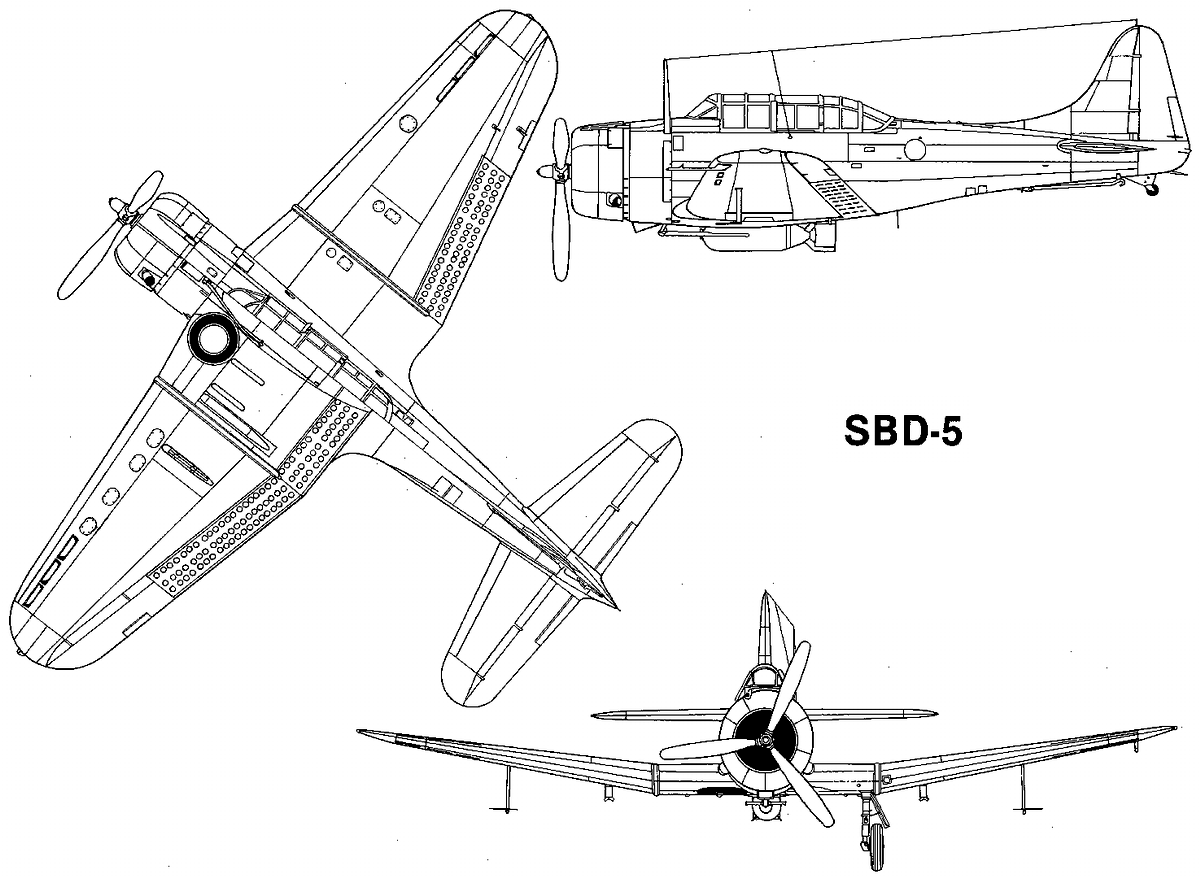
The SBD-5 variant finally received what Dauntless most needed—a more powerful engine. The aircraft was equipped with a 1,200-horsepower Wright R-1820-60 Cyclone, but due to the increased equipment weight, the maximum speed increased by only 7 mph (11 km/h), and cruising speed even decreased slightly. External differences from older models were limited to the absence of a carburetor air intake, smaller cowling flaps, and the relocation of the engine cooling slot. The archaic telescopic gunsight was replaced with a new reflector. Hardpoints for a pair of 58-gallon (219 l) drop tanks were mounted on the wings, increasing the reconnaissance radius to 1,340 nautical miles (2,483 km).
The SBD-5 became the primary production variant of the Dauntless, with 2,965 aircraft produced (serial numbers 10807 through 11066, 28059 through 29213, 35922 through 36421, 36433 through 36932, and 54050 through 54599) between February 1943 and April 1944. Douglas also produced 615 aircraft for the Army as the A-24B (serial numbers 42-54285 through 54899). Sixty A-24Bs were later deemed surplus to Army service and transferred to the Navy, which presumably reassigned them to Marine Corps air squadrons.
The SBD-5 arrived at the front in large numbers, quickly replacing older Dauntless variants throughout 1943. It was already in service with the fleet's strike divisions when carrier forces resumed offensive operations in the second half of 1943. It was planned to replace the Dauntless in front-line units with the SB2C Helldiver in 1943, but delays in Helldiver production forced the Dauntless to remain at the front throughout 1943 and into early 1944. Throughout 1944, the Curtiss SB2C Helldiver quickly replaced the Dauntless in fleet service. No longer flying from carrier decks, the Dauntless was relegated to home airfields, where it continued to rack up combat victories and enemy losses.
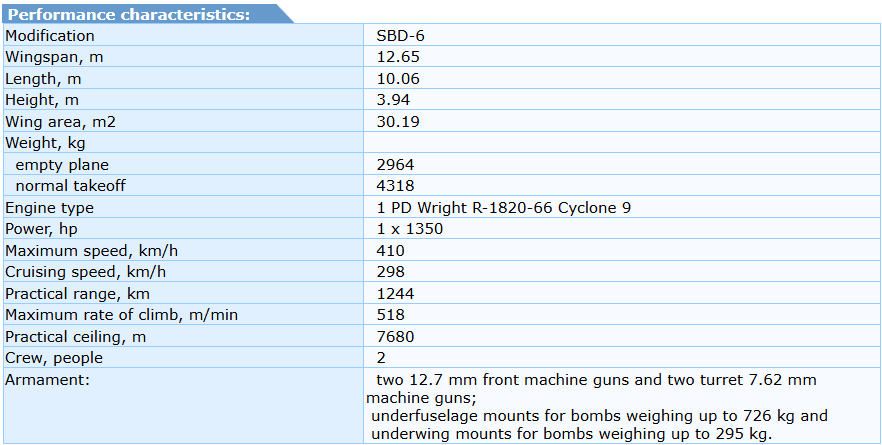
The final variant of the Dauntless, externally indistinguishable from the SBD-5 but equipped with an even more powerful 1,350-horsepower Wright R-1820-66 Cyclone engine, was the SBD-6. However, the increased top speed to 421.5 km/h (260 mph) was still clearly insufficient and far from the fleet's needs in 1943. The non-metallic self-sealing fuel tanks were replaced by metal ones with a self-sealing layer.
Only 450 aircraft (registration numbers 54600 through 55049) were produced before production was finally discontinued. By the time deliveries began (March 18, 1944), the SBD-6 was considered completely obsolete, and all SBD-6s were assigned to Coastal Defense battalions, bombing training units, used as target tugs, or as support aircraft.
A-24 / SBD "Dauntless", Douglas Bomber