Ambrosini SS-4
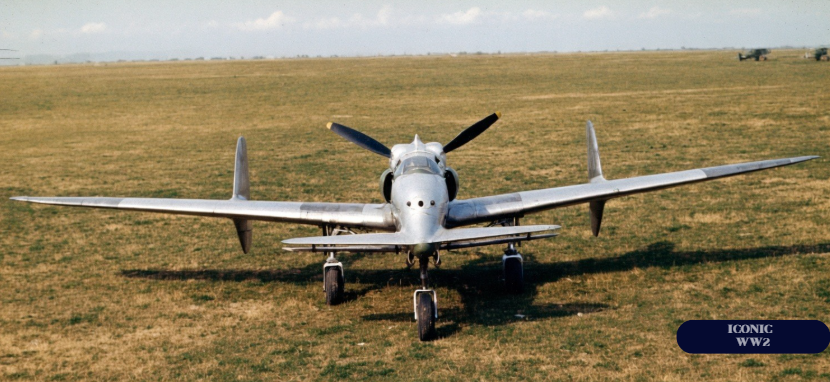
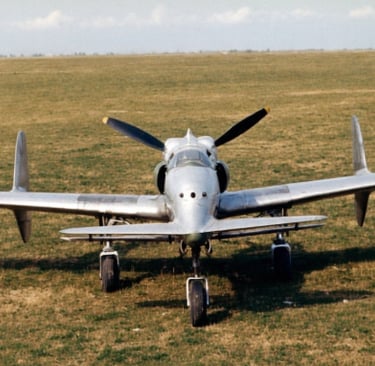
Developer: Ambrosini
Country: Italy
First flight: 1939
Type: Fighter
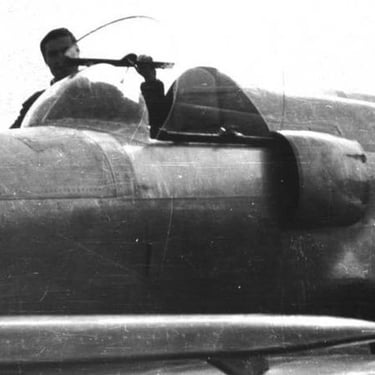
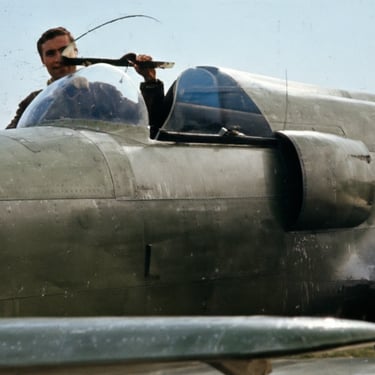
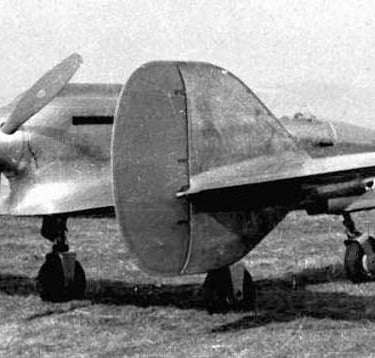
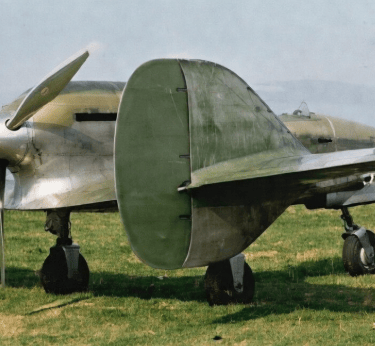
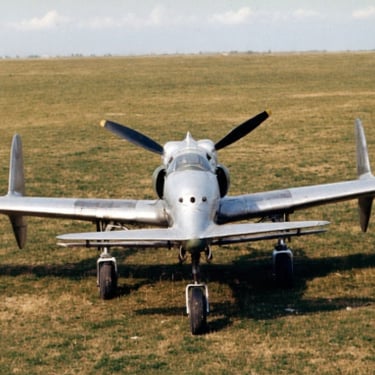
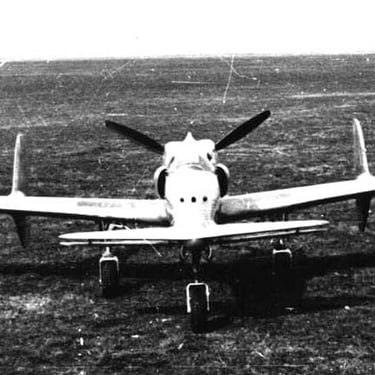
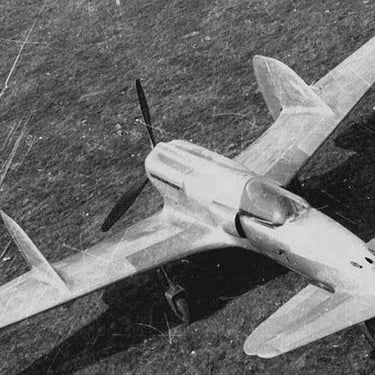
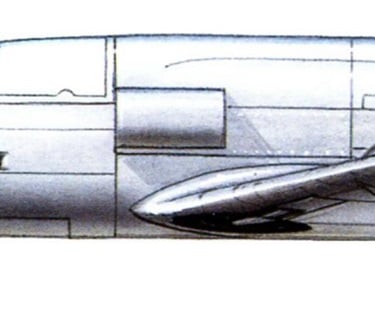
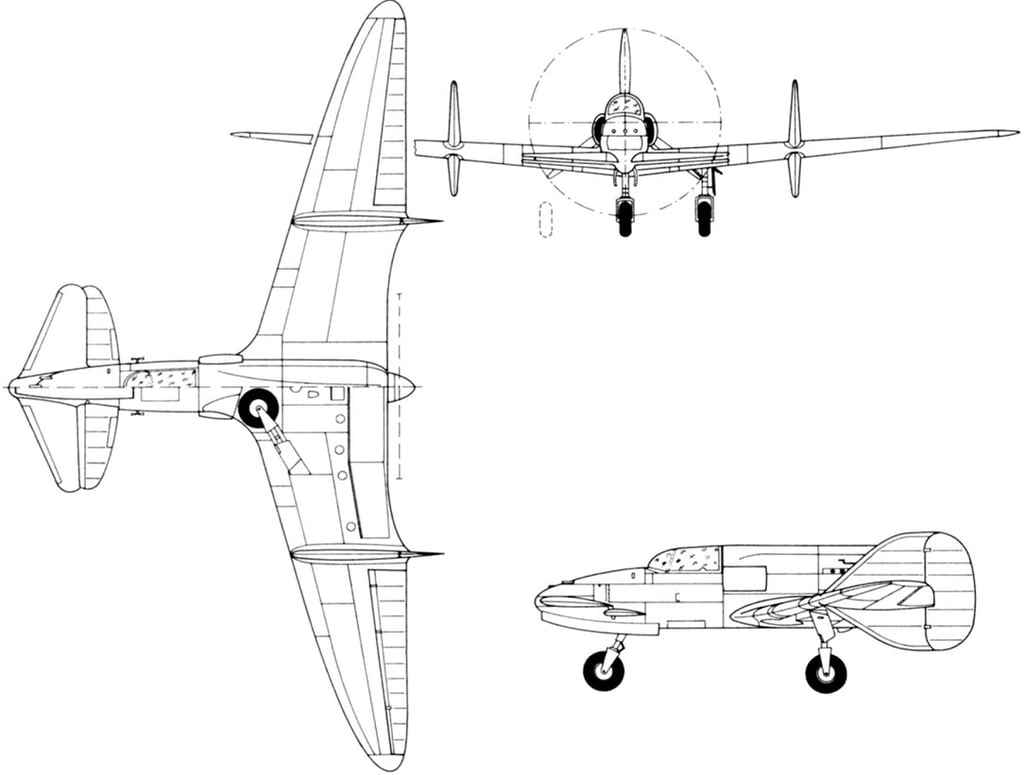
The path to the innovative canard fighter known as the Ambrosini SS.4 began at the Direzione Superiore Studi ed Esperienze (DSSE) in Guidonia, the premier experimental center of the Regia Aeronautica during the 1930s. Engineer Sergio Stefanutti, driven by a vision to eliminate the dangers of spinning while granting the pilot an unobstructed forward view, turned to the unconventional canard—or tail-first—configuration.
His early experiments bore fruit with the SS.2 of 1935, a modest wooden two-seat light aircraft fitted with a diminutive 16 hp Keller engine. This simple machine demonstrated convincingly that the canard layout offered inherent resistance to stalls and a remarkable degree of safety in low-speed flight.
Building upon that foundation, Stefanutti refined the concept in 1937 with the SS.3 "Anitra" (Duck), again a two-seater but now powered by a more capable 38 hp CNA D.II engine. Constructed at the Stabilimento Costruzioni Aeronautiche in Guidonia, the "Anitra" functioned as a high-speed aerodynamic testbed. It validated the twin-fin vertical stabilizer arrangement—necessary to provide directional stability with the abbreviated fuselage—and proved the viability of the configuration for scaling up to a combat aircraft.
By 1939, these lessons culminated in the SS.4, a far more ambitious project undertaken by the Società Aeronautica Italiana Ing. A. Ambrosini. Unlike its wooden predecessors, the SS.4 was an all-metal single-seat fighter-interceptor of advanced design, far ahead of most contemporary Italian aircraft.
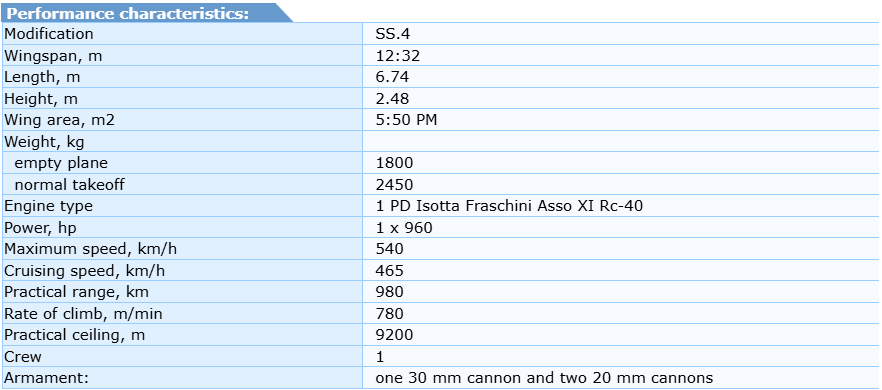
Its layout featured a pusher propeller driven by a rear-mounted Isotta Fraschini Asso XI R.C.40 engine of 960 hp, which allowed the center of gravity to remain concentrated while clearing the nose entirely for armament. The proposed armament was formidable for the era: a 30 mm cannon firing through the propeller hub, supplemented by two 20 mm Mauser cannons mounted in the forward fuselage. This arrangement concentrated fire without the need for wing convergence harmonization. Further innovations included a fully retractable tricycle undercarriage—uncommon in the Regia Aeronautica's inventory, which still relied heavily on tail-draggers—enhancing ground handling and pilot visibility during takeoff and landing.
On 7 March 1939, chief test pilot Ambrogio Colombo lifted the sole prototype from the airfield at Castiglione del Lago. The maiden flight revealed promising qualities: excellent stability and an estimated top speed approaching 570 km/h. Yet troubling engine vibrations marred the performance.
Tragedy struck the very next day, 8 March. During the second test flight, a severe malfunction—likely stemming from excessive vibration, a cooling failure, or consequent structural collapse in the engine mountings—forced Colombo into an emergency descent. Unable to reach the runway safely, the aircraft crashed short of the field at Eleuteri airfield near Castiglione del Lago. Colombo perished in the wreck, and the prototype was destroyed.
The loss of both the aircraft and its experienced pilot proved fatal to the program. With Italy on the brink of entering the Second World War, the Ministero dell'Aeronautica could ill afford the time and resources required to rectify the issues and develop so radical a design further. Priority shifted to more conventional fighters already in production.
In the years that followed, Stefanutti applied his ingenuity to other projects, notably the swift lightweight interceptors SAI.207 and SAI.403 Dardo, which achieved impressive performance with traditional layouts.
Though its career spanned only two flights, the SS.4 stands as a bold monument to pre-war Italian aeronautical daring. It anticipated by several years the canard-pusher fighters that emerged elsewhere—the American Curtiss XP-55 Ascender and the Japanese Kyūshū J7W Shinden—marking it as one of the earliest serious attempts to field a high-performance interceptor of this configuration. In an age of rapid evolution in military aviation, the SS.4 remains a poignant reminder of the promise—and peril—of pushing boundaries.