De Havilland DH98 "Mosquito", Bomber
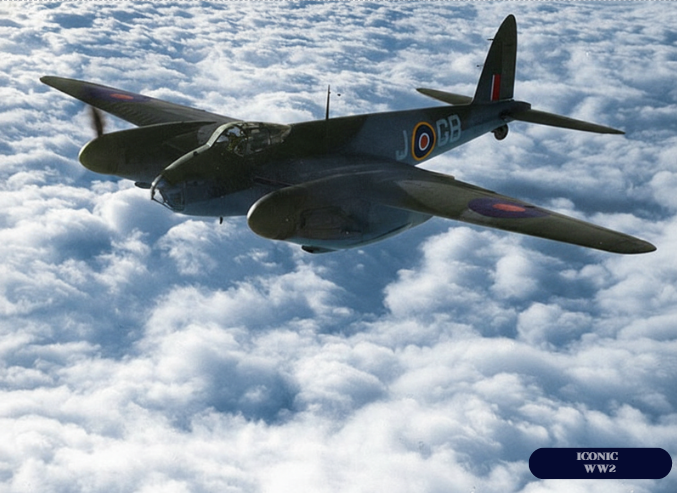
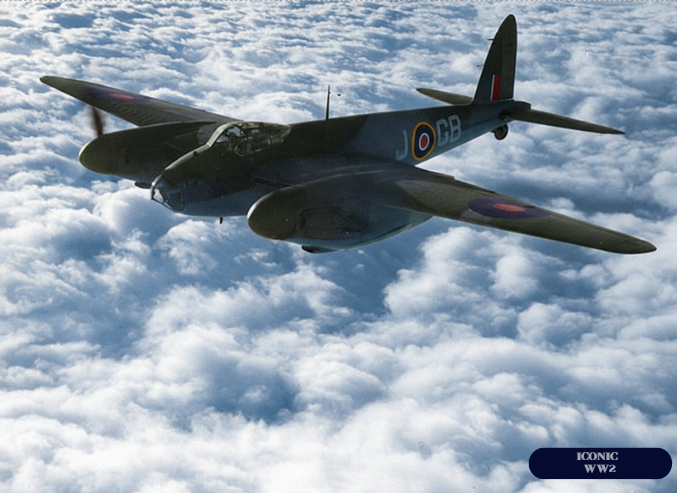
Developer: De Havilland
Country: United Kingdom
First flight: 1942
Type: Fighter / Light-Bomber / Torpedo Bomber
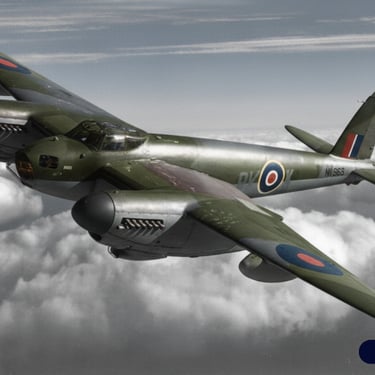
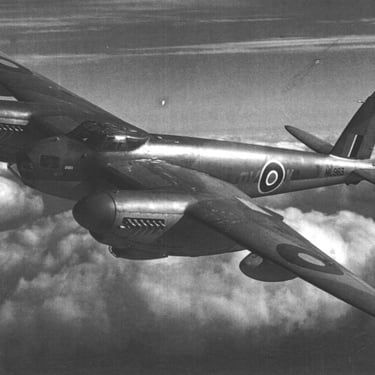
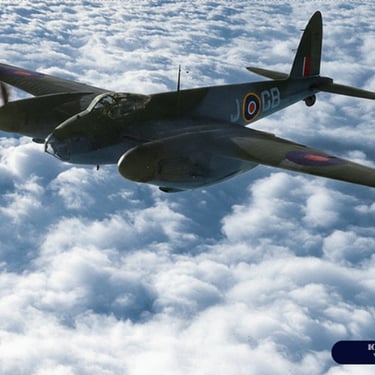
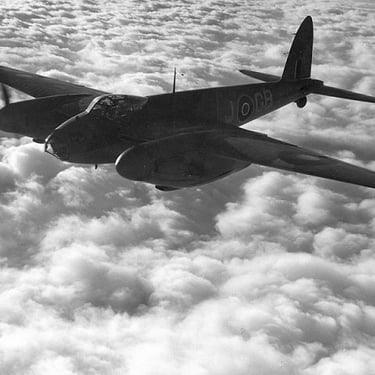
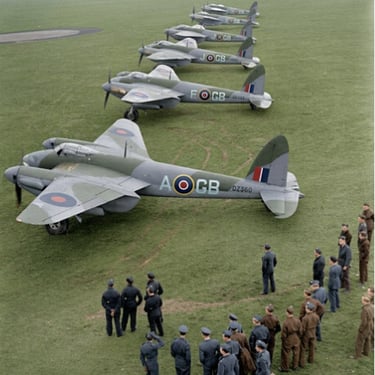
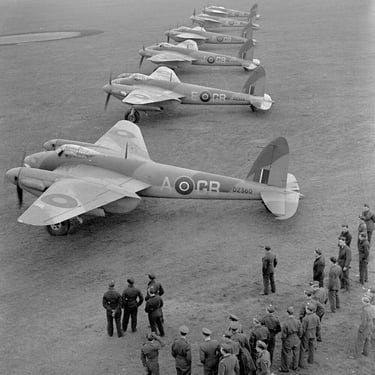
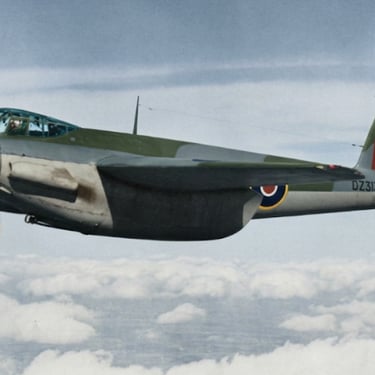
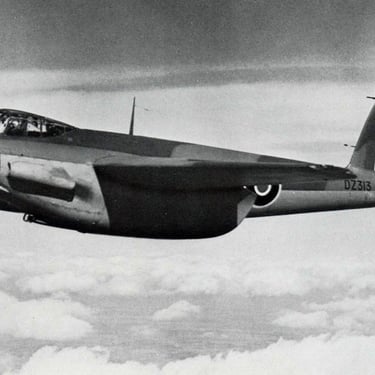
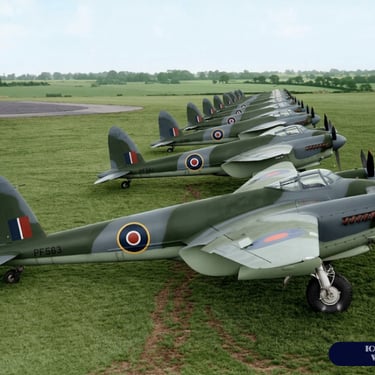
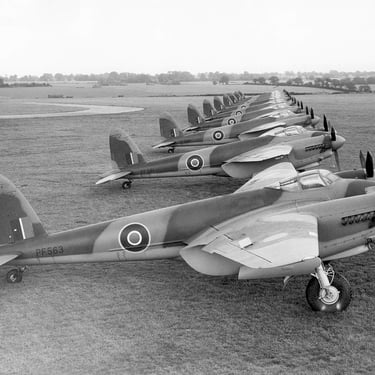
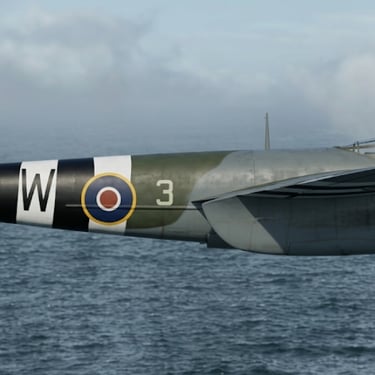
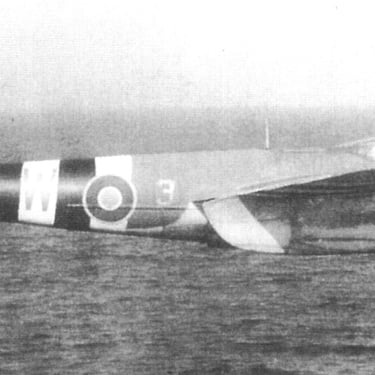
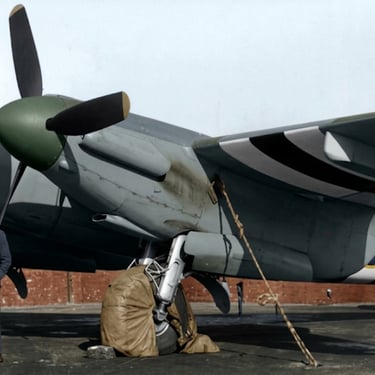
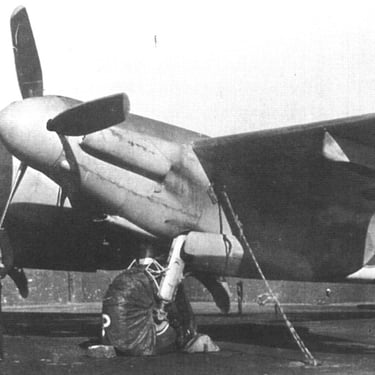
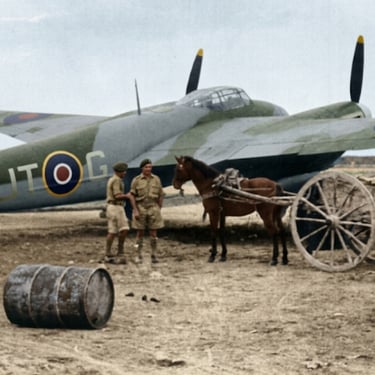
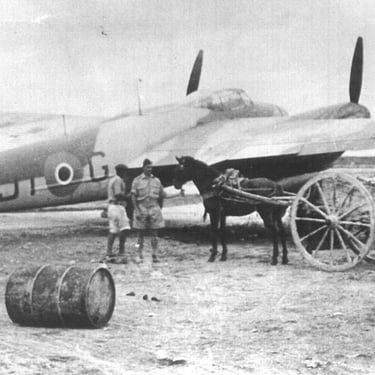
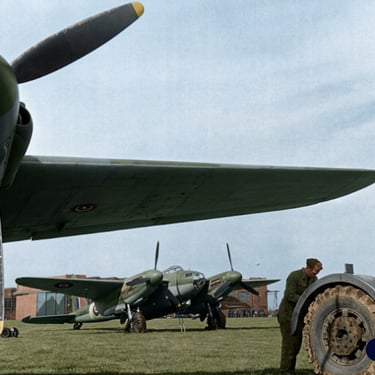
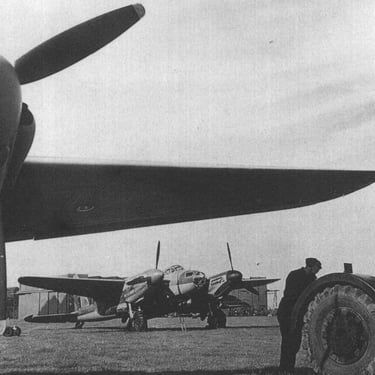
De Havilland Mosquito
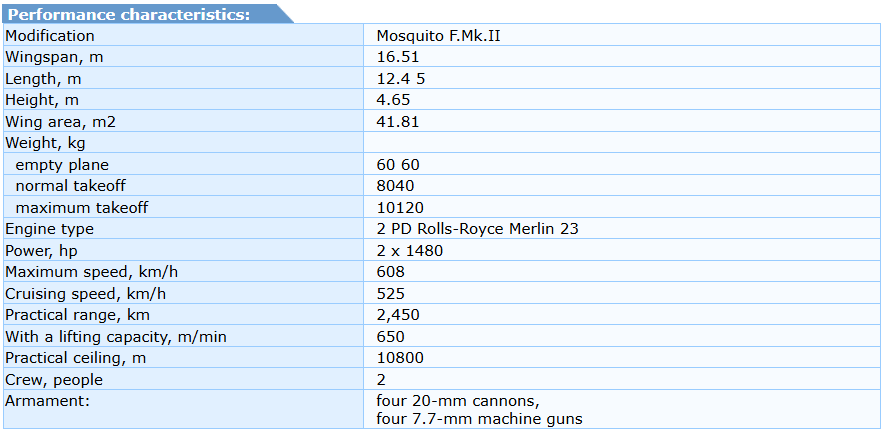
On July 18, 1940, de Havilland received orders to produce one of the fifty DH98 aircraft it had ordered as a fighter. Airframe W4052 was allocated for the conversion. From the outset, the Mosquito fighter was designed with the most powerful armament of its time, including four 20mm Hispano-Suiza HS404 cannons and four Browning rifle-caliber machine guns.
The following facts illustrate the urgent need for a twin-engine fighter at the time. Massive Luftwaffe raids on the British Isles, some of which were carried out at night, necessitated the urgent equipping of fighters with radar. The first, very crude radars were quite heavy (approximately 500 kg). Furthermore, operating them in the air was a complex undertaking, bordering on an art. A trained operator had to be included in the crew. These circumstances precluded the installation of a radar on a single-engine, single-seat fighter (although attempts were made). The first night interceptor equipped with a radar was the Royal Air Force fighter variant of the Blenheim. However, the aircraft's performance characteristics were inadequate and it was in need of a replacement.
German FW200 Condor long-range bombers, operating west of Ireland, caused considerable trouble for British shipping. Lord Woolton, the British Minister of Food, attended a demonstration of new aircraft on December 29, 1940, and drew the attention of aviation industry and RAF leaders to this problem. But they themselves were well aware of the need to rapidly develop a modern night (escort) fighter. The F.18/40 specification, defining the desired design of such an aircraft, had been formulated as early as October. The Mosquito, with its excellent speed and range, was ideally suited for both roles: night interceptor with radar and long-range loitering fighter.
However, the armament arrangement wasn't yet completely clear. While the Mosquito's designers had already planned a compartment under the cockpit for the cannons, the machine gun mount proved a real pain for Sir Geoffrey. The fact is that on the eve of the war and during its initial stages, the idea of a turret fighter was very popular in England. The most prominent example of this type of aircraft was the single-engine Boulton Paul Defiant. Although mediocre in performance, the fighter couldn't completely compromise its underlying concept. The military proposed creating a version of the Mosquito with a four-machine gun turret behind the cockpit. De Havilland Sr. categorically objected, but he couldn't help it: he who pays the piper calls the tune.
In mid-January 1941, the company received the order to complete the first batch of 28 DH98 aircraft in a "fighter" configuration with fixed armament. In April 1941, orders were received to produce two of these aircraft with movable turrets as an experiment. Several fighters were to be equipped with dual controls. At Salisbury Hall, sleepless nights began again for the designers: several Mosquito components had to be urgently redesigned to suit the aircraft's new purpose.
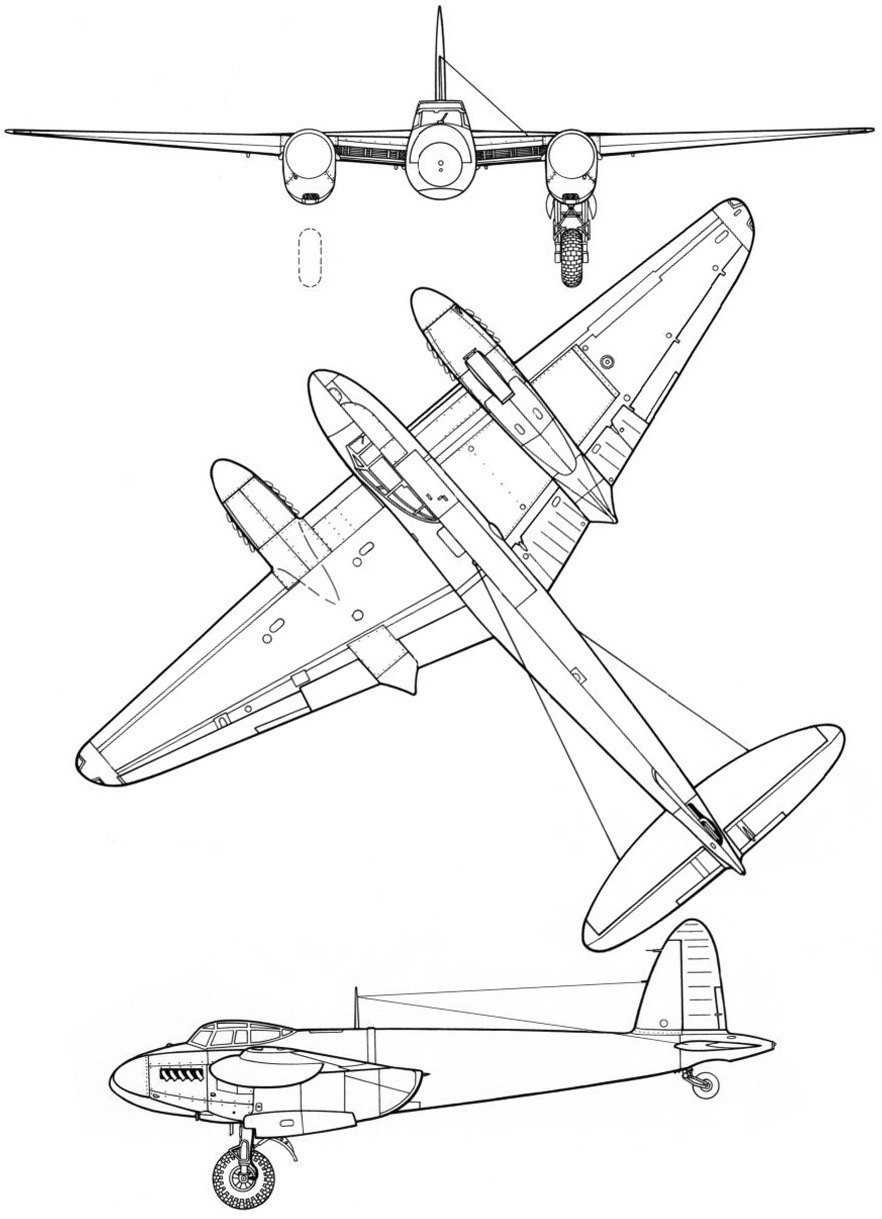
The G-forces of a maneuverable fighter naturally significantly exceed those of a bomber, so the wing spars and skins had to be reinforced. The cannons, mounted under the cockpit floor, forced the entry hatch to be moved to the starboard side of the fuselage. Two additional fuel tanks with a total capacity of 682 liters were installed in the freed-up portion of the bomb bay. Both crew members were now seated side by side. The cockpit instrumentation and layout were revised.
The V-shaped windshield was replaced with a single, flat piece of armored glass, which eliminated distortion when aiming in aerial combat and improved forward visibility. Aircraft with serial numbers W4053 and W4073 were allocated for production of turret fighters. These aircraft were not equipped with fixed machine guns in the nose cone to reduce weight.
On May 13, 1941, just two days before the first flight of the Mosquito fighter, German agent K. Richter landed in a field near Salisbury Hall. His level of training proved poor: the next day, he was arrested by police. Richter gave himself away by failing to answer a few simple questions from a local resident, who immediately informed the appropriate authorities. Police recovered his radio and pistol buried in the woods. Despite the incriminating evidence, the agent refused to testify about the nature of his assigned mission and was executed in December 1941. It's possible that Salisbury Hall, with its mosquito-themed works, was the intended target.
At dawn on May 15th, workers rolled the completed prototype fighter, W4052, out onto a field near the hangar. The field proved too short for a takeoff for a plane as fast as the Mosquito. Geoffrey Jr. measured its dimensions and asked only that several trees be cut down that might interfere with the takeoff once the aircraft had taken off. Avoiding the assembly and disassembly required for overland transport to Hatfield promised to save a week and a half. It was wartime, and time was precious.
The aircraft was stripped down to the bare minimum, with only the minimum amount of fuel needed for the "jump" to Hatfield. Alongside J. de Havilland Jr., company employee F. Plumb made the first, and dangerous, flight. He had previously bet Geoffrey £1 that he would fail to take off from this short, improvised airfield. However, everything ended successfully. After a 400-meter run, W4052 lifted off and landed on the factory airfield five minutes later.
On May 20, they began testing the guns on the ground and in the air. The experiments proceeded without any major problems: the mount proved sufficiently robust, and the feed, cartridge case removal, and link systems operated flawlessly.
De Havilland designers were concerned that the fighter's stability would be unsatisfactory for night flights and in adverse weather conditions. Therefore, they decided to slightly reduce the fuel capacity (and range), thereby shifting the center of gravity forward. However, after brief testing, military pilots from Boscombe Down concluded that the W4052 was sufficiently stable for night flights if the aircraft's takeoff weight did not exceed 8,380 kg. This conclusion, to put it mildly, was not entirely consistent with reality. Even the company's test pilot was forced to note the insufficient longitudinal stability of the Mosquito, a fighter with a 680-liter fuel tank behind the guns, in a report dated July 5, 1941. Taking into account the opinion of customers, De Havilland did not take any steps to eliminate the defect, except for slightly increasing the area and span of the horizontal tail (on bombers and reconnaissance aircraft - 7.71 m2 and 5.92 m, on fighters - 8.18 m2 and 6.32 m, respectively).
During the first stage of testing, the following flight data were obtained for the prototype fighter with a takeoff weight of 8,400 kg: maximum speed of 608 km/h at an altitude of 6,600 m, service ceiling of 9,300 m, and range at the most advantageous speed and altitude of 2,100 km. At the end of July, W4052 returned to Hatfield, where the AI.Mk.IV radar was installed on it. The radar emitter, in the form of a swept rod, was located in the nose of the fuselage between the barrels of the Brownings, the azimuth receiving antennas were on the wingtips, and the antennas designed to measure the target's elevation angle were on the starboard wing, approximately in the middle of it. Simultaneously, tests of the so-called "saxophone" exhaust devices were planned, but they were not ready. In late August - early September, J. de Havilland Jr. practiced night interception techniques. The target was a Blenheim bomber. The W4052 was equipped with floatless carburetors, allowing for safe, aggressive maneuvers with negative G forces. During one flight, the pilot performed a roll at low altitude, then returned to normal flight with an extended reverse half-loop.
The maiden flight of the W4053 turret fighter took place on September 14, 1941. It was not without incident—the high-speed impact tore off part of the turret's glass during flight. The second prototype (factory number W4073) took to the air in December, carrying only a dummy turret. This aircraft was equipped with dual controls and, shortly after completing testing, was converted into a trainer, with the turret, naturally, removed. The Mosquito's decision to remove the turrets was due not only to the loss of speed but also to its proven ability to engage enemy bombers in maneuverable air combat using fixed armament.
The Mosquito's aerodynamics were so advanced that some pilots began to fear their fighter would "overshoot" its target aircraft. For a time, de Havilland focused its attention on the Jungmann airbrake flaps, mounted as a "frill" around the fuselage. It was believed that this arrangement would dampen the vortices striking the stabilizer. In reality, the opposite was true. Extended, the flaps immediately caused tail buffeting, but they performed poorly in their primary function—braking the aircraft. For example, when braking at 400 km/h (250 mph), the aircraft lost 160 km/h (100 mph) in 45 seconds without the Jungmann flaps, and in 30 seconds with the flaps deployed. A better effect was achieved by extending the main landing gear. The company's specialists experimented with various flaps, but failed to achieve satisfactory results. During its active service, the W4052 underwent countless major and minor modifications. These included various exhaust manifold and exhaust manifold options, flame arrestors, underwing bomb racks, and drop tanks. The aircraft was equipped with various radio and radar systems, searchlights, reversible propellers, and its armament also changed. In 1942, the prototype Mosquito fighter was briefly tested with a 40mm cannon, and then balloon cable cutters were installed.
A whole saga revolves around developing a rational paint scheme for the night fighter. All specialists believed the aircraft should be a solid black. A special "lampblack" paint with an exceptionally low reflectivity seemed to perfectly meet the requirements. However, W4078 and W4082, painted in this "mourning" color, began flying 42 km/h slower due to their roughened surface. The loss in speed was deemed excessive, and "lampblack" was subsequently replaced by a less "optically black" but smoother paint, poetically named "silent night."
The entire first series of fighters was built with extended engine nacelles and exhaust stacks covered by flame arrestor boxes. The latest exhaust design had virtually no effect on aircraft speed compared to that used on the first-series bombers and reconnaissance aircraft (the loss was no more than 3 km/h). However, the manifolds no longer cracked, and stealth was significantly improved.
The first production Mosquito F.II fighter was aircraft with the factory number W4074. It was followed by 21 more aircraft between January and March 1942. All of them left the Hatfield factory without radar and were therefore sent directly to special RAF workshops, where the AI.Mk.IV meter-wave radar kit was installed. Due to the modifications being carried out, the first Mosquito fighter units were not ready for combat until late April (although 157 Squadron had formally re-equipped with the "twos" back in January). The aircraft transferred to night fighter squadrons were designated NF.II. The production aircraft reached a maximum speed of 608 km/h at an altitude of 6,700 m (8 km/h less than the prototype W4052). The B.IV Series I bombers, powered by identical Merlin 21 engines, were approximately 6 km/h faster, owing to the lack of radar antennas and a flat windshield. The fighters' loss of speed was partially offset by their longer engine nacelles.
It's worth noting that the maximum speed varied from aircraft to aircraft. For example, careless adjustment of the supercharger air intake tunnels, which resulted in a 300-meter reduction in engine altitude, also resulted in a 13 km/h (8 mph) reduction in speed. However, the Hatfield factory's production standards were extremely high, and such significant "variations" were rare. However, minor skin deformations near the static pressure inlet had a significant impact. This sometimes resulted in an overstatement of the indicated airspeed by 16-18 km/h (10-11 mph). Consequently, some aircraft were unfairly rated as "high-speed" by units, while others were considered "slow."
Four of the first Mosquito production aircraft were built as T.III trainers (in fact, these were unarmed fighters with dual controls, and were designated F.II dual control). Without major changes (apart from the "universal" wing introduced in 1943), the T.III trainers were later produced serially from March 1942 to December 1948. The aircraft were equipped with Merlin 21, 23, or 25 engines. The normal takeoff weight of the aircraft was 7,700 kg, and the maximum takeoff weight with two 454-liter drop tanks was 8,550 kg. As a rule, they were unarmed, although some aircraft were equipped with two to four Browning machine guns, which were used for target practice at towed targets. A total of 366 T.III aircraft were produced at British factories.
In February 1942, the first fighter of the 150 aircraft ordered for the second batch rolled out of the Hatfield assembly plant. With the exception of a few prototypes and a special order for 23 Squadron's Intruders, all were F.II variants.
The AI.Mk.V radar was first tested on a fighter with serial number DD668. It differed from the "four" in that the cathode-ray tubes were carried not only by the operator, but also by the pilot. Target display at that time was accomplished using two tubes, one of which determined the target's direction in the azimuth plane, while the other indicated its range. Furthermore, the latter provided information about the enemy aircraft's position in the upper (or lower) hemisphere relative to the radar carrier, but did not allow one to determine how much higher (or lower) the enemy aircraft was flying. The night fighter pilot was required to control the aircraft so that the signal from the upper receiving antennas was balanced by the signal from the lower ones. The same balance had to be maintained for the azimuth signals coming from the left and right wingtip antennas. Since the exact elevation of the target wasn't known, fighters sometimes "overshot" it and lost sight of it. On aircraft equipped with the AI.Mk.IV, the situation was further complicated by the fact that the pilot was merely following the operator's commands, operating as if blindfolded, and much depended on mutual understanding between crew members. For the pilot of an AI.Mk.V-equipped aircraft, the task was simplified, but only slightly. The now-standard circular display was only introduced on the AI.Mk.VIH radar.
An aircraft with serial number DD723 was tested with a propeller-engine system from a Lancaster heavy bomber, with radiators mounted in the "beard" beneath the engines. The advantages of unification could not compensate for the deterioration in the aircraft's aerodynamics, so this option was abandoned.
Variants
Mosquito PR.Mk IV : reconnaissance version of the B.Mk IV, which could carry up to four cameras.
Mosquito B.Mk V : improved version of the B.Mk IV with underwing hardpoints; only one prototype built.
Mosquito FB.Mk VI : the most intensively produced variant, which was either an airfield-seizure aircraft or a fighter-bomber developed from the F.Mk II fighter prototype; it could carry bombs internally and underwing, and from 1944, rockets.
Mosquito B.Mk VII : Canadian-built variant of the B.Mk V prototype.
Mosquito PR.Mk VIII : reconnaissance version similar to the B.Mk IV but with Merlin engines with two-stage superchargers.
Mosquito PR.Mk IX : reconnaissance version with engines equipped with two-stage superchargers and increased fuel capacity.
Mosquito B.Mk IX : high-altitude bomber; from 1944 it became capable of carrying one super-yield high-explosive bomb weighing 1,814 kg.
Mosquito NF.Mk X : night fighter with engines with two-stage superchargers; not built.
Mosquito FB Mk XI : fighter-bomber with engines with two-stage superchargers; not built.
Mosquito NF.Mk XII : designation of NF.Mk II aircraft after installation of AL Mk VIII centimetric radar.
Mosquito NF.Mk XIII : new production night fighter, equivalent to converted NF.Mk XII aircraft.
Mosquito NF.Mk XIV : proposed as an improvement on the NF.Mk XIII; not built.
Mosquito NF.Mk XV : high-altitude night fighter with increased wingspan, pressurized cabin, AL Mk VIII radar and two-stage superchargers on the engines.
Mosquito B.Mk XVI : development of the D.Mk IX with a pressurized cabin and the ability to carry a 1,814 kg (4,000 lb) bomb.
Mosquito PR.Mk XVI : reconnaissance version of the B.Mk XVI with a small astrodome; first pressurized version of the PR.
Mosquito NF.Mk XVII : Designation of the NF.Mk II after fitting the AL Mk X radar.
Mosquito FB.Mk XVIII : Modification of the FB.Mk VI, fitted with a 57mm Molins cannon, rocket projectiles and increased armour; used primarily against submarines and ships.
Mosquito NF.Mk XIX : Night fighter based on the NF.Mk XIII with a "universal" nose to accommodate AL radar.
Mosquito B.Mk XX : Bomber built in Canada.
Mosquito FB.Mk 21: Canadian equivalent of the FB.Mk VI.
Mosquito T.Mk 22 : Canadian equivalent of the T.Mk III.
Mosquito B.Mk 23 : Canadian equivalent of the B.Mk IX; not built.
Mosquito FB.Mk 24 : Canadian fighter-bomber with engines fitted with two-stage superchargers; not built.
Mosquito B.Mk 25 : Canadian-built development of the B.14 Mk XX, powered by Packard Merlin engines.
Mosquito FB.Mk 26 : Canadian-built development of the FB.Mk 21, powered by Packard Merlin engines.
Mosquito T.Mk 27 : Canadian-built development of the T.Mk 22, powered by Packard Merlin engines.
Mosquito T.Mk 29 : Trainer aircraft converted from FB.Mk 26.
Mosquito NF.Mk 30 : High-altitude night fighter, powered by Merlin engines with two-stage superchargers, and fitted with electronic countermeasures (ECM).
Mosquito NF.Mk 31 : Packard Merlin-powered variant of the NF.Mk 30; not built.
Mosquito PR.Mk 32 : High-altitude reconnaissance aircraft similar to the NF.Mk XV.
Mosquito TR.Mk 33 : Naval torpedo bomber, reconnaissance, and fighter version of the Sea Mosquito for use from aircraft carriers; similar to the FB.Mk VI, with folding wings and arrestor hook.
Mosquito PR.Mk 34 : Long-range reconnaissance aircraft with extra fuel in the bomb bay. Mosquito B.Mk 35: Long-range, high-altitude aircraft based on the B.Mk XVI with a pressurized cabin.
Mosquito NF.Mk 36 : Basically similar to the NF.Mk 30 variant, but with high-altitude Merlin engines.
Mosquito TR.Mk 37 : Radar-equipped variant of the TR.Mk 33.
Mosquito NF.Mk 38 : Radar-equipped variant of the NF.Mk 30.
Mosquito TT.Mk 39 : Target-towing variant of the B.Mk XVI.
Mosquito FB.Mk 40 : British-built variant of the FB.Mk VI.
Mosquito PR.Mk 40 : Australian reconnaissance aircraft, developed from the FB.Mk 40.
Mosquito FB.Mk 41 : Australian fighter-bomber, similar to the FB.Mk 40, but with two-stage superchargers.
Mosquito PR.Mk 41 : Australian reconnaissance aircraft; a development of the PR.Mk 40, but with two-stage superchargers.
Mosquito FB.Mk 42 : The only Australian-built version of the FB.Mk 40, with Merlin 69 engines.
Mosquito T.Mk 43 : Australian-built trainer version of the T.Mk III.