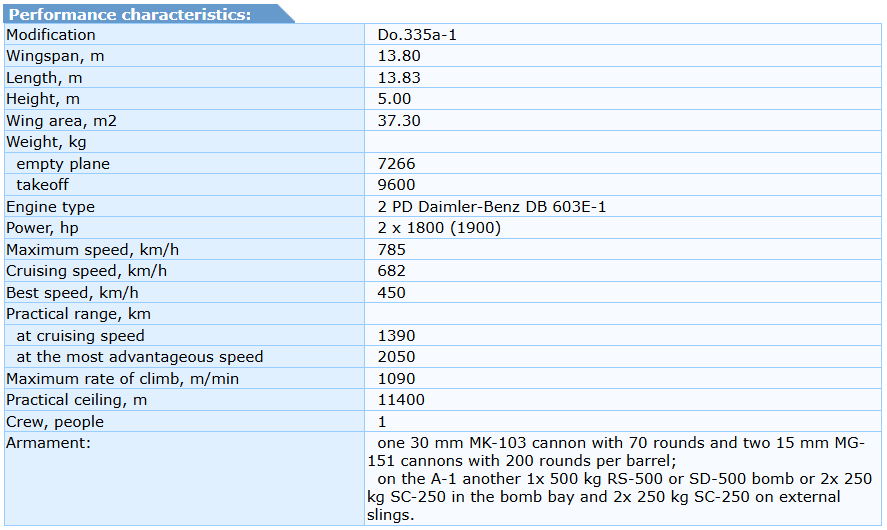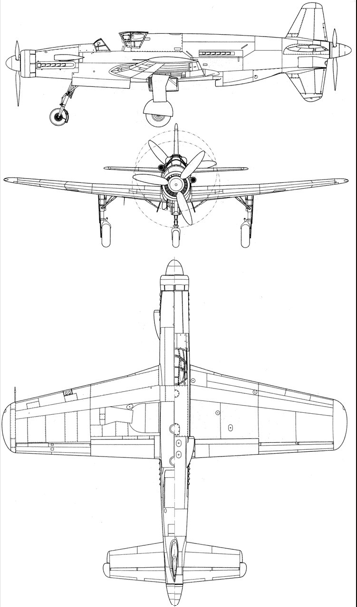
Dornier "Do-335 Pfeil", Fighter
Developer: Dornier
Country: Germany
First flight: 1942
Type: Heavy Fighter
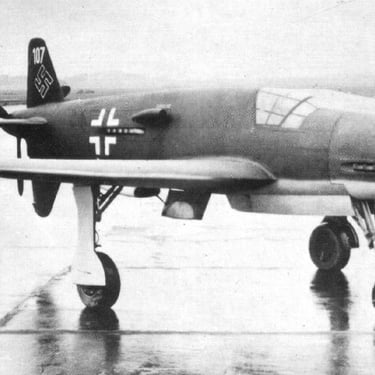
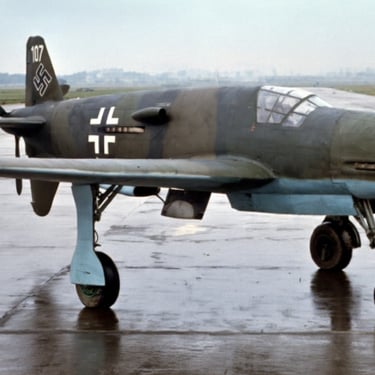
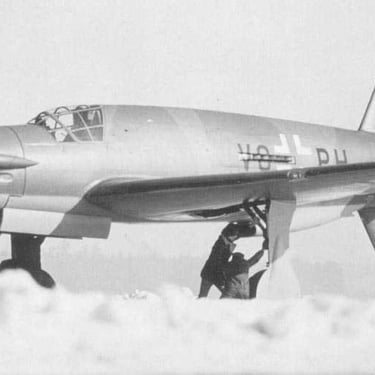
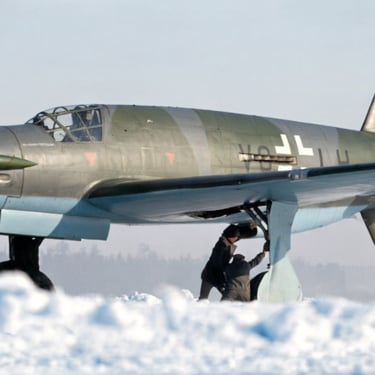
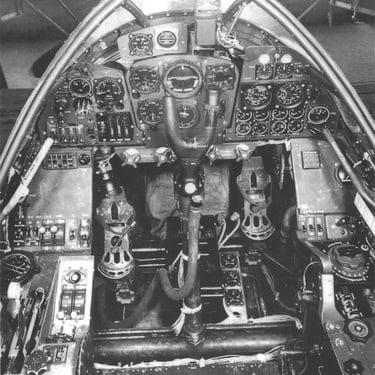
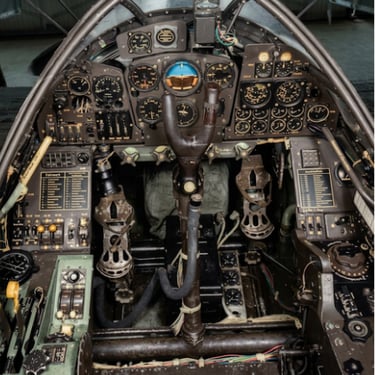
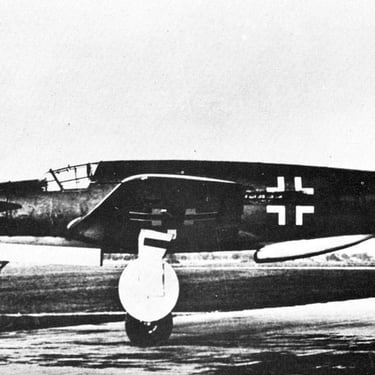
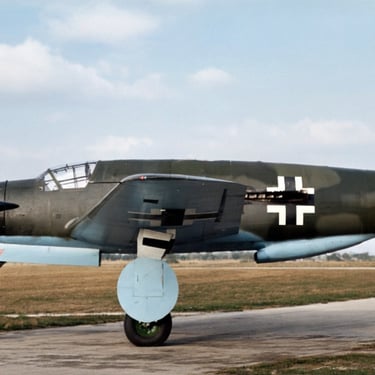
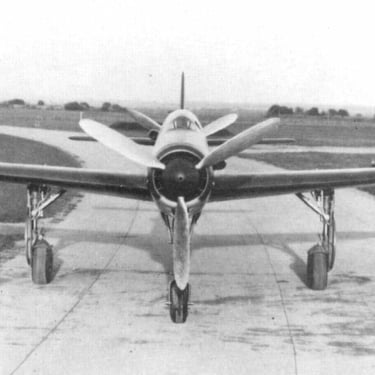
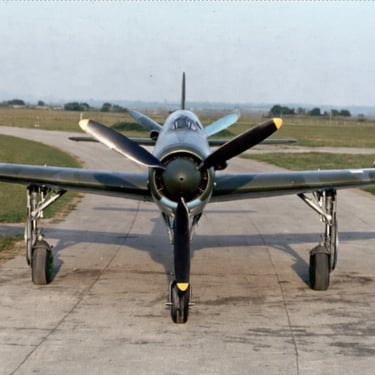
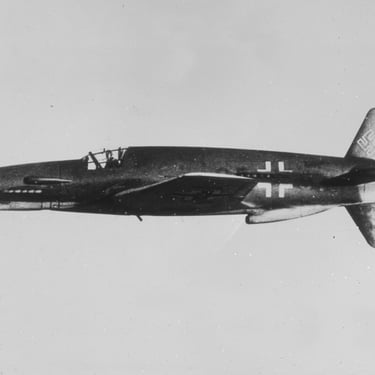
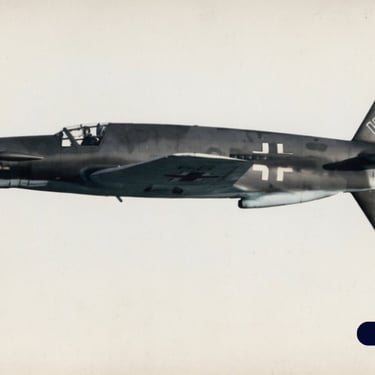
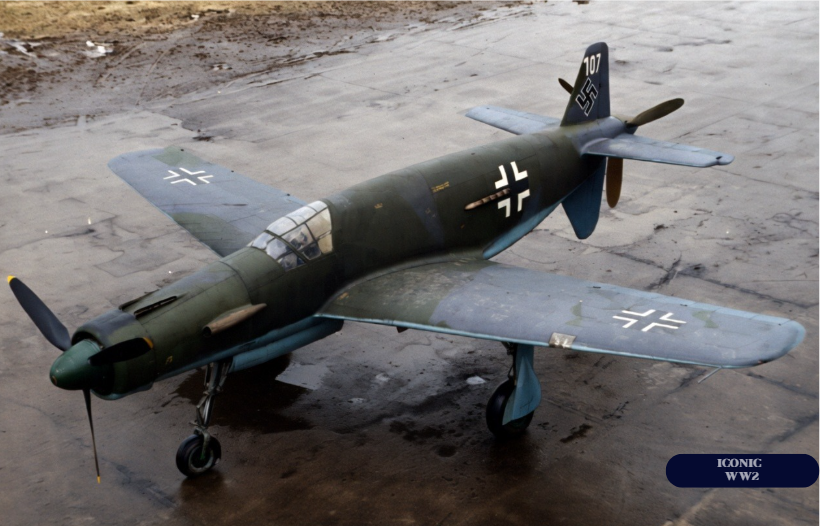
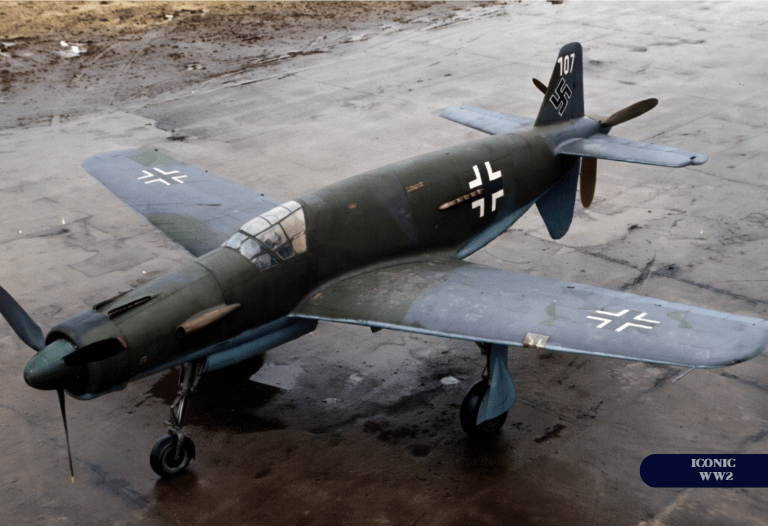
Dornier Do-335 Pfeil fighter
The Do-335 was a heavy German fighter-bomber during World War II, often referred to in various sources as the Pfeil (German for "arrow"). The Do-335 "Pfeil" was the fastest piston-engine aircraft in history. This aircraft possessed a truly revolutionary design, although its tandem engine layout was not entirely new. By the end of the war, Germany had assembled only 37 of these aircraft, and they did not actively participate in combat.
If a competition were held to determine the most unusual aircraft designed during World War II, the Dornier Do-335 "Pfeil" would have an excellent chance of taking home a prize. Unlike most of its competitors, which, despite their advanced designs, lacked significant combat value, the Do-335 was a highly successful combat aircraft. The Do-335 "Pfeil" was one of the fastest piston-engine fighters in the history of aviation. Had German designers succeeded in resolving all the technical problems that plagued the fighter throughout its development and organizing its mass production, the Luftwaffe would have acquired a machine of exceptional quality, capable of effectively countering any Allied aircraft. Therefore, it is not surprising that after the end of World War II, the Allies actively tested the Do-335s they had acquired. However, the rapid development of jet aircraft quickly rendered the Do-335 obsolete as a combat aircraft.
The design of this fighter was based on the tandem engine layout, which K. Dornier patented back in 1937. According to the renowned German aircraft designer's design, in addition to the traditional front engine with a tractor propeller, a second engine with an extended shaft and a pusher propeller was located behind the cockpit. The pusher propeller was located behind the tail unit.
The Do-335 "Pfeil" was a multi-role aircraft, intended to serve as a heavy day fighter, a high-speed bomber (with a bomb load of 500-1000 kg), a night fighter (single- and two-seater), a reconnaissance aircraft, and a trainer. The Do-335 represented the third variation on the concept of using two engines in the aircraft's centerline—the rear engine drove a tail rotor located behind the cruciform tail. This unusual propeller position was nothing new; it had been used as early as 1911 by Tatin-Polhan in the "Aero-Torpille." However, it's worth noting that before the Do-335, no one had used this rear propeller arrangement in conjunction with a conventional tractor propeller at the front, which is what made the "Strela" unique among all other combat aircraft.
By the end of 1942, after the design was completed in Germany, preparations for production of the new aircraft began. By the time the Do-335-V1 made its maiden flight on October 26, 1943, Dornier had received an order for 14 prototypes, 10 pre-production Do-335a-0s, 11 production aircraft—the Do-335A-1 single-seat fighter-bomber variant, and three Do-335a-10s and -12s—two-seat trainers. Following preliminary handling evaluations at Oberpapenhofen, the first aircraft was transferred to the test center in Rechlin for official testing. Despite some wobbling during high-speed flight, the Rechlin pilots were delighted with the Do-335's performance. German pilots noted the aircraft's excellent maneuverability, particularly its acceleration and turn radius. The Do-335 could fly with only one front or rear propeller operating. Even with the nose engine off, the aircraft still maintained an impressive speed of up to 557 km/h.
The Do-335 was a low-wing monoplane of all-metal construction. The aircraft's wing was trapezoidal, with a leading-edge sweep angle of 13°. The wing featured a single spar and a stressed skin. The wing also housed compressed air tanks and an armored hydraulic accumulator. The aircraft featured a cruciform tail with a load-bearing stabilizer, lower and upper vertical stabilizers. The tail structure was all-metal, with the exception of the leading edges, which were made of wood and housed the radio antenna.
The fuselage of the Do-335 fighter consisted of four parts: the pilot's cabin with a compartment for retracting the nose landing gear, a compartment with fuel tanks (in the two-seater version, the radio operator's cabin was also located here), the rear engine compartment, and the tail section.
In the cockpit, some of the instruments were located on the left and right instrument panels, each 300 mm wide. The right panel housed the engine warning panel and the FuG-16 radio control panel. The pilot's emergency ejection lever was also located here. When activated, the upper vertical stabilizer and rear propeller were ejected, preventing the pilot from being injured in a collision. The left panel housed the fuel pump controls, along with a lever for selecting the rear and front engines. The main instrument panel, located in front of the pilot, housed the flight instruments, which also allowed for blind flight.
Forward and downward visibility from the cockpit was provided at an angle of -5° to the horizontal; sideward visibility was fairly good, as the cockpit was located near the wing's leading edge. Later fighters further improved visibility with the use of canopy blisters. Forward visibility, which had been impaired by the curvature of the canopy panels, was planned to be improved in the future by installing flat glass. Behind the cockpit was the fuel tank; its capacity in the two-seater version was reduced by the addition of the radio operator's compartment. Beneath the fuel tank was the bomb bay, which, in the night fighter version (single- or two-seater), housed an additional fuel tank.
The aircraft's trapezoidal metal wing with rounded tips consisted of two halves. Access to the wing joints was provided through special small hatches. The main wing spar had a box-section. Special knives for cutting barrage balloon cables were mounted on the leading edge of the Do-335 fighter's wing. A 3-meter-long, self-sealing fuel tank was located in the leading edge of each of the two wing halves, installed through a special long, narrow hatch located on the underside of the wing.
The wing's leading edge was designed to accommodate FuG-220 radar antennas, so it was made of wood. No de-icer was installed, although an electric de-icer from Siemens or AEG was planned. A laminar-flow wing was also planned for the fighter.
The aircraft's cruciform tail unit was unusual. The stabilizer and vertical stabilizer were of a twin-spar design, while the lower vertical stabilizer was equipped with a protective buffer, which was equipped with a shock absorber. The elevator controls were rigid. The upper half of the vertical tail could be jettisoned in an emergency (if the pilot was ejected from the cockpit). The aircraft's landing gear was tricycle, with the nose landing gear retracting toward the forward fuselage, rearward. The main landing gear wheels retracted into the wing, but not completely. Therefore, the doors covering the main landing gear wheels had spacers.
By September 1944, Germany had already formed a special unit, Erprobungskommando 335, whose primary mission was to conduct combat testing of the Do-335. Several Do-335A-0 and possibly Do-335A-1 aircraft were assigned to this unit. The pilots' primary task was to develop tactics for effectively employing the aircraft as a high-speed bomber, interceptor, and reconnaissance aircraft. Captain Alvon Meyer was appointed commander of this unit. On October 26, 1944, a special RLM order was sent to numerous anti-aircraft batteries across the Reich, warning them of the appearance of a new German aircraft in the skies. This order outlined the distinctive features of the new aircraft: tandem engines and a cruciform tail.
It's worth noting that aircraft from Erprobungskommando 335 rarely came into direct contact with Allied aircraft. Only a few such incidents were recorded. According to unconfirmed reports, in the fall of 1944, one Do-335 was damaged by enemy fighters and made an emergency landing near Reims. The loss of one Do-335 has also been confirmed. On December 24, 1944, while flying from Oberpfaffenhofen to Rechlin, a Do-335A-08 was lost near Donefeld. The pilot of this aircraft was killed, but the cause of the plane's destruction remains unknown. It could have been an encounter with enemy aircraft or a mechanical failure. Before the end of the war, two more pilots lost their fighters to the aircraft, in March and April 1945.
In mid-April 1945, pilots of No. 3 Squadron RAF, flying Tempest fighters, intercepted a Do-335 "Pfeil" over the Elbe. The aircraft, which was evading them at high speed, was first spotted by French ace Pierre Clostermann. Later, pilots from the 325th Fighter Group of the US 15th Air Force, flying Mustang fighters, also spotted it. In both cases, the German aircraft easily outran its pursuers. One of the Do-335s captured by the Allies had victory insignia on its skin, but it is highly likely that these victories were scored by the pilot before he even entered the cockpit.