Focke-Wulf "Ta-154 Moskito", Fighter
Developer: Focke-Wulf
Country: Germany
First flight: 1943
Type: Fighter
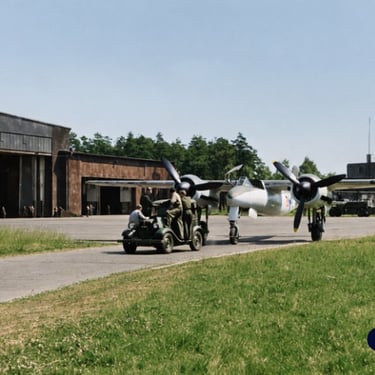
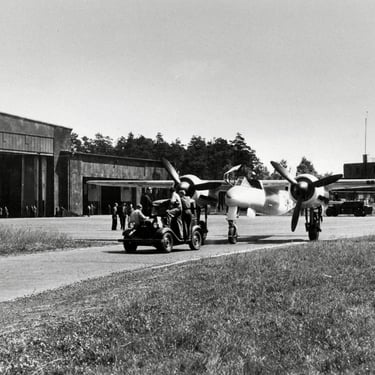
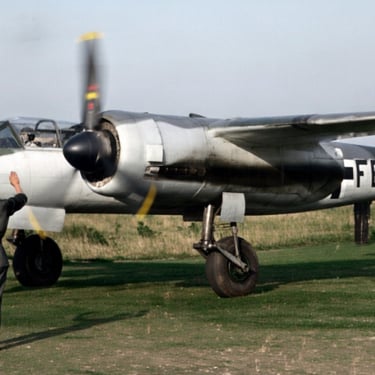
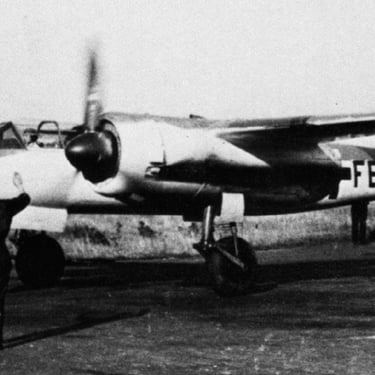
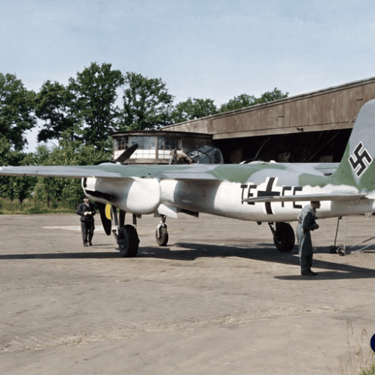
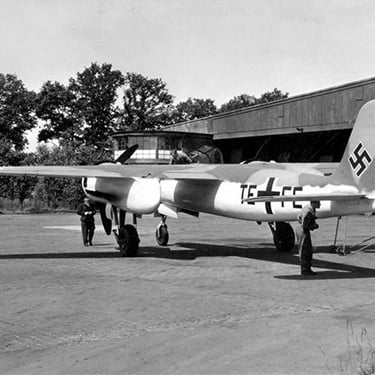
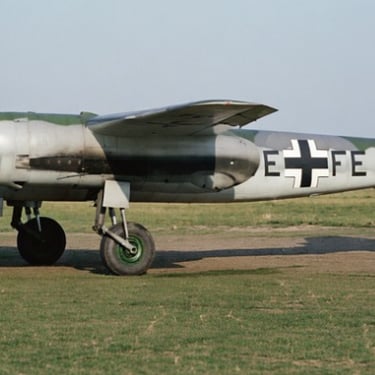
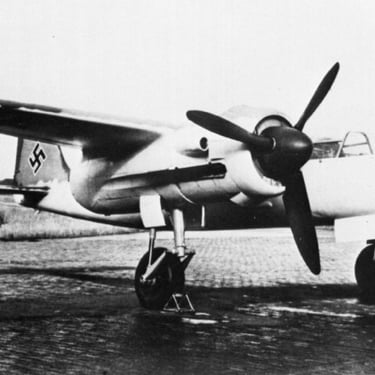
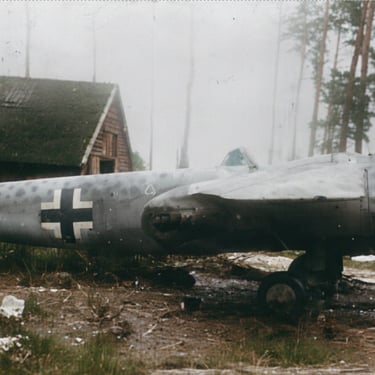
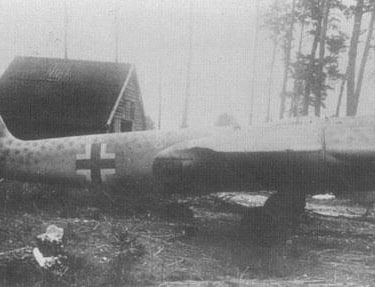
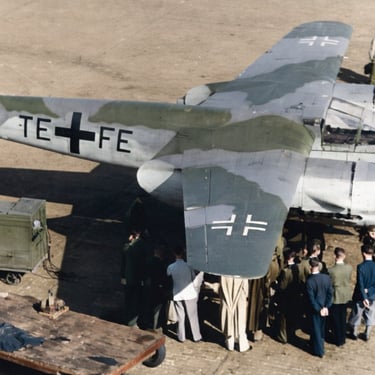
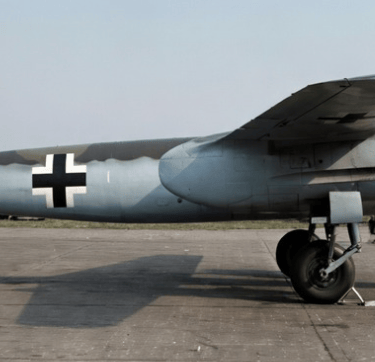
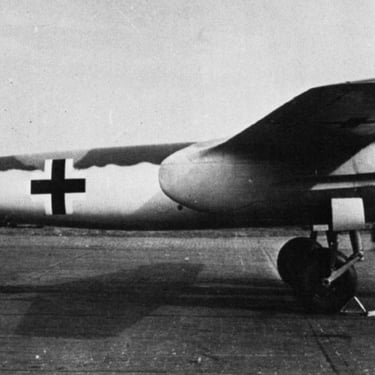
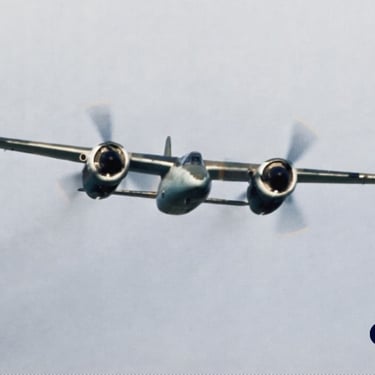
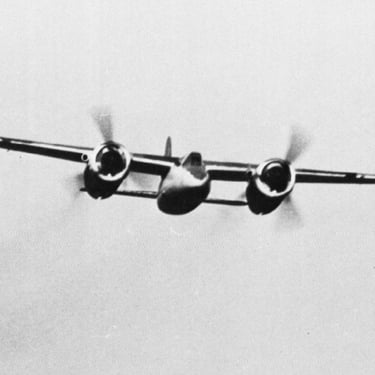
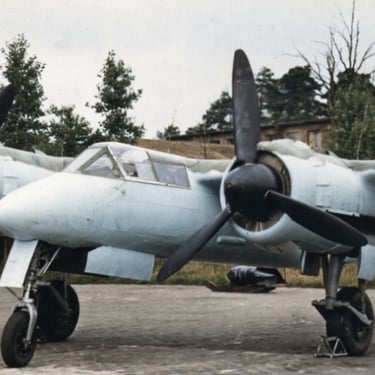
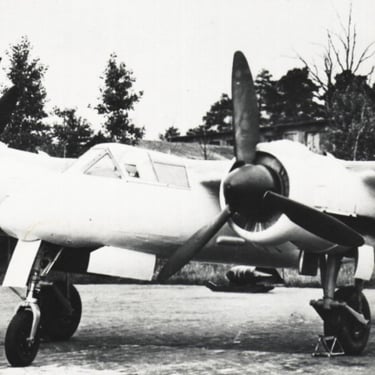
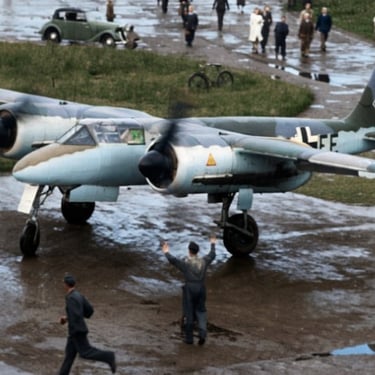
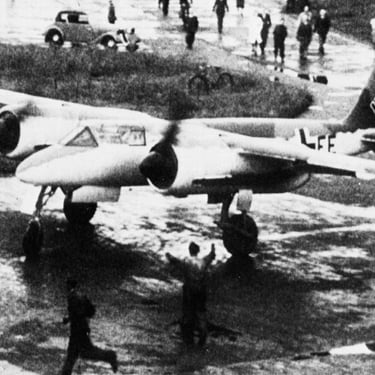
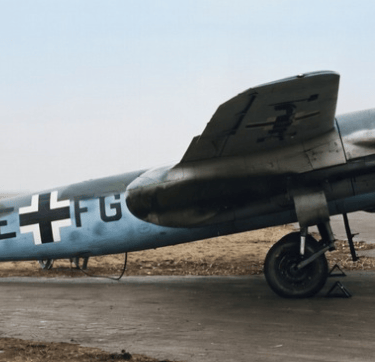
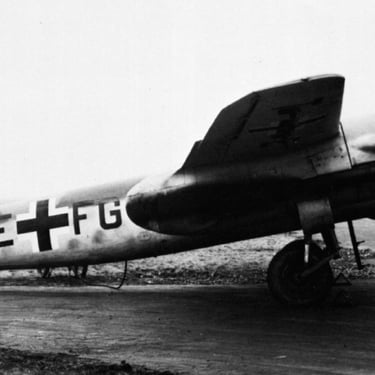
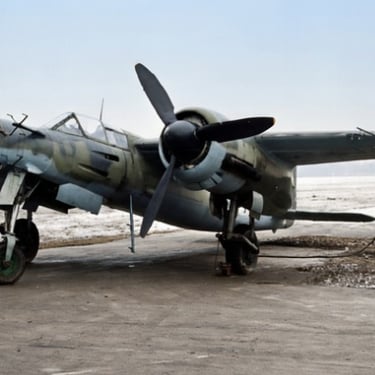
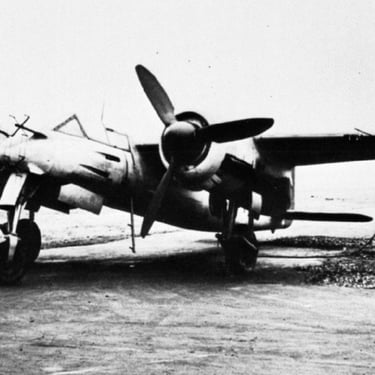
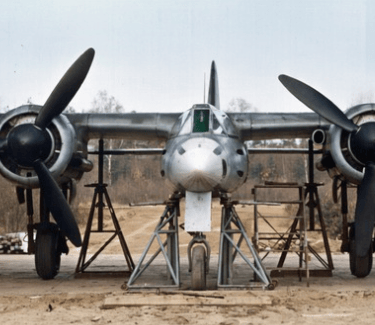
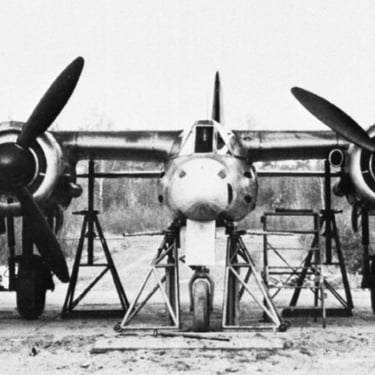
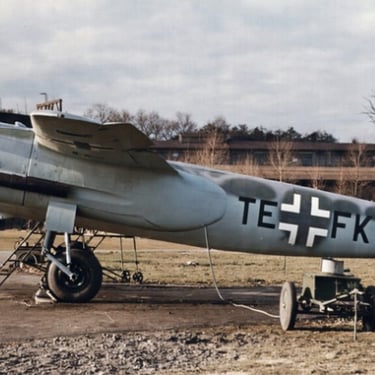
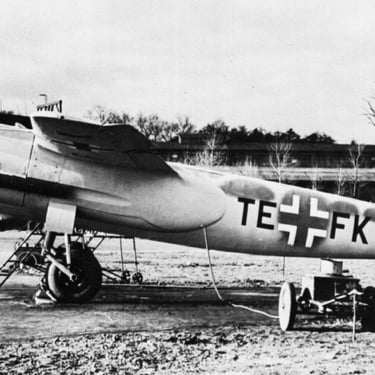
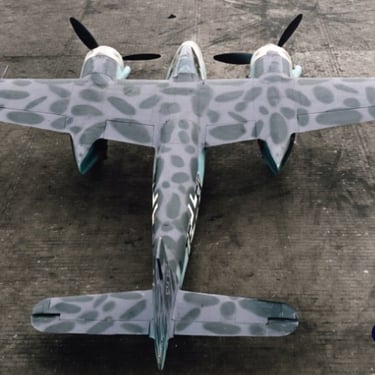
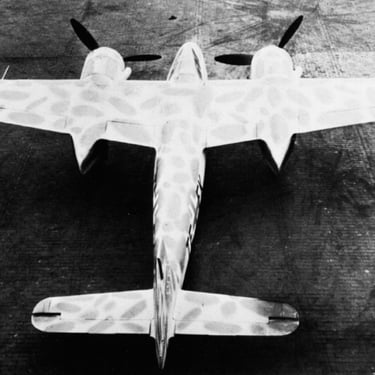
Focke-Wulf Ta.154
Before the outbreak of World War II, Göring, the Luftwaffe's staff, and its top leadership were unwilling to consider the very possibility of a threat to Germany from night bomber raids. Such defeatist sentiments had no place in Hitler's plans, which relied on a "blitzkrieg." An exception to the rule was the creation in 1940 of a night fighter force led by Colonel (later Major General) Kammhuber. Kammhuber's night fighter force steadily grew, allowing them to achieve notable successes in combat against a small number of slow, poorly armed bombers, which, moreover, employed formulaic tactics. The first general "of night fighters" demonstrated admirable energy, transforming them into a formidable force despite the use of non-target aircraft. However, the development of more effective interceptors, as Kammhuber insisted, was delayed. Meanwhile, elementary precautions made such work imperative in view of the inevitable emergence of the next generation of bombers.
In the summer of 1941, the Luftwaffe's strain on the front lines increased dramatically. As a result, the OKL resisted all of Kammhuber's attempts to increase night fighter strength. Furthermore, Erhard Milch banned the development of specialized night fighters, believing that existing aircraft were adequate. The steady increase in night raids by British bombers in the spring of 1942 reached its peak on the night of May 31 during Operation Millennium. 1,046 bombers, having broken through the Kammhuber Line, bombed Cologne. The weakness of these improvised night interceptors can be gauged by the fact that, combined with anti-aircraft artillery, they managed to shoot down only 3.8% of the attacking aircraft.
Heinkel had already begun work on the He.219 night fighter. Kammhuber placed the order immediately after the decision blocking work on such aircraft was overturned. At the same time, after a series of sporadic meetings, Kurt Tank authorized research on a two-seat all-weather air defense fighter. The Technical Department's requirements called for a 2.75-hour flight endurance, armament of four 20- or 30-mm cannons, and a technologically advanced design with extensive use of wood. The project was given such a high priority that Tank was warned of the possibility of receiving the contract even before flight testing began.
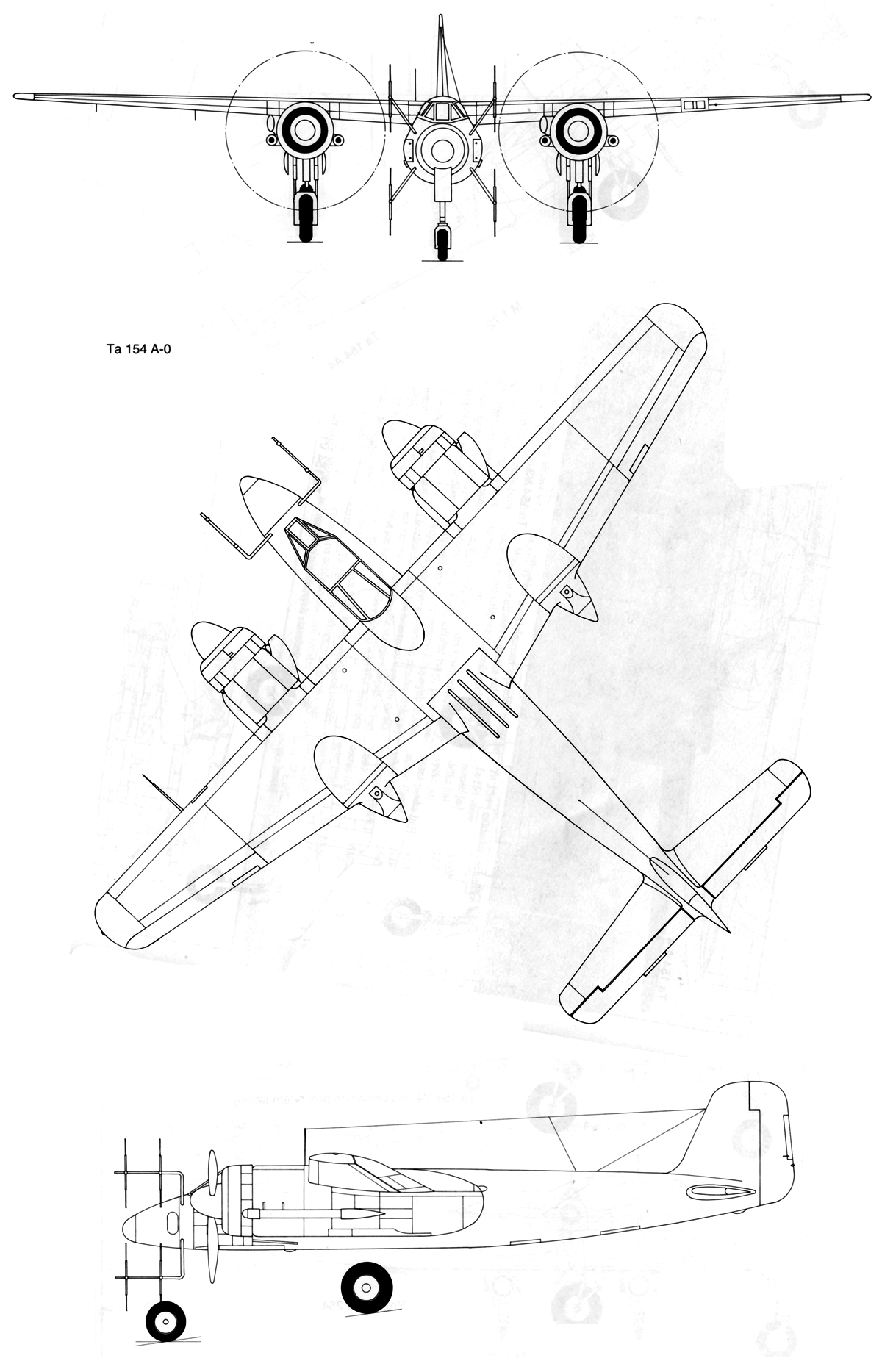
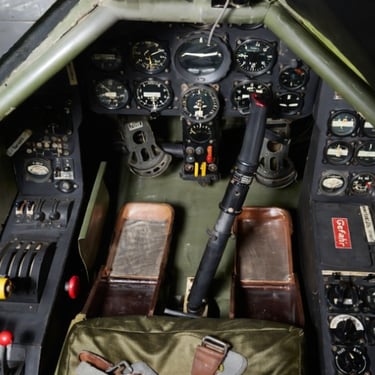
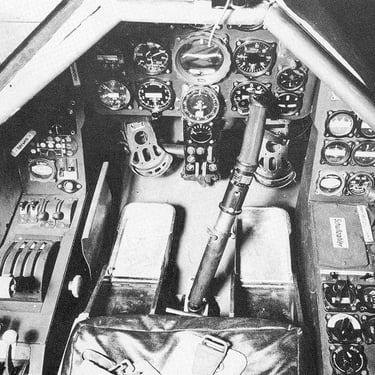
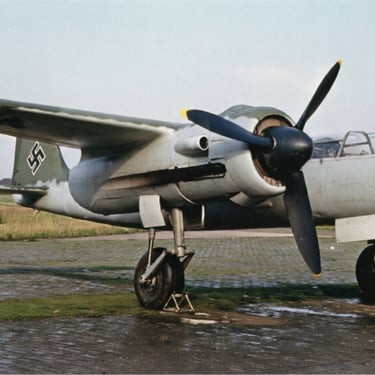
General development work began in September 1942. Sketches were presented to the Technical Department a month later. After approval, the project received the designation Ta.211. This was the first use of the "Ta" designation with the RLM serial number, which generally reflected the high authority of Tank, who had just been elected vice president of the Academy of Aviation Sciences. The extensive use of wood in the aircraft's construction provoked objections from some RLM employees, despite the official requirement to use readily available materials. They believed the skill level of those working in the woodworking industry was insufficient. Furthermore, although wood was a classic aviation material, the German aircraft industry had little experience using it in high-speed aircraft construction. While strength calculations for a metal structure were not an issue, calculating the strength of a wooden structure could have delayed the design work. However, the debut of the British Mosquito earlier in the year dispelled these concerns. As a result, with the award of the contract in November, the Focke-Wulf project was given top priority, and German propaganda began referring to it as the "Teutonic Mosquito." By this time, RLM had stopped assigning numbers from a previously selected set for a specific company, instead using numbers that hadn't yet been used. Thus, at Tank's request, Focke-Wulf received the numbers 152-154. Tank chose the number "154" for the new fighter. The number "211" was later assigned to the He.219 modernization project. Senior engineer Ernst Nipp oversaw the detailed design. The aircraft was a cantilever monoplane with a monocoque wooden fuselage, constructed as a single piece from the forward bulkhead to the elevator. The two-spar wooden wing was attached to the fuselage with four bolts. The forward fuselage and engine nacelles were covered with duralumin sheets, and the control surfaces were fabric. The ailerons, slotted flaps, elevators, and rudder were made of light alloy. Everything else was made of wood. The tricycle landing gear with nose wheel was hydraulically retracted. The two crew members were seated one behind the other under a single canopy that opened to the right. Crew protection was provided by 50 mm thick armored glass in the canopy, 30 mm thick side armored glass in the canopy, 12 mm thick armor plates on the front frame, and 8 mm thick armor panels on the sides of the cockpit. All fuel was stored in a 1,500 liter tank behind the cockpit. Each nacelle contained a 115 liter oil tank. The design called for two MG-151/20 cannons with 200 rounds per gun and two MK-108 cannons with 110 rounds per gun. They were mounted on the fuselage under the wings. The magazines for the 20mm cannons were located in the wing center section, while the 30mm cannons were located in the fuselage. Design development, assembly of the first aircraft, and static testing proceeded concurrently to meet the deadlines set by the Technical Department.Rather unexpectedly (given the time constraints), a full-scale strength testing program for the monocoque fuselage was undertaken. The Count Zeppelin Research Institute used runs in a test tank to test the fuselage's dynamic loads. It was calculated that dynamic loads at high atmospheric speeds corresponded fairly accurately to loads at lower speeds in a denser environment.
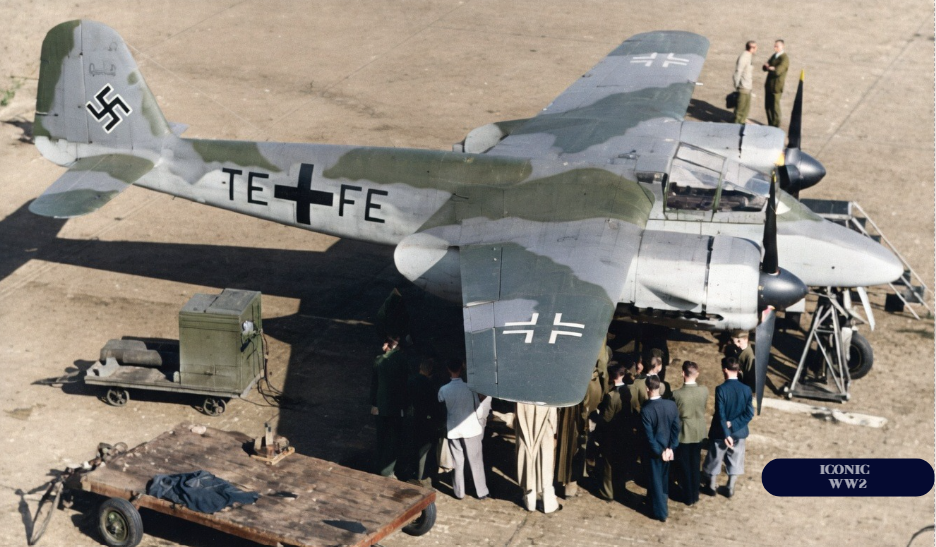
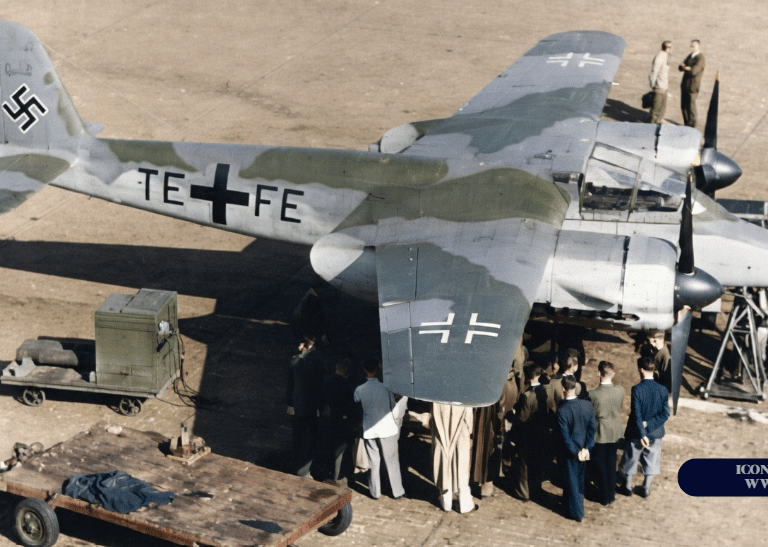
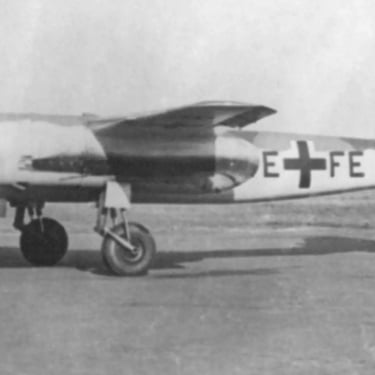
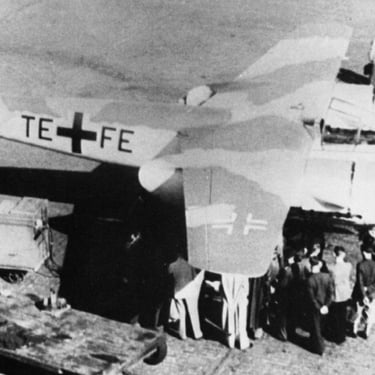
In the spring of 1943, Focke-Wulf began underwater tests of the completed Ta.154 fuselage in Alatsee, Bavaria. The fuselage was attached under a float equipped with measuring instruments. Assembly of the first aircraft proceeded rapidly. It was decided to use the more powerful Jumo-213 instead of the Jumo-211N (producing 1,460 hp at ground level). However, the latter was not ready by the time the first two prototypes were built, which used Jumo-211Rs with frontal radiators. The propellers had wide blades. Engine power at takeoff was 1,350 hp, and at 3,000 m, 1,480 hp. The first prototype Ta.154-V1 (TE+FE) took off on July 1 from Hannover-Landenhagen airfield, piloted by Flugkapitän Hans Sander. Without radar antennas and armor, it already showed a speed of 700 km/h at the beginning of tests.
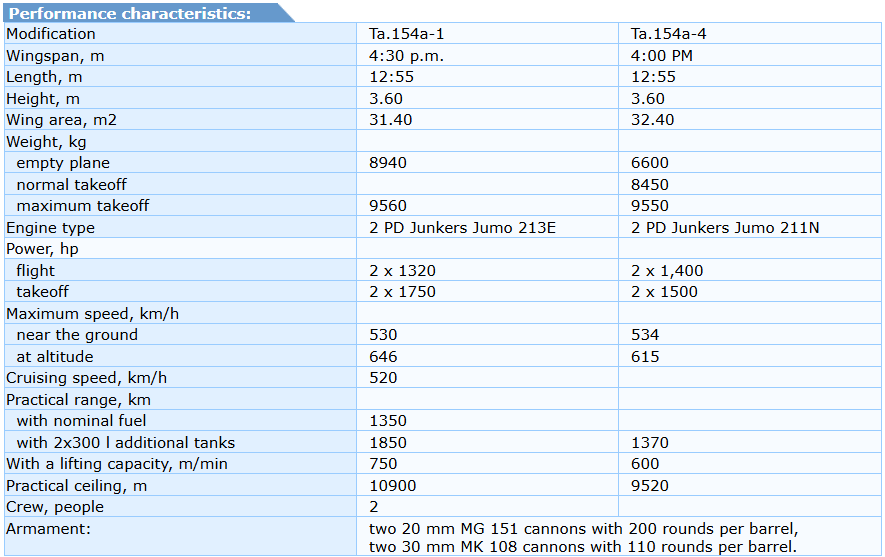
Soon, the second experimental Ta.154-V2 (TE+FF) was ready, featuring a FuG-212 "Lichtenstein" C-1 radar with four antennas in the nose. On November 25, 1943, the first experimental machines were joined by the Ta.154-V3 (TE+FG), also known as the Ta.154A-03/U1 and considered the standard for the series. It received Jumo-213E engines with a three-speed, two-stage supercharger, developing 1,750 hp at takeoff, 1,320 hp at 10,000 m, and 1,580 hp in emergency mode. Full armament was also installed. Despite a fairly significant increase in engine power, the maximum speed was reduced by 12% due to the additional drag of the antennas, gun ports, and flame arresters. Nevertheless, the flight performance was sufficient for an immediate order of 250 Ta.154A-1 fighters. The initial contract called for the production of 15 prototypes for testing. As a result, these aircraft received "ferzukh" numbers and pre-production designations. The Ta.154-V4 (TE+FH), which flew on January 19, 1944, was also known as the Ta.154A-04, and the V5 (TE+FI), which flew on February 23, was known as the Ta.154A-05. A total of seven initial aircraft were built in Langenhagen, the last of which flew in March. The remaining pre-production aircraft were completed in Erfurt. They differed from each other mainly in the shape of the radar antennas. The FuG-212 radar "mattress" on one of the prototype aircraft was replaced with a single antenna in the nose, while others were equipped with the "antler" antennas of the FuG-220 Liechtenstein SN-2 and a FuG-350 Naxos Z receiver radome above the cockpit. The equipment included a Revi-16B sight, FuG-10P and FuG-16ZY radios, a FuG-25a transponder, a FuG-101a altimeter, a FuBl-2 blind landing system, and a ReGe-6 radio compass.
The assembly line for the Ta.154A-1 was set up in Posen, but the first two production aircraft (KU+SN and KU+SO) were built in Erfurt. The second flew on June 13, 1944, but on June 28, it crashed after a wing broke off in flight. Tank immediately stopped wing production. A thorough examination of the wing fragments was conducted to determine the cause of the incident. It quickly became clear that the cold gluing process used in production was causing warping of the skin. These problems did not occur on pre-production aircraft, which used Goldmann Tego-Film adhesive, but the Goldmann plant was destroyed by a British bomber raid on Wuppertal almost immediately after Ta.154A production began. The new adhesive had not been sufficiently tested, and the plywood gluing defect was not detected.
Tank, who by then was responsible for the development of all-weather fighters for the entire German aviation industry and had received a professorship at the Braunschweig Technical School, was accused by Göring of sabotage for his decision to discontinue wing production. The Erfurt factory belonged to the Gauleiter, who complained directly to the Reichsmarschall, and Göring was unaware of the Ta.154's intended purpose, much less the problems with production technology. Meanwhile, serial production of the Ta.154A-1 began in Posen. The first aircraft produced there (KU+SP) flew on June 30, two days after the crash of the second production aircraft. During the landing approach, the right flap failed to deploy, and the aircraft was also completely destroyed. Production continued. By August 14, 1944, when RLM terminated the fighter program, seven Ta.154A-1s had flown. Following the loss of the second and third production aircraft, the Ta.154A-0 also suffered a catastrophe, when one engine caught fire during a test flight. As a result, the Technical Department began to have serious doubts about the Focke-Wulf fighter, especially given the significant problems subcontractors were having with the production of wooden components. The program was terminated.
By this time, several projects had been developed based on the existing design, including the Ta.154C and Ta.254. The former featured Jumo-213A engines with a takeoff power of 1,776 hp and 1,600 hp at 5,500 m, a metal forward fuselage, a teardrop-shaped rearward-sliding canopy, ejection seats for the crew, and a pair of MK-108 cannons in a Schrage Musik mount. The Ta.254 was a high-altitude multirole aircraft with a wing area 30% larger. The Ta.254A was planned to be powered by Jumo-213 engines, and the Ta.254B by DB-603s. The armament was similar to that of the Ta.154A-1. The Ta.254A-1 and A-3 were expected to reach speeds of 680 and 735 km/h (430 and 450 mph, respectively) at an altitude of 10,600 m (35,500 ft) (the A-3 using the MW-50). The Ta.254B-3, using the MW-50, was expected to reach 715 km/h (448 mph) at an altitude of 10,500 m (35,500 ft). With a fuel capacity of 2,630 liters, the estimated range was 1,400 km (880 mi) at a speed of 585 km/h (365 mph). Tank never realized these plans, and the announcement of the "urgent fighter program" put an end to the Ta.154 forever. Several Ta.154A-1s with FuG-218 "Neptune" radars were used for a time by I/NJG.3 in Stade, beginning in January 1944. At the same time, several proposals emerged to use the completed aircraft as "disposable" weapons against American bombers. In the summer of 1944, the idea of using the Ta.154A as a "Hookpack" alongside the Fw.190A-4 began to be explored. The Ta.154, with two tons of explosives in its nose, was controlled by the pilot of an Fw.190A mounted on his back, similar to the "Mistel" carried by the Ju.88. The Fw.190 pilot was supposed to direct the Ta.154 toward the bomber formation, after which he would release his fighter. The Ta.154's warhead was detonated by radio. Six Ta.154A-0s were converted to serve as carriers, but after testing by several pilots, including Horst Lux of Junkers, the work was abandoned, as the small weight difference between the carrier and the aircraft being carried did not guarantee safe release.
Another use for the Ta.154 was the so-called "formation breaker." In this version, one aircraft was towed by another using a 6-meter rigid tug. Near the bomber formation, the tug would put the coupling into a shallow dive, after which it would release the towed aircraft, which was loaded with explosives. Control was maintained through a wire connecting the aircraft's wings. Just before reaching the target, the towed Ta.154 would finally release. This project never progressed beyond the sketch stage. However, another idea for using the Ta.154 as a "formation breaker" was almost realized. In late 1944, the Posen factory received instructions to convert six half-finished Ta.154A-1s into manned "aerial torpedoes."
A primitive cockpit with a downward-facing ejection seat was installed in the center of the fuselage. The forward section held two tons of explosives with three detonators: impact, time, and acoustic. The takeoff weight of such an aircraft, including pilot, explosives, and 1,270 liters of fuel, was 9,580 kg. The pilot was supposed to aim the aircraft at a formation of bombers and eject. All six aircraft were completed but never flew.