Mitsubishi A5M Fighter
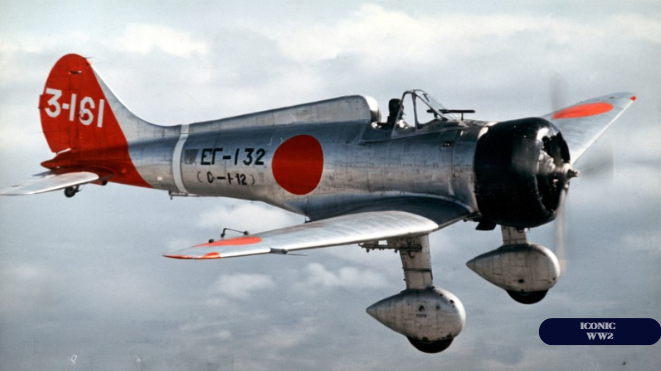
Developer: Mitsubishi
Country: Japan
First flight: 1935
Type: Carrier-based Fighter aircraft
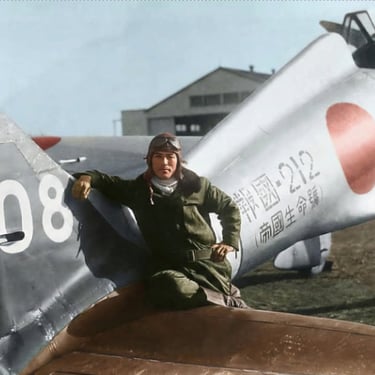
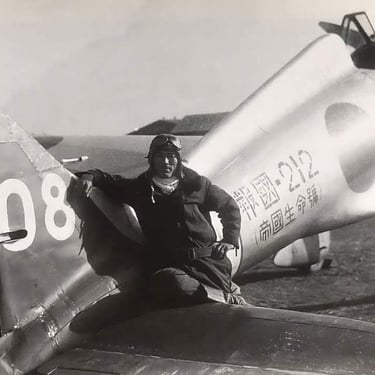
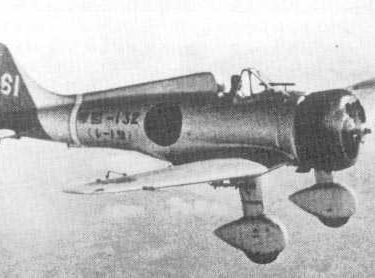
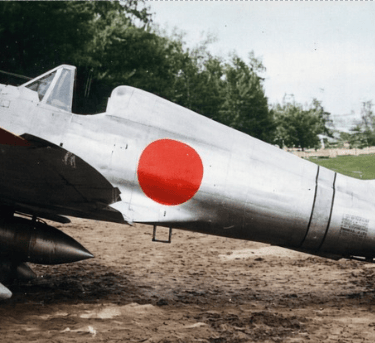
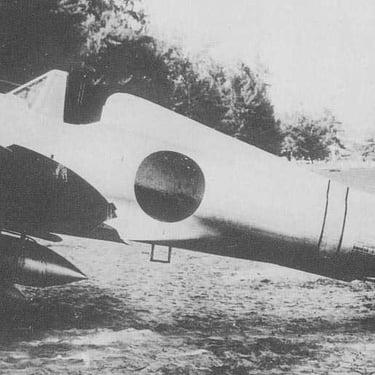
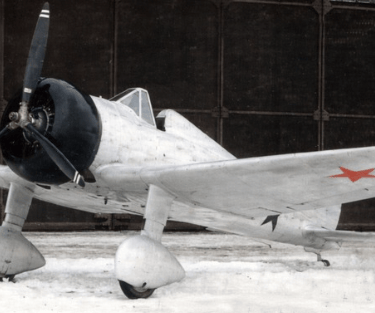
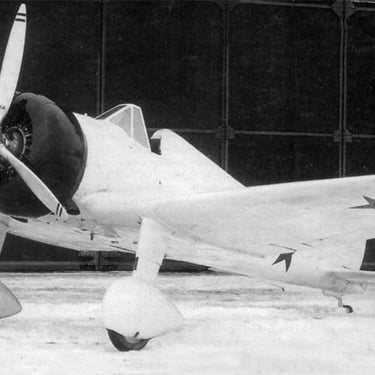
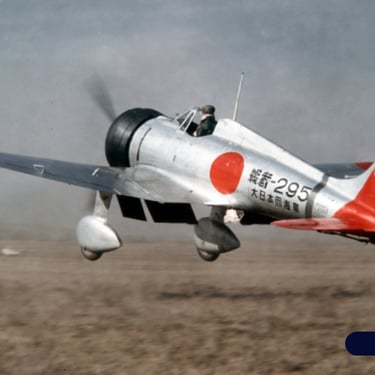
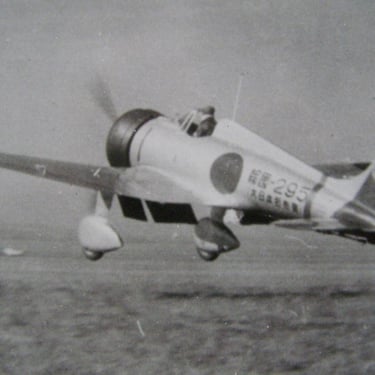
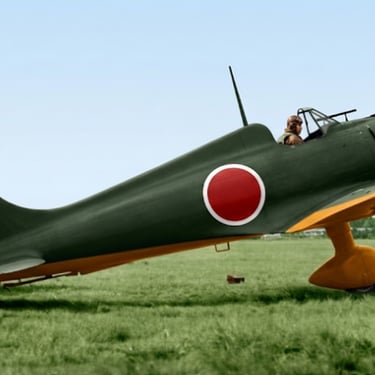
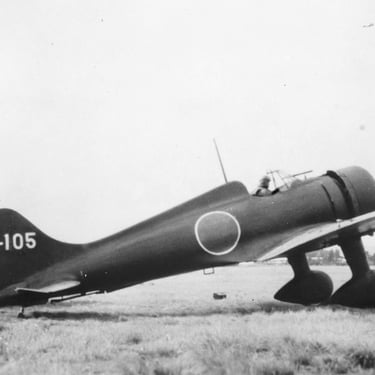
In the mid-1930s, high-speed monoplane fighters began arriving in ever-increasing numbers in the air forces of various countries. Carrier-based aviation, however, remained virtually monopolized by biplanes. On American and British aircraft carriers, fighter units were entirely equipped with classic biplanes, with their bulky wing boxes and numerous struts and bracing. Only France, on its sole carrier, the Béarn, had D.371T1 parasol monoplanes. This was due to the strict landing speed limit imposed by the small flight deck. It was not until 1935 that the first carrier-based fighter, a cantilever monoplane, appeared. This aircraft was created by aircraft designers from Japan, a country whose aircraft manufacturing capabilities were then not highly regarded internationally. Its factories were considered backward, and its designers were considered capable of merely copying the achievements of their European and American counterparts. The fallacy of this approach was only realized when Japanese aviation achieved a series of decisive victories over the air forces of its adversaries in the first year of the Pacific War.
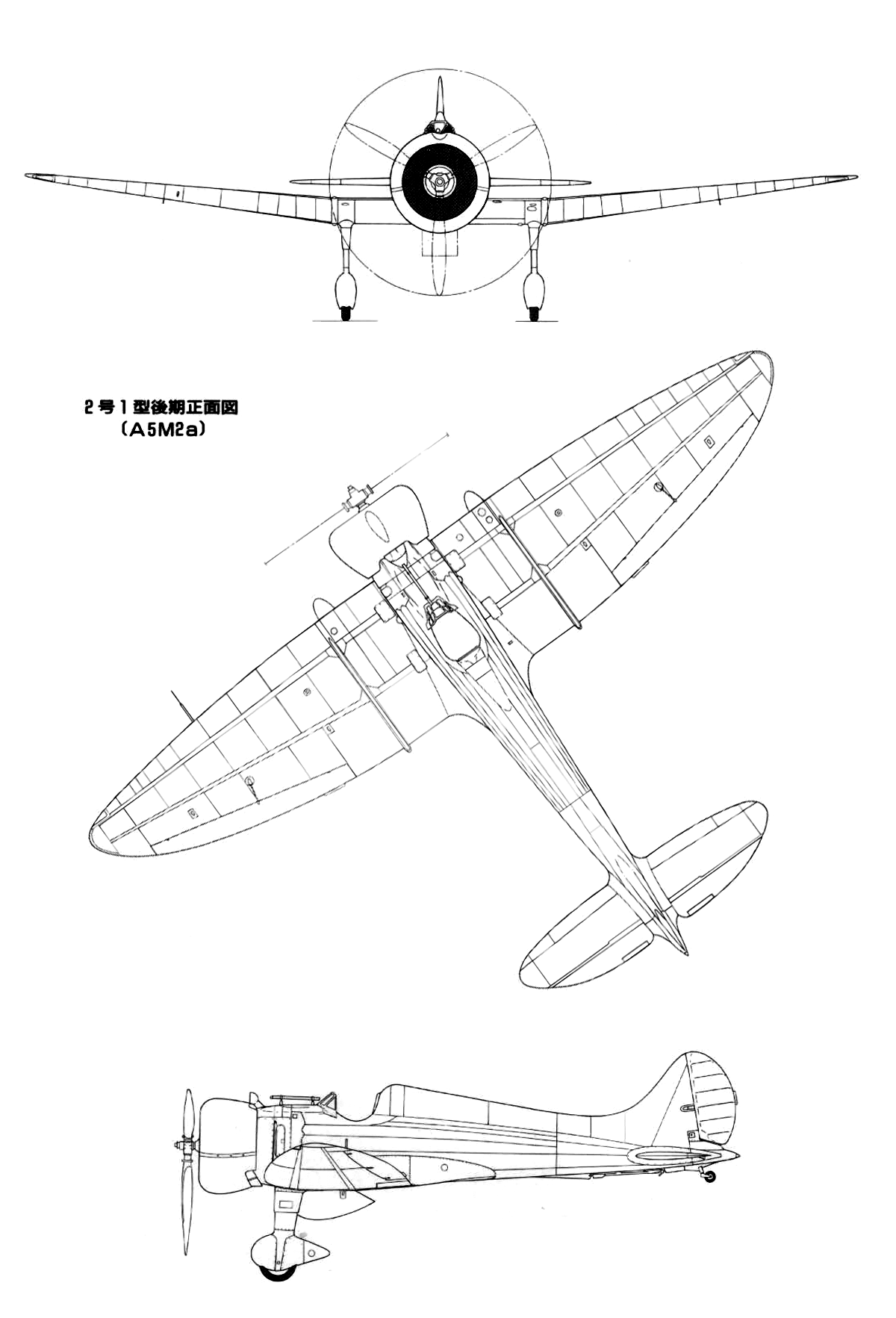
The A5M carrier-based fighter was designed based on the "9-Se" specification issued by the Japanese Naval Aviation Headquarters in February 1934. The specifications defined only the aircraft's basic parameters, leaving no restrictions on the design layout. This enabled designer Jiro Horikoshi, who led the design team from Mitsubishi Jukoge, to make a truly innovative decision. Although Horikoshi sketched out other options, including a sesquiplane configuration, the cantilever monoplane, designated the Ka-14, was immediately adopted. The desire to increase maximum flight speed and the limitations imposed on the wingspan by the dimensions of the carrier's cargo elevators resulted in a wing loading of 77.2 kg/m², quite high by Japanese standards . The aircraft was designed very quickly: the first prototype was completed within 11 months. Weight control was so strict that the resulting fighter turned out to be even lighter than expected.
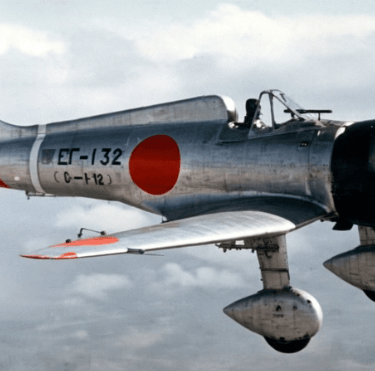
The aircraft was powered by the Nakajima Kotobuki 5 radial engine (producing up to 600 hp), the lightest of the available engines, with a two-bladed propeller. The landing gear was fixed—the wheels were simply covered with teardrop-shaped fairings. According to the designers, retractable landing gear would have increased speed by only 3%, but would have significantly complicated the aircraft and increased its weight. The rational all-metal design, which combined high strength with light weight, coupled with excellent aerodynamics, promised a significant leap in performance.
On February 4, 1935, test pilot Kajima made the Ka-14's maiden flight. During factory tests, the prototype achieved a speed of 444 km/h at an altitude of 3,200 m (the target was only 350 km/h). Other requirements were also exceeded. Navy representatives didn't trust the company and demanded proof tests by naval pilots. But naval test pilot Kobayashi managed to achieve 449 km/h at the Kagamigahara test base!
On the second prototype, the designers added flaps that improved the fighter's landing characteristics, which was crucial for a carrier-based aircraft. They also lengthened the fairing, installed a Kotobuki 3 gearless engine with a maximum output of 715 horsepower, and replaced the originally chosen inverted gull wing with a straight wing. This improved controllability and stability without sacrificing performance. But speed isn't everything. In Japan, as elsewhere, the primary tactic used by fighter-on-fighter combat was close, maneuverable combat on the horizontal—what the British rather figuratively called "dogfighting." Although the Ka-14 was more agile than many biplanes, in Japan, where maneuverability was traditionally prized, many considered it insufficient. The pilots of the Yokosuka Experimental Air Detachment, who conducted training air battles on it, in their conclusion gave preference to the proven serial biplane Nakajima A4N1.
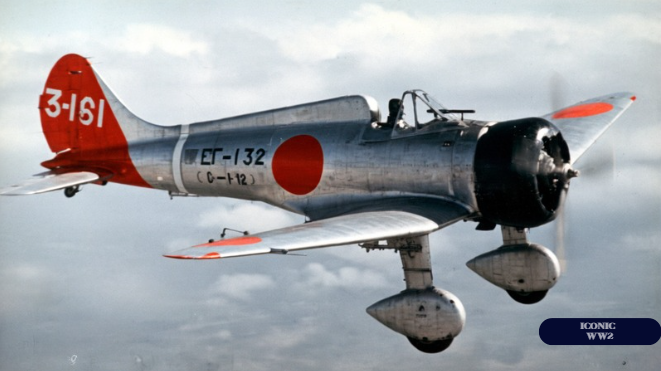
Only when young pilots transitioned to vertical combat (contrary to officially approved instructions) did the true value of the new fighter become apparent. In the fall of 1936, the Ka-14 was accepted into service as the "Type 96 Model 1 Carrier-Based Fighter," or A5M1. Production A5M1s differed from the second prototype in having an increased fuel capacity and a slightly redesigned engine cowling (the production version was equipped with a Kotobuki 2KAI-Ko, producing 630 hp). The contours of the fuselage fairing and vertical tail were also altered. Armament consisted of two 7.7 mm Type 89 machine guns mounted in the upper nose. The aircraft was equipped with an additional fuel tank mounted under the fuselage. Its large droplet was half-recessed into the fuselage. The development of the new fighter by combat pilots began in the first months of 1937. The A5M was delivered to the 13th air detachment, based on land.
The A5M1 was followed in serial production by the A5M2-Ko, featuring a Kotobuki 2KAI-3-Ko engine in an extended cowling, a three-bladed propeller, and an even more extensive fairing. The A5M2-Otsu, with an enclosed cockpit and a Kotobuki 3 engine, was quickly abandoned due to its obstructed view, replaced by an enlarged canopy. At this time, the Mitsubishi Nagoya plant was joined by the naval aircraft arsenal in Omura, where A5M2-Otsu assembly was also established. Several variants of the A5M were built that did not enter production, including the A5M1-Ko, armed with a pair of 20mm Oerlikon cannons, and the A5M3-Ko, with a French Hispano-Suiza 12Xcrs inline engine and a 20mm cannon firing through the propeller's hollow shaft. Two experimental modifications, named Ki.18 and Ki.33, were produced for the Army Air Force, but they could not withstand competition from aircraft from other companies.
In July 1937, Japan entered the war with China. Naval aviation played a key role in the operations near Shanghai. By the beginning of the war, the Imperial Japanese Navy possessed four aircraft carriers. They carried mixed air groups, each comprising half a dozen A2N3, A2N4, and A4N1 fighters. Three carriers were deployed against China: the Ryuho, the Hose, and the Kaga. The largest carrier, the Akagi, remained in Japan for repairs and modernization. The first combat sorties demonstrated that the older fighters were unable to cope satisfactorily with the tasks assigned to them. Despite the superior training of Japanese pilots, carrier-based aircraft suffered significant losses. The most common aircraft type, the A4N1, had a top speed of 350 km/h (220 mph), while the Chinese Air Force's primary fighter, the American Curtis Hawk III biplane, reached 385 km/h (245 mph). This gave the Chinese a distinct advantage both in counter-fighter operations and in attacks on bomber formations. The latter was particularly worrying to the Japanese command. The heavier Hawk, designed as a fighter-bomber, was inferior to the Japanese fighters in maneuverability, which partially offset its speed advantage. When intercepting bombers, speed was the determining factor. The decision was made to urgently deploy new monoplanes into combat.
At the end of August, the aircraft carrier Kaga was recalled to Japan. Two A5Ms were loaded onto it at Sasebo Port for battlefield testing. This move seemed quite risky, given that the new fighter had no prior carrier-based experience. On August 22, they conducted their first combat sortie, and on September 4, they encountered Chinese fighters for the first time, shooting down three of them, according to Japanese reports (the Chinese admitted to losing two aircraft).
On September 1st, the aircraft carrier Hose docked at Sasebo, followed by the Ryuho the following day. Both also added new fighters to their fleets. The use of the A5M in combat in China rapidly expanded. The monoplane quickly proved its superiority over Chinese aircraft. On September 7th, Captain Igarashi shot down three Hawks in a row (according to Chinese sources, two) over Lake Tang. Almost as maneuverable as the American biplane, the A5M outscored it at 50 km/h. On September 9th, the 13th Air Detachment was transferred from Japan to Kungta Airfield, which had been captured by the Marines, and on the 15th, aircraft from the deck of the Kaga (which by then had completely renewed its fighter fleet) were also deployed there.
On September 19, Japanese naval aviation launched a raid on Pangjing, then the capital of China, from this airfield. A total of 45 aircraft were involved, including all 12 A5Ms of the 13th Air Squadron. The fighters carried drop tanks—a first in combat. Over Nanjing, the Japanese pilots were met by 23 Chinese fighters—American Curtiss and Boeings, and Italian Fiats. During the battle, the Chinese lost seven aircraft, the Japanese four (none of which were A5Ms).
The first losses of the new fighters occurred on September 21. Aircraft from the carriers Hose and Ryūho attacked Canton. Five aircraft from the Ryūho ran out of fuel for the return trip. They ditched and sank. The first monoplane was shot down in the air only on October 12. On that day, five Chinese pilots intercepted nine bombers escorted by 11 A5Ms. Despite being outnumbered, the surprise attack resulted in victory. In aerial combat, the A5M demonstrated a significant advantage over the biplane fighters available to the Chinese Air Force: American Curtis Hawk IIs and Hawk IIIs, and British Gladiators. Combined with the superior training of Japanese pilots, this led to heavy losses for the Chinese in the air. According to Japanese data, by the end of August, A5Ms had shot down more than 330 Chinese aircraft, although the Chinese confirm only about a third of that number. However, this is still a high figure, as fewer than 30 A5Ms themselves were lost.
The case of Petty Officer Kashimura is widely known. During an aerial battle, he collided with a Chinese fighter. The Japanese write that a damaged Hawk fell on his A5M from above. As it turns out, Kashimura's fighter lost a significant chunk of its left wing (more than a third of its span) in the collision and still made it to the airstrip in Shanghai.
The situation changed somewhat when Soviet air units appeared among Chiang Kai-shek's air forces. Formally, they were considered foreign volunteers, but in reality, they were regular Red Army Air Force units, whose personnel had undergone careful selection and additional training. They retained their original structure, even including the unpublicized political officers. Their combat effectiveness significantly exceeded that of the Chinese, and they also had superior equipment: I-15bis and I-16 fighters and SB bombers. Chinese pilots soon received similar aircraft as well.
The Japanese aircraft (known to us as the I-96) proved a formidable adversary for the I-15. "The Japanese I-96 fighters had a definite advantage in the horizontal plane and tried their best to impose their combat tactics," recalled D.A. Kudymov, a participant in the fighting in China. However, the I-15, in turn, had superior armament and survivability, in particular due to the pilot's armor protection. In close combat, the A5M was also dangerous for the I-16. The Japanese first encountered the latter on November 22, 1937. Captain G.M. Prokofiev led six "Ishakas." They were opposed by six A5Ms. The battle ended with the destruction of one Japanese aircraft, and pilot Miyazaki was killed. Subsequently, similar clashes occurred with varying success. It is impossible to objectively judge victories and losses from either Japanese or Soviet sources. Both sides significantly overstated the number of aircraft shot down and understated those lost. For example, 15 Japanese bombers and 11 A5Ms took part in the raid on Wuhan on January 18, 1938. They were opposed by 19 I-15bis and 10 I-16s. The Japanese claimed to have shot down 18 aircraft (Soviet sources confirm four), while ours insist on 14 victories (the Japanese admit to losing five aircraft). There is an even greater discrepancy in the data for the raid on Wuhan on June 29. Eighteen twin-engine G3M bombers and 27 A5M fighters approached the city. They were opposed by 67 enemy fighters (25 of which were piloted by the Chinese). The Chinese report: 10 bombers and 11 fighters were shot down, 11 aircraft were lost (including two with Soviet pilots). The Japanese, however, published a report claiming to have shot down as many as 51 fighters over Wuhan that day! They limited their losses to two bombers and two fighters. So how can you reconcile such data?
Nevertheless, it can be concluded that our pilots considered the A5M a worthy adversary. It caused considerable trouble for both fighters and bombers. SBs delivered to China easily outflanked the old biplanes of the Japanese Navy, as well as the army's Ki-10 fighters. The appearance of A5Ms in significant numbers significantly complicated their lives. A striking example of this was the results of a raid on Pankin Island on January 13, 1938, by a group of 13 SBs. The group was led by F.P. Polynin. The A4N1s patrolling the air were unable to interfere—their bombs fell precisely on the Japanese aircraft parking areas. However, during their retreat, the bombers suffered both from anti-aircraft guns and from eight A5Ms that pursued them. One SB caught fire, and its crew abandoned it; another, damaged, crashed during an emergency landing. Polynin himself, attempting to return to base on one engine, landed in a swampy meadow. As a result, the SB was forced to switch to bombing from altitudes of 6,000-7,000 meters, which provided ample time to escape the target.
Several damaged A5Ms soon became trophies of the Chinese army. One of them was tested by the Chinese themselves. Two aircraft were repaired and sent to the USSR. The first fell into the hands of Chinese soldiers on February 18, 1938, near Nanchang. Its pilot committed suicide after a forced landing. A second identical fighter was soon captured in the same area. The aircraft were ferried to the Soviet Union by G.I. Zakharov and A.S. Blagoveshchensky. Japanese agents tried to prevent the delivery of the captured fighters to our country. Due to sabotage, both A5Ms crashed en route: sugar was added to the fuel tanks at one of the intermediate airfields. Zakharov broke his arm during the forced landing.
Nevertheless, on October 28, 1938, one of the A5M2-Otsu aircraft arrived at the Air Force Research Institute, where it was again repaired by a team from Plant No. 156. The aircraft proved ill-suited for winter operation, so an I-5 cowling and skis had to be retrofitted. However, the Kotobuki performed poorly in the cold. This may have been due to the fact that it was assembled from parts of three captured engines. Testing actually began only in late spring 1939. On May 13, Major Kravchenko made its maiden flight. The report noted that "the aircraft (...) demonstrated good stability, maneuverability, and ease of piloting." However, based on overall maneuverability and armament, the A5M was rated inferior to the new Red Army Air Force fighters. There were many reasons for this assessment. By mid-1939, Japan's first carrier-based monoplane was indeed obsolete, and the Imperial Navy was already awaiting a replacement. Furthermore, flight performance measured during testing was underestimated due to wear on the aircraft and engine.
The A5M's armament was clearly inadequate for the late 1930s. It carried only two Type 89 machine guns. This machine gun, taken from a downed Japanese fighter, had been delivered to the USSR as early as January 1938. It generated no interest, as it was essentially a copy of the old British Vickers. In terms of ballistic characteristics and rate of fire, it was inferior even to the PV-1, and even less so to the new ShKAS machine gun. The latest I-16 modifications were armed with four ShKAS machine guns or a combination of two ShKAS machine guns and two ShVAK cannons. However, the A5M's lighter firing weight was partially offset by its greater stability. Both the I-15bis and I-16 produced a much wider bullet dispersion.
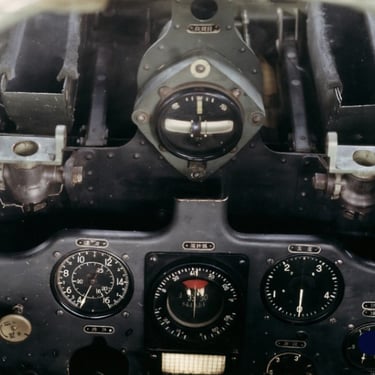
The A5M was carefully studied by specialists from the Red Army Air Forces and our own aviation industry. They noted a number of successful design solutions, such as the convenient placement of the battery in a special container. The compact and reliable Japanese volt-ampere meter and ultraviolet instrument panel backlight were recommended for copying by domestic factories. Interestingly, the A5M's deck-based capabilities appear to have been completely ignored. It is often reported that the A5M, which was in the Air Force Research Institute, went into a tailspin in August 1939 during a training battle with an I-153. Test pilot M.N. Vakhrushev was killed. However, he crashed not the A5M, but another captured Japanese fighter, the Ki-10 biplane. The Mitsubishi monoplane was likely simply dismantled for study. In any case, by January 1940, this aircraft was no longer listed among the research institute's aircraft inventory. Despite numerous mentions in Russian memoirs, the A5M was not actually at Khalkhin Gol. It was mistaken for a very similar army fighter, the Ki.27 (also known as the "Type 97," or I-97 in Soviet reference books).
In China, these aircraft continued to fight for a long time. The Imperial Navy Aviation used them both at sea and on land. The presence of naval pilots at the front was explained by two factors: the need to gain combat experience and the long range of naval aircraft, which allowed them to fly deep into the Chinese rear. The main naval aviation base was located in Hankou. A5Ms covered airfields and ports and flew bomber escort. By early 1940, two air flotillas operated in China—the 2nd and 3rd—comprising more than 50 fighters of this type. In addition, aircraft carriers operated off the coast, completely replacing their old biplanes with monoplanes by the end of 1938.
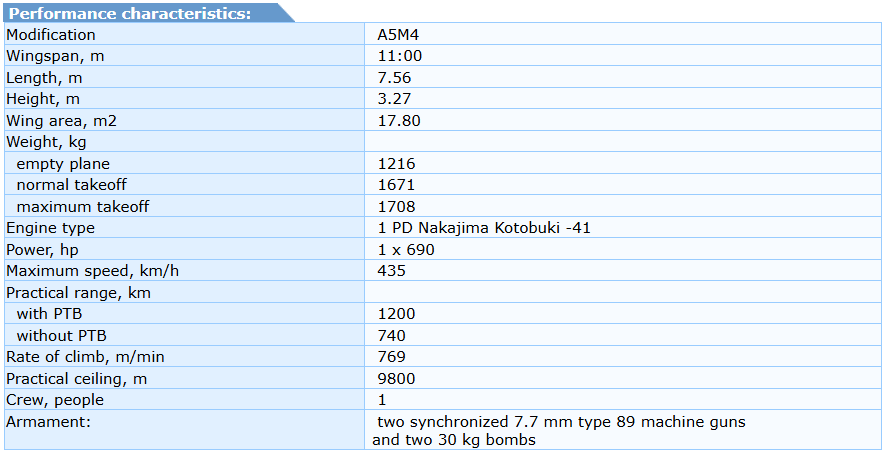
Since 1938, the A5M4 modification was in production. It was very similar to the A5M2-Otsu, but featured a new cockpit canopy, an even more extensive fairing, and a radio. It was powered by a Kotobuki 41 engine producing a maximum output of 785 hp. The introduction of new underwing drop tanks increased the range to 648 km. A two-seat trainer version, the A5M4-K, was produced alongside the A5M4 (the "Type 96 Model 24 Carrier Fighter"). The instructor's cockpit was located behind the main cockpit, where the trainee sat, and was also open. The Nakajima plant in Nagoya ceased production of the A5M in 1940, having built 782 fighters. The Naval Air Arsenal plant in Omura assembled 161 combat aircraft (they were discontinued in early 1941) and 103 A5M4-K trainers (these were produced until 1943). Watanabe Tekkose manufactured 39 A5M4s in 1939-41.
In 1940, the new A6M carrier-based fighter (Type 0, better known as the "Zero") entered service. It far surpassed its predecessor in speed, range, and the weight of a single second's salvo. Their introduction into combat units also began in China. In September, the 12th Air Squadron received 27 brand-new A6M1s. But the older aircraft remained in service for quite some time. At the end of the year, the Japanese acquired bases in Indochina. Significant air forces were transferred there, including the 14th Air Squadron with A5M4s. From there, Japanese aircraft began raiding Kunming in southern China.
By mid-1941, the 12th and partially the 14th Air Squadrons, as well as units on all major newly built aircraft carriers, had been completely re-equipped with the Zero. Older A5Ms were gradually transferred to air defense units at coastal bases and training units. By the start of hostilities in the Pacific in December 1941, 193 A5Ms were in service, 144 of which were in second-line units. They were used by units providing air cover for the naval bases in Sasebo, Omura, Ominato, and Takao, a special fleet air group intended to participate in the invasion of Malaya, and squadrons based on the light aircraft carriers Hose (11 A5Ms), Ryuho (22), and Zuiho (16). The Shoho was not carrying any aircraft at this time. American intelligence assigned the A5M4 the codename "Claude." Fighters from the Ryuho, part of Rear Admiral Kakuji's 4th Carrier Division, supported one of the landings in the Philippines—in the Davao area of Mindanao, beyond the reach of the A6Ms stationed in Taiwan. The carrier then took part in combat operations in the Dutch East Indies (now Indonesia). In February and March 1942, the Ryuho operated against Anglo-American communications in the Bay of Bengal.
At the beginning of the war, Japan seized a vast territory. The bases established there needed air cover. But modern equipment was in short supply, and the hastily formed air defense units were equipped with old equipment. A5Ms were assigned to new units within the 4th Air Squadron in Rabaul (on New Britain Island) and the 1st and 6th Air Squadrons in the Marshall Islands (stationed on Luoti, Taloa, and Palau). The A5Ms were used quite actively at the front until April 1942, after which they were almost completely replaced by the Zero. However, some aircraft remained in service with the air defense forces later; for example, they were used on Buin Island as late as September 1943.
The units stationed at bases in Japan were considered rear-echelon units and were used primarily for training. Their air patrols were largely a formality. When bombers from the Doolittle Group were approaching their targets near Tokyo in April 1942, three A5M4s from the Kasumigaura Air Squadron were in the air. They didn't even notice the American aircraft. The A5Ms participated in the famous Battle of the Coral Sea. On May 7, 1942, two A5Ms and four A6Ms took off from the deck of the Shoho to protect her from attacks by dive bombers and torpedo bombers from the American carrier task force. They managed to shoot down three enemy aircraft, but this didn't save the Shoho, which sank, hit by seven torpedoes and thirteen bombs. This took only 20 minutes. After the battle, the fighters had nowhere to land—only the waves stretched beneath them. One A5M4 made it to the nearest island, while the second was forced to land in the open sea. But this wasn't the last carrier to carry fighters of this type. As of July 14, 1942, the auxiliary carrier Kasugamaru, a converted liner, was listed as carrying 11 A6Ms and 14 A5Ms. However, there is no record of their combat use.
After this, the A5Ms remained briefly in air defense units in Japan before being fully reassigned to training units and naval flight schools. At the end of 1944, a significant number of A5M4 and A5M4-K aircraft were still in service. As the front lines approached the shores of the homeland, these now-badly worn-out aircraft began to be used for kamikaze units. A bomb was suspended under the fuselage. These aircraft were used as light bombers and kamikaze aircraft to attack American ships off the coast of Japan (during the Battle of Iwo Jima) in the first half of 1945. Thus ended the suicidal career of this remarkable fighter, one of those that placed Japan at the forefront of global aircraft manufacturing.
Mitsubishi A5M Fighter