Mitsubishi A6M Fighter
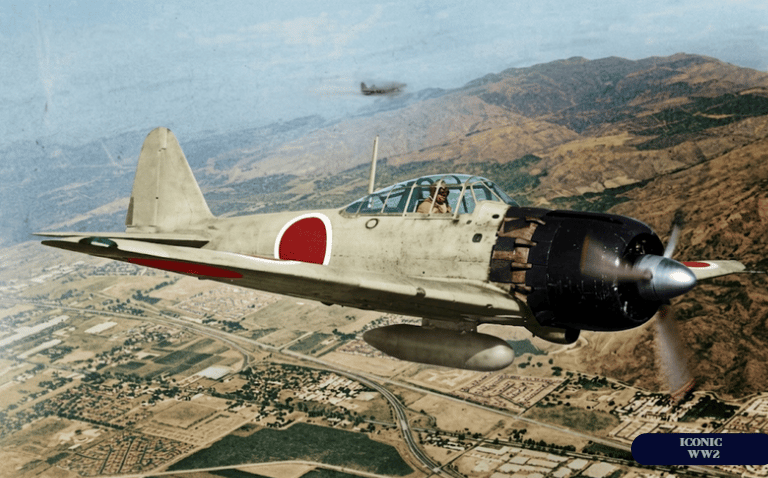
Developer: Mitsubishi
Country: Japan
First flight: 1939
Type: Carrier-based Fighter aircraft
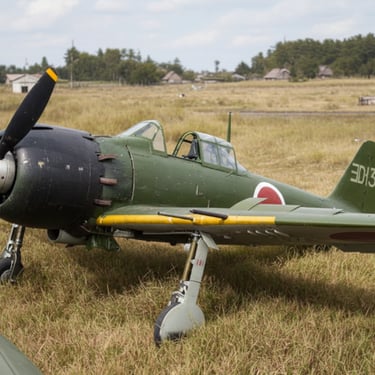
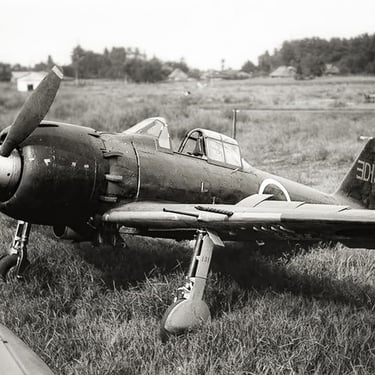
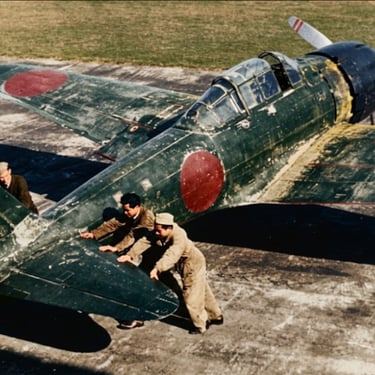
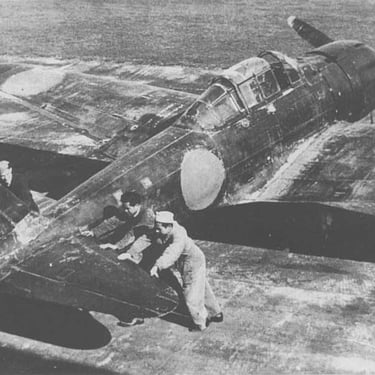
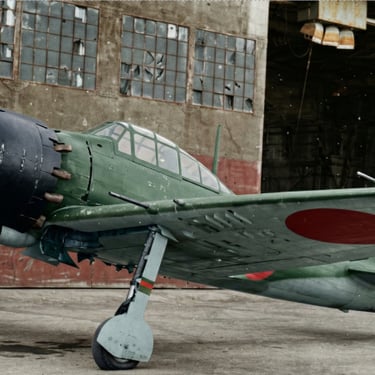
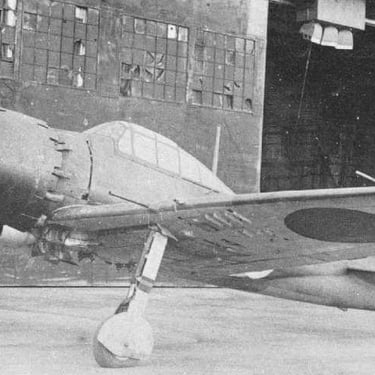
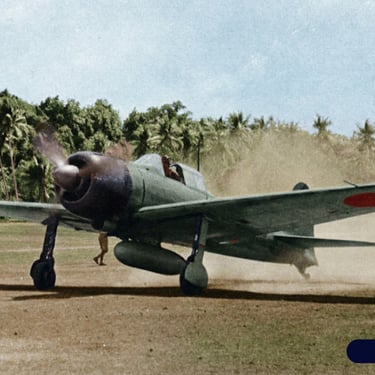
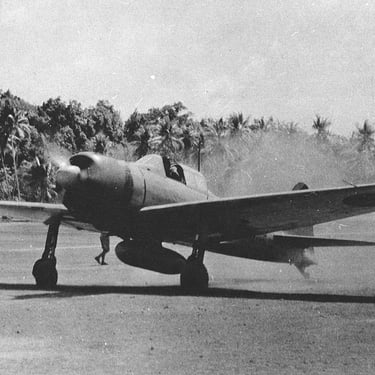
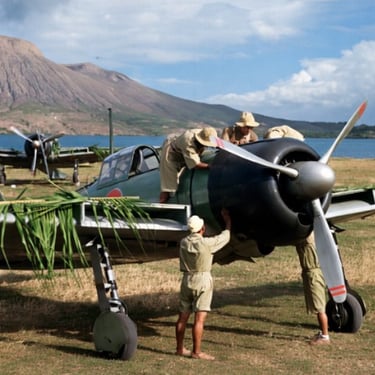
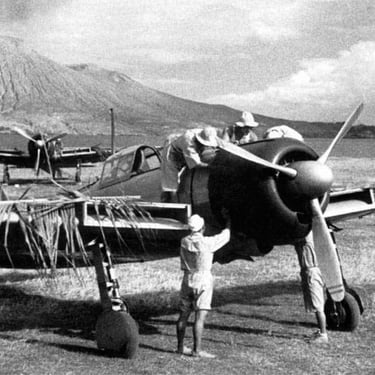
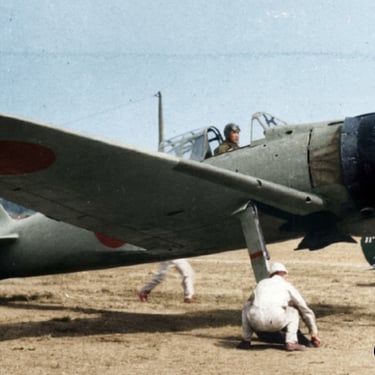
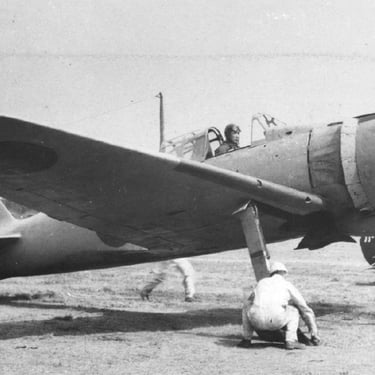
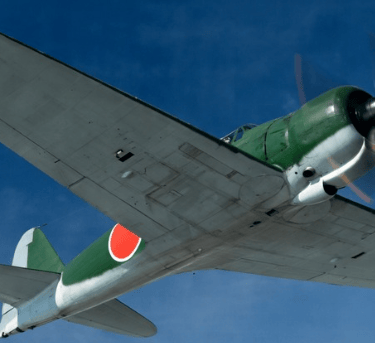
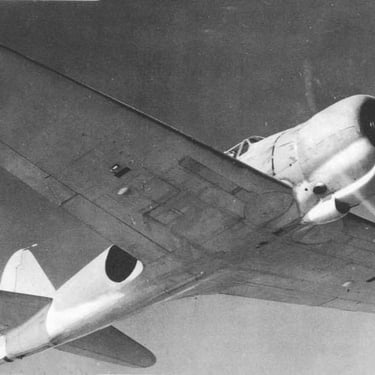
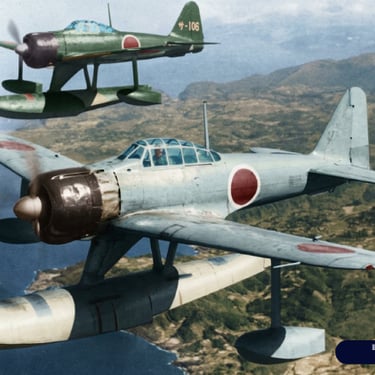
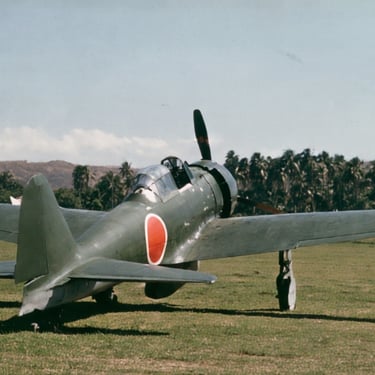
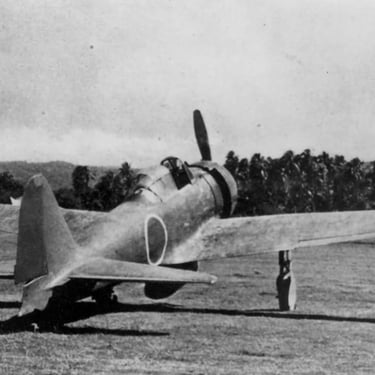
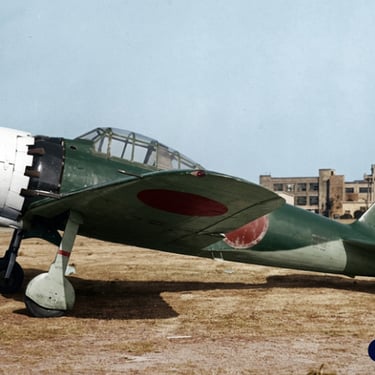
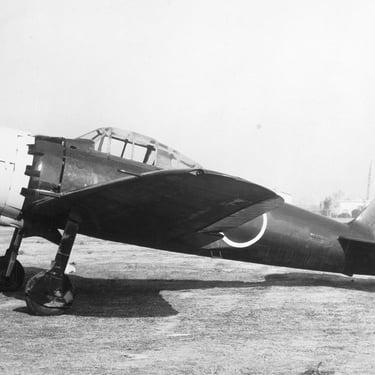
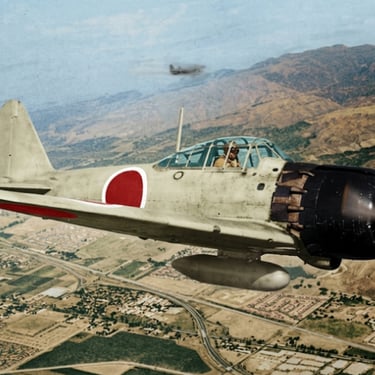
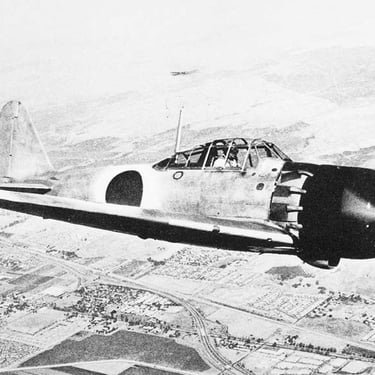
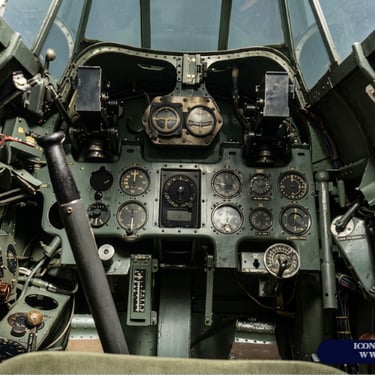
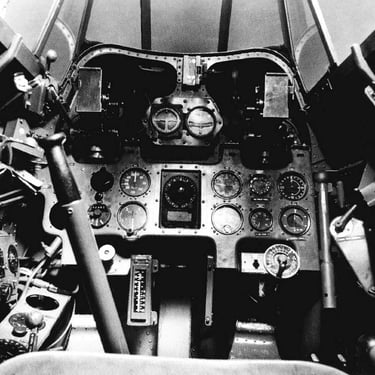
On April 10, 1938, the preliminary design of the new fighter was presented to the customer, followed shortly by a mockup of the future Zero. As expected, the presentation sparked a lively debate both over the technical decisions made by the designers and the specifications themselves. Conservative pilots criticized the enclosed cockpit, arguing that it would significantly limit visibility. It's worth noting that the pilots had previously managed to convince Mitsubishi designers to eliminate the enclosed canopy on the A5M2b modification (during carrier landings, pilots often peered forward over the side of the cockpit to determine the correct glide path, so on aircraft with an enclosed canopy, it was almost always left open). The armament mix and the question of the priority of performance—maneuverability versus speed—also sparked controversy. This issue pitted two opposing viewpoints, presented by equally accomplished and respected fighter pilots. Lieutenant Commander Minoru Genda believed that the most important quality for a carrier-based fighter was high maneuverability, which determined its ability to engage the enemy in a turning battle. Therefore, he advocated achieving the lowest possible power load, even at the cost of forgoing heavy armament. His opponent, Lieutenant Commander Takeo Shibata, was another expert. He argued that Japanese fighters already outmaneuvered all enemy aircraft. However, as the battles in China demonstrated, their pilots had little chance to demonstrate this quality: due to their short range, Japanese fighters could not escort their own bombers on long-range raids. Shibata also considered high horizontal speed to be an important parameter. A fighter with even a slight speed advantage was capable of imposing its own combat tactics on the enemy. Shibata argued that a well-trained pilot piloting a faster aircraft could destroy an enemy, even if the enemy fighter had greater maneuverability. The debate between the two aces dominated the meeting held on April 13, 1938, and no clear conclusion was reached. This jeopardized the entire program for the new fighter. In circles close to the Imperial Navy command, voices increasingly called for freezing the 12-Shi program and radically revising the specifications. Jiro Horikoshi saved the situation by promising "a deal for everyone." Based on calculations, he convinced the customer that the new aircraft would adequately possess all the qualities under discussion: speed, range, and maneuverability. Kaigun Koku Hombu officially approved the mockup and gave the go-ahead for prototype construction—by that time, work on the future Zero was already in full swing in Oemachi (a southern suburb of Nagoya) at one of the Mitsubishi plants.
On March 16, 1939, 11 months after the preliminary design was approved, the prototype was ready. On the 19th, the aircraft was weighed and balanced, after which engine tests and onboard equipment trials began. Since the Oemachi plant lacked its own airfield, the prototype had to be partially disassembled and transported on two oxcarts to the army test airfield in Kagamihara, 40 kilometers away. There, the aircraft was reassembled, and on April 1, 1939, company test pilot Katsuzo Shima took his place in the cockpit. After engine tests, a run-up, and testing of the rudder and brakes, the pilot gave the aircraft the throttle and lifted off. This wasn't quite a flight yet—just a bounce. After quickly checking the rudder response, Shima reduced the power and landed the fighter. The flight test program then began. On April 14, during the thirteenth flight, the landing gear was retracted for the first time. At the same time, certain problems with the landing gear retraction mechanism and airframe vibrations—minor but noticeable—came to light. While the retraction mechanism was easily adjusted, the vibrations persisted. Horikoshi believed the culprit was an inappropriate two-blade propeller. On April 17, a new three-blade automatic propeller (the first of its kind used on a Japanese aircraft) was installed on the prototype, and the engine mounts were fitted with rubber shock-absorbing pads. These measures successfully mitigated the vibrations.
On April 25, 1939, during a maximum speed test, the new aircraft reached 491 km/h (303 mph) – almost 10 km/h (6 mph) less than the 12-Si specifications required. This performance did not satisfy the customer, who rightly blamed the lack of speed on the engine's insufficient power. While the Zuisei 13 produced 875 hp (675 kW), new fighters being developed in Germany, Great Britain, and the United States were equipped with engines exceeding 1,000 hp (730 kW). On May 1, Kaigun Koku Hombu instructed the developer to install a 940 hp (670 kW) Sakae 12 engine from Nakajima's competitor, the first prototype. While the aircraft was being re-equipped, testing of the second prototype began on October 18 – still equipped with the Zuisei, but equipped with a three-bladed propeller from the outset. It also received a full complement of armament. After a very short factory testing cycle, the second prototype was accepted into the Navy on October 25, and weapons testing began at the end of the month. The first firing achieved an excellent result: nine hits from a 20-round burst on a 19-square-meter ground target.
The third prototype—the first pre-production one—was equipped with a Sakae 12 engine from the very beginning. To accommodate the new engine, the engine mount and cowling had to be redesigned, as the Sakae had a larger diameter than the Zuysei. In an effort to minimize drag and not impair forward visibility, the designers designed the cowling to fit very tightly around the engine, which led to cooling issues that required considerable effort from the designers to resolve. To eliminate the tendency to spin, which had become apparent during prototype testing, the tail unit was redesigned: the vertical stabilizer was moved rearward, and the horizontal stabilizer was moved upward. As a result, the aircraft's length increased slightly.
As a result of all the changes, the aircraft was deemed fit for serial production, which began at Mitsubishi Aircraft Plant No. 3 in Nagoya. Even before the full test cycle was completed on September 14, 1939, the aircraft received the official designation "carrier-based fighter experimental type 0," or A6M1 .
Prototypes and pre-production aircraft were sent to the Yokosuka Kokutai, stationed at Oppama Airfield, for operational testing. This unit served as an instructor and test unit, staffed by the most experienced pilots in the Imperial Navy. These experienced pilots were able to appreciate the new aircraft, praising its performance only in superlative terms. For a long time, the A6M1 operated without incident—the first serious incident occurred only on March 11, 1940, almost a year after flight testing began. That day, test pilot Okuyama took off from Oppama in the second prototype. The flight mission called for overloading the engine with high RPMs in a steep dive. During the second approach, while diving from 1,500 m to 900 m at a 50° angle, the engine noise suddenly increased sharply, after which the engine exploded. The aircraft broke into pieces, and the pilot was thrown from the cockpit. At an altitude of approximately 300 meters, the parachute opened, but the pilot was ripped from his harness and fell into the water. Okuyama was likely killed immediately by the explosion, and the parachute deployed spontaneously. The cause of the crash was never determined. According to the most convincing theory, one of the aileron balancers broke, causing vibration that destroyed the aircraft. The crash delayed the start of A6M deliveries to units from May to July 1940—the company needed time to reinforce the mounting points for the aileron balancers and rudders.
Development of the A6M took place under intense pressure from air unit commanders – rumors of the stunning performance of the new fighter undergoing testing at Oppama quickly spread among aviators. Longer range was especially desirable, as the A5M had a very limited fuel capacity and was unable to escort bombers on long-range missions. The glowing reviews from test pilots at the Yokosuka Kokutai added fuel to the fire. Although Mitsubishi specialists insisted on the need for further refinement of the Reisen, on July 21, 1940, in accordance with a decision by the Kaigun Koku Hombu, the first batch of six pre-production fighters was sent to Hankou, China. The detachment was staffed by pilots from the Yokosuka Kokutai and was led by Tamotsu Yokoyama. In China, the detachment was assigned to the 12th Rengo Kokutai (12th Combined Air Group). Concurrently, other aircraft from the pre-production batch were undergoing testing aboard the aircraft carrier Kaga. Following successful completion, the aircraft was accepted into service as the "Naval Type Zero Carrier-Based Fighter Model 11" (A6M2 Model 11) – "Rei-Shiki Kanzo Sentoki," or "Reisen" for short. (According to American nomenclature, the aircraft was named "Zek" – from the biblical name Ezekiel, but the designation "Zero" – "zero" – was most commonly used.) Nine fighters tested on the Kaga also soon departed for Hankou to reinforce the 12th Rengo Kokutai. The first result of field testing was a solution to the engine cooling problem: metal deflectors were installed on the first-row cylinders, directing airflow to the second-row cylinders. Subsequently, similar devices were installed on all production Zeros. However, another problem, which surfaced in combat, remained unresolved: the frequent jamming of the ventral fuel tank release system. Because of this, Japanese fighters were sometimes forced to engage in combat with "ballast" under the fuselage, which did not improve the aircraft's aerodynamics. A total of 64 A6M2 model 11 aircraft were built, with serial numbers ranging from 3 to 67. Therefore, only three aircraft carried the A6M1 designation—two prototypes and the first pre-production aircraft.
The first reports of the new "superfighter" that reached Europe and America were rather vague and contradictory. On the one hand, its existence was noted in reports by many observers, including Colonel Clair E. Chennault, then an adviser to Chiang Kai-shek and later a general and commander of the American Volunteer Air Group (AVG)—the famous "Flying Tigers." On the other hand, their reports were dismissed as unimportant, often interpreted in ways that suited the current political climate. Isolationists, highly influential in the US establishment, were particularly vocal in this regard. Trying to prevent increased military spending, they spread the notion that the vaunted fighter was merely a "pirated copy" of European aircraft. It must be said that there was every reason for this - among the remains of the few downed Zeros, licensed or copied components were often found: the Hamilton-Standard propeller, the Bendix landing gear, the Palmer tires, the Sperry, Pioneer and Kollsman flight instruments, the Oerlikon cannons, the Vickers machine guns... The fact that first-class fighters of the new generation - the Lightning, the Corsair and the Mustang - were being created and put into production in the USA also contributed to the underestimation of the new aircraft.
On the other hand, the Zero's undeniable advantage in air combat over China and its superior performance had a calming effect on the Japanese military. A belief emerged that this fighter could enable Japanese aviation to achieve lasting air superiority. It was believed that one Reisen was worth two to five enemy aircraft. Such calculations were especially important given the impending war against the United States—sober-minded members of Japan's military and political leadership were well aware of the United States' economic superiority. Admiral Yamamoto himself believed that Japan would lose its chance of defeating the United States if the war lasted longer than six months. Therefore, to succeed in the coming war, the Land of the Rising Sun desperately needed a qualitative advantage in military technology. It would seem that the Zero fully met these requirements. But the Reisen's superior qualities proved fatal for Japanese naval aviation—Kaigun Koku Hombu specialists missed the moment when they should have initiated work on a successor to the A6M. This should have been done as early as 1941, but the military simply didn't believe such a fine aircraft would quickly become obsolete (or that the war would last longer than it would be necessary to replace the Reisen).
As we know, no aircraft is perfect—even the seemingly perfect one reveals some flaws during service. This is what happened with the Zero. The first step was to strengthen the rear wing spar, which was done starting with the 22nd aircraft. Starting with the 37th aircraft, the exhaust stacks were relocated—previously, they exited near the fourth door, which regulated engine cooling, but now they exit near the fifth. The cannon ports in the wing were reduced in cross-section, as were the air intake openings for the cabin ventilation, located near the leading edge of the right wing. Starting with the 47th aircraft, the rear canopy glazing was slightly modified.
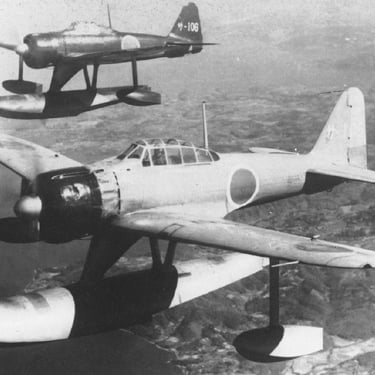
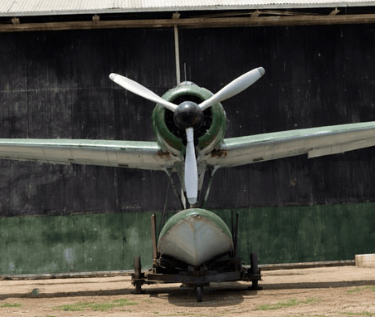
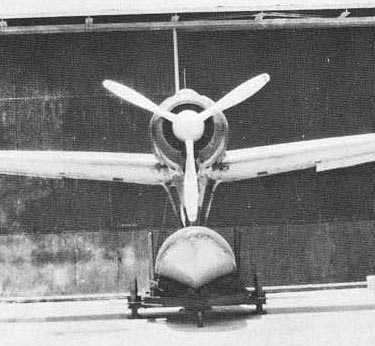
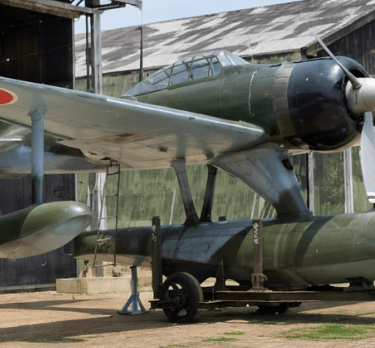
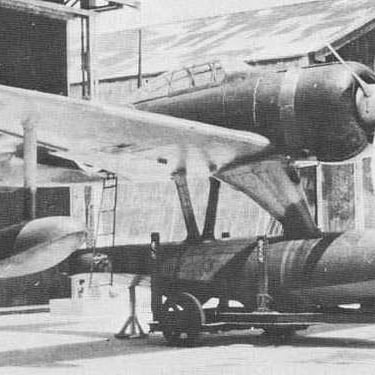
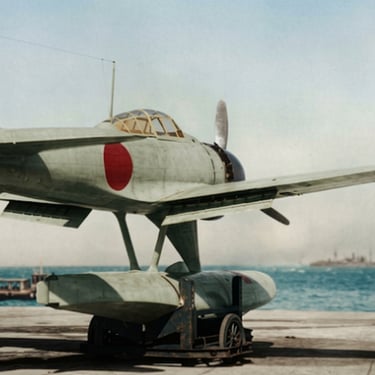
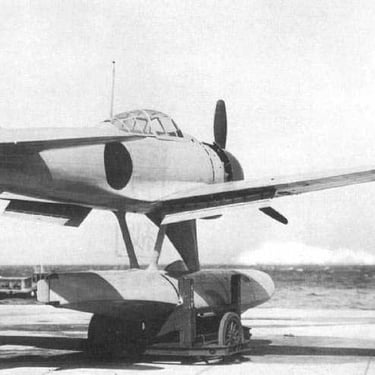
The aforementioned tests aboard the aircraft carrier Kaga revealed that although the Zero fits comfortably on a standard aircraft elevator, the gap between the edge of its hatch and the wingtip was too small to safely move the aircraft from the hangar to the flight deck and back. While the crew successfully managed this problem under test conditions, precisely aligning the aircraft with the elevator's centerline, what would happen in the heat of battle? Therefore, it was decided to make the wingtips manually folding. Other minor improvements were also made, including another change to the cross-section of the gun ports and the cabin ventilation intake. Thus, the A6M2 Model 21 modification was born. Beginning with the 127th aircraft, it was equipped with a ground-adjustable aileron balance. This was prompted by the crash of one of the aircraft on April 17, 1941, which resulted in the death of Lieutenant Shimokawa, the pilot of the "Yokosuka" kokutai, caused by structural vibration. The Model 21 became the first Zero variant not built exclusively by Mitsubishi; from November 1940, it was also built by Nakajima at the Koizuma plant. In total, over the course of two years, Mitsubishi built 740 A6M2 Model 21 aircraft, and Nakajima built approximately 800. It was at Nakajima that one of the most interesting Zero variants—a floatplane fighter—was created.
When it became clear in early 1941 that armed conflict with the United States was imminent, both the Zero's designer and operator agreed on the need to modernize the aircraft. The goal was not to increase firepower or improve maneuverability—these characteristics were deemed perfectly acceptable. However, the aircraft's speed characteristics would benefit from improvement. To this end, a new modification of the Nakajima engine, the Sakae 21, was installed. It featured a two-stage mechanical supercharger instead of a single-stage one, an improved gearbox, and a new updraft carburetor. Engine power increased to 1,130 hp, improving its high-altitude performance, but also increased its weight. To at least partially offset the increased weight, the capacity of the fuselage fuel tank was reduced from 98 to 60 liters. The cowling's contours were significantly altered. Since the supercharger air intake was located above the engine, the cowling was also raised to cover the machine gun ports. Characteristic channels had to be created in the cowling, allowing the machine guns to fire as before. A propeller with an increased diameter of 3.05 meters was also installed, and starting with the fourth aircraft of the new modification, the ammunition load for the cannons was increased from 60 to 100 rounds per gun. As before, the ammunition was stored in a drum, but its diameter was increased. Since the new drum protruded beyond the wing contours, it had to be covered with a fairing. The aileron span was reduced, eliminating the complex two-stage control system.
The first aircraft with the Sakae 21 engine were ready in June 1941. Flight tests showed that the aircraft's performance had improved less than expected. At the same time, reports began arriving from combat units proposing to eliminate the wing-folding mechanism. In this situation, the designers decided to "kill two birds with one stone." The wingtips were simply "cut" at the folding line. This eliminated the now-hated folding mechanism, and the speed increased by approximately 3 km/h. True, reducing the wing area by almost a square meter (from 22.44 to 21.53 m2) resulted in a slight decrease in maneuverability, but the rate of climb increased—it now climbed to 6,000 m in 7 minutes 19 seconds instead of 7 minutes 27 seconds. In this form, the aircraft was accepted into service under the designation A6M3 model 32. However, due to problems with the refinement of the Sakae 21 engine, production of the model 32 did not begin until July 1942. A total of 343 of these aircraft were manufactured.
By the time the Model 32 aircraft entered service, the Imperial Navy Air Force was engaged in intense combat far from the homeland, over the Solomon Islands. The loss of several aircraft carriers at the Battle of Midway and the lack of a developed airfield network in the combat area urgently raised the need to increase the Zero's range. For this purpose, a new modification was developed – the A6M3 Model 22. It was equipped with two additional 45-liter fuel tanks, located in the wing near the weapons bays. To prevent the increased weight from significantly impairing maneuverability, it was necessary to return to extended (folding) wingtips. Mitsubishi produced 560 Model 22 aircraft, including a number of Model 22A (22KO) aircraft. Its main difference was the use of the Type 99 Model 2 cannon with an extended barrel instead of the standard Type 99 Model 1 cannon. At least three aircraft were experimentally armed with the new 30mm cannons, but this variant never entered production—the A6M3 design proved too fragile to withstand the recoil of these weapons. The A6M4 Model 32, which featured a turbocharged engine, also never entered production. Only two prototypes were built, then sent to the 1st Naval Technical Arsenal. Their subsequent fate is unknown. In fact, the A6M4 remains one of the most enigmatic Zero modifications—it's worth noting that even chief designer Jiro Horikoshi himself couldn't recall any details regarding this variant postwar.
Both the A6M3 model 32 and model 22 were built by Nakajima, but the exact number of aircraft produced by this company has not been established.
When the new Zero modification with its chopped-off wings came to the attention of the Allies, it was initially mistaken for a new aircraft, giving it the code name "Hap." But that was precisely the nickname of the Chief of Staff of the US Army Air Forces, General Henry Arnold. The general didn't appreciate the humor and insisted on changing the code name to "Hamp." But all this fuss over the name lost its meaning after a single A6M3 Model 32 fell into Allied hands in New Guinea in December 1942, and it became clear that it was simply another modification of a well-known aircraft. Instead of "Hamp," the code name "Zek 32" was prescribed.
The refinement of the A6M2 consumed a great deal of effort at Mitsubishi, leading to delays in work on new fighters—the J2M Raiden shore-based aircraft (design specification 14-C for its development was issued as early as 1939) and the Zero's successor, the A7M Penny carrier-based fighter, ordered in July 1942. The Raiden prototype only flew in March 1942, and the Reppu in May 1944. Meanwhile, Japan's adversaries were continually improving their fighter aircraft, introducing fundamentally new aircraft into combat. The Hellcats—Grumman F6F-3 fighters—that appeared on the decks of American aircraft carriers not only matched the Zero in combat while turning, a deadly threat to other American fighters, but were also equal to the F4U Corsairs in speed, and were also distinguished by a combat-damage-resistant design, armor protection for the pilot, and tested fuel tanks.
For the Imperial Navy Air Force, the only solution to the current situation was a further modernization of the A6M, aimed at "catch[ing] up" with the new enemy fighters in key combat capabilities. The work was led by Mijiro Takahashi, who replaced Horikoshi as the Zero's chief designer in late 1941. The primary objective was to increase the permissible dive speed. This required, first and foremost, strengthening the skin. The wing was again made non-folding, with new, rounded wingtips. Its area was only 21.3 m², and the aircraft's weight was reduced by 78 kg. Thanks to these changes, the dive speed was increased to 660 km/h.
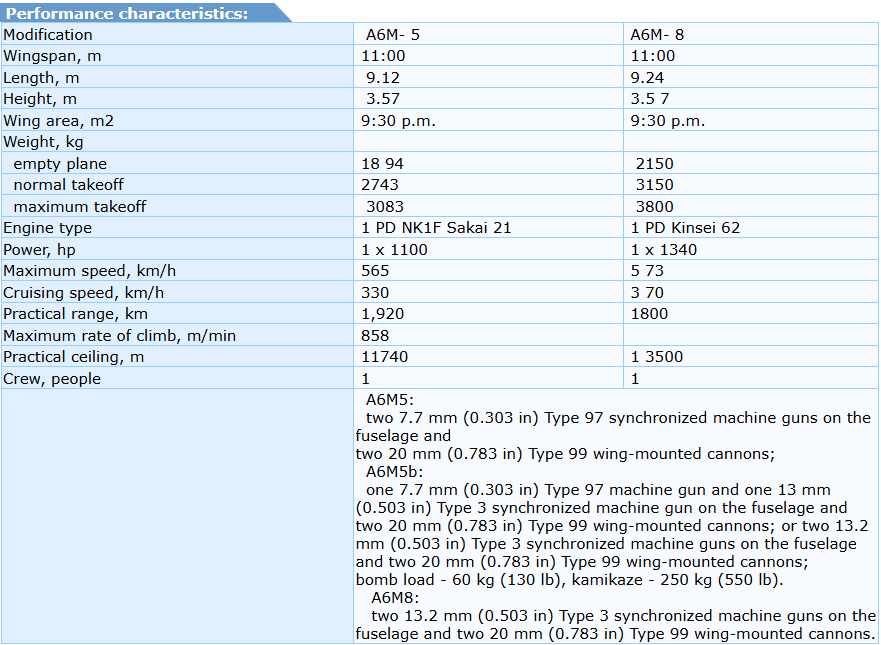
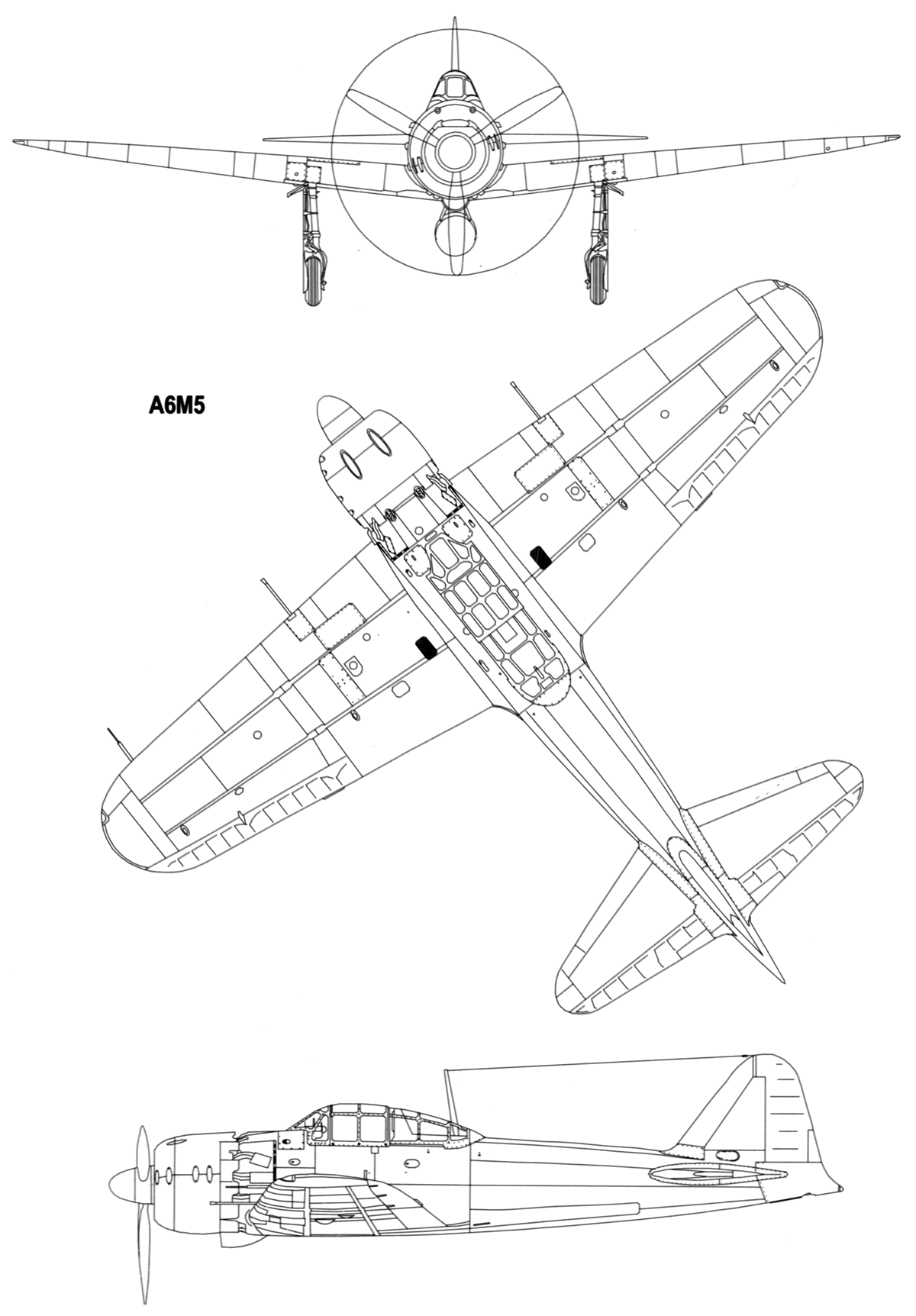
Since more powerful engines were unavailable, the designers had to squeeze every last ounce of performance out of the Sakae 21. Specifically, the heavy exhaust manifold, shared by all cylinders, was replaced with seven jet exhaust pipes (one for each pair of cylinders). This allowed them to add several kilograms of exhaust thrust to the propeller thrust. As a result, the aircraft's horizontal speed increased to 565 km/h at an altitude of 6,000 m. The aircraft's rate of climb also increased. The fuselage skin around the pipes had to be reinforced with steel sheeting, as the hot exhaust gases easily burned through the thin duralumin. This variant was designated the A6M5 Model 52. The prototype, converted from a Model 32 aircraft (serial number 904), began testing in August 1943. Mitsubishi produced 747 aircraft of this model, including a number of transitional variants – with a new wing like the Model 52, but with the old exhaust system like the Models 22/32. The Model 52 was also produced in 1943-44 by Nakajima.
In the fall of 1943, the A6M5 began arriving in combat units. The first encounters with Hellcats revealed that the improvements introduced were insufficient to compete with the Americans. The Japanese aircraft lacked any armor, and its structural integrity remained low. Typically, after a short burst of six large-caliber Browning shells, the Hellcat's A6M5 would simply disintegrate in mid-air. Conversely, the robust and well-armored American aircraft could withstand numerous hits without significant consequences. Therefore, the next stage of the Zero's modernization involved further upgrading its armament by converting the cannons to belt feed, allowing for an additional 25 rounds per gun. The wing structure was also reinforced once again, increasing the permissible dive speed to 740 km/h. This was still 30-45 km/h slower than the Corsair, but further strengthening of the Zero's structure led to a significant increase in weight and, consequently, a sharp deterioration in climb rate and maneuverability. Serial production of this variant, designated A6M5a Model 52a (or 52ko), began in March 1944. Mitsubishi manufactured 391 aircraft; Nakajima's production volume is unknown.
The changes made to the Model 52a failed to address another significant issue: low combat survivability. Until then, the Zero had neither armor protection for the pilot nor tested fuel tanks. In early 1944, another variant, the A6M5L Model 52L (or 52OTSU), was introduced, which attempted to improve protection. Specifically, the cockpit was equipped with a frontal armored window—a 50mm-thick "sandwich" consisting of two layers of plexiglass sandwiched between sheets of regular glass. A fire suppression system was also installed—a CO2 cylinder mounted in the fuselage near the firewall. In the event of a fire, the carbon dioxide instantly filled the fuselage fuel tank and engine compartment. Taking advantage of the opportunity, several more design changes were made, the most significant of which was the replacement of the right-hand synchronized 7.7mm machine gun with a Type 3 13.2mm machine gun, marking the first upgrade to the aircraft's armament since its inception. The Type 3 machine gun was a bizarre conglomeration of Western technology—a copy of the American large-caliber Browning M2, adapted to fire cartridges from the French 13.2mm Hotchkiss machine gun, produced in Japan under license. Furthermore, the fuel system was modified, with lines routed to underwing hardpoints—now allowing for the suspension of a pair of 150-liter (50-gallon) auxiliary fuel tanks. Serial production of the Model 52b began at the Mitsubishi plant in April 1944, and a total of 740 of these aircraft were built.
The new modification proved to be yet another half-measure. Japanese aircraft were increasingly inferior to American ones, and there was no replacement for the Zero: the J2M Raiden was plagued by constant technical problems, and the A7M Penny's engine was still incomplete. Designers were forced to push the Zero beyond its limits, even though it was becoming increasingly clear that the aircraft, designed in 1938, could not compare in performance to the 1944-era aircraft. Nevertheless, the next modification—the A6M5C model 52C (or 52Xey)—dramatically increased its armament, mounting two 13.2mm Type 3 machine guns with 240 rounds each in the wing consoles in addition to the cannons. Thus, the aircraft's armament consisted of two 20mm cannons and three 13.2mm machine guns (the synchronized 7.7mm machine gun was removed due to its complete uselessness against well-protected American aircraft). Additionally, underwing rails were installed for eight 10-kilogram unguided air-to-air rockets. Pilot protection was significantly improved by installing an 8mm armored backplate and 55mm-thick armored glass in the rear of the canopy—the Zero increasingly found itself tailing the enemy, rather than landing on their tail itself.
In previous versions, the aircraft's range had been significantly reduced due to a sharp increase in wing loading. The customer demanded increased range, so an additional, tested 140-liter fuel tank was installed behind the pilot's seat, increasing the range to 2,114 km. All these changes added 300 kg to the aircraft's weight. The Zero's new chief designer, Eitaro Sano, raised the question of equipping the aircraft with a more powerful engine. He proposed installing a Mitsubishi Kinsei 62 engine with 1,350 hp in the A6M5s, hoping that with its help, the Zero would regain air superiority. However, Kaigun Koku Hombu refused to approve such a replacement, as all Kinsei engines in production were reserved for the Yokosuka D4Y3 dive bombers. Furthermore, any design work to install an engine other than the Sakae on the Zero was prohibited. Ultimately, when the first Model 52C aircraft entered testing in September 1944, its performance proved to be quite mediocre. To improve the situation, in October the aircraft was upgraded with a Sakae 31A engine with a water-methanol injection system. However, this engine modification was still quite crude and was not put into production. Production volume of the Model 52C was significantly lower than that of its predecessors—Mitsubishi built only 93 of these fighters, each with the same old Sakae 21 engines.
Attempts to refine the water-methanol injection system were made on the next Zero modification, the AbMbs Model 53s. However, this boost system proved extremely unreliable in service, and the project was limited to a single prototype built by Mitsubishi and a few pilot production vehicles produced by Nakajima at the turn of 1944/45.
The introduction of the next Zero variant resulted in heavy losses of aircraft carriers for the Imperial Japanese Navy. Several former merchant ships were urgently converted to replace the sunken capital ships. However, their flight decks were too short for the Yokosuka D4Y dive bombers, and their predecessors, the Aichi D3A, were already hopelessly outdated. Therefore, Kaigun Koku Hombu commissioned Mitsubishi to develop a carrier-based bomber based on the Zero. Using the A6M5 variant as a basis, the designers redesigned the underfuselage hardpoint to accommodate a 250 kg bomb instead of the 300 liter auxiliary fuel tank. The ability to carry two 150 liter underwing tanks was retained. The aircraft's tail was slightly redesigned, the rear fuselage skin was reinforced, and the Type 89 reflector gunsight was replaced with a new Type 4. That's it—the fighter was transformed into the "Naval Type 0 Fighter-Bomber Model 63," or simply the A6M7.
In fact, two variants were built: the model 63, equipped with a forced "Sakae 31a" or "Sakae 31b" engine with water-methanol injection, and the model 62 with a standard "Sakae 21" (some sources claim that the designation "model 62" was not used, and all A6M7s were designated as "model 63").
Serial production of the A6M7 began in the spring of 1945 at the Mitsubishi and Nakajima factories. The first aircraft of this modification reached combat units in May. The number of A6M7s built is unknown, but it is known that air units used it as a model for converting other Zero fighter-bomber variants, including the few surviving A6M2s. Among other field modifications, a courier modification was noteworthy, in which a space for one passenger was carved out in the rear of the slightly elongated cabin, and the canopy was also slightly lengthened—though not as much as on the Zero trainer variants.
Another field conversion even received an official designation: A6M5d-S. It was a realization of the concept popular in Japan (and also in Germany, where it was known as the "schrage muzik," or "jazz") of an interceptor fighter for heavy bombers, armed with forward-firing cannons. This required the pilot to approach the enemy aircraft from below. The A6M5d-S variant received a third Type 99 Model 2 cannon, mounted behind the cockpit.
The final Zero modification was the A6M8, which finally received the Kinsei 62 engine. This was due to a restructuring at Nakajima, which began phasing out Sakae-family engines in late 1944 and replacing them with the new Homare 21. The military was forced to agree to the installation of an alternative engine in the Zero. In November 1944, work began on installing the 1,500 hp Kinsei 62 engine. The aforementioned Elitaro Sano led the work, and the design team also included Kazuaki Izumi and Shiro Kushiba. The A6M5s airframe served as the basis, and the version with the Kinsei engine was designated A6M8s Model 54s. Due to the extensive modifications and the constant American bombing raids, work proceeded slowly, and testing of the A6M8s only began in April 1945. Armament was reduced to two 20mm cannons and two 13.2mm machine guns due to the elimination of a synchronized machine gun—the larger diameter of the new engine left no room in the fuselage for it. However, the hardpoints were strengthened: the aircraft could carry a 500kg bomb under the fuselage and two 350-liter external fuel tanks under the wings. The Model 54s reached a maximum speed of 573 km/h at an altitude of 6,000 m (naturally, without external hardpoints), and was the fastest modification of the Zero. The rate of climb was also good—the aircraft climbed to 6,000 m in 6 minutes 50 seconds. Test pilots unanimously claimed that the Model 54c was the best Zero modification, but it was still significantly inferior to American aircraft: for example, the Corsair F4U-1D's top speed was almost 90 km/h higher. Testing also revealed some shortcomings, the most significant of which were a drop in oil pressure and engine overheating. These were easily remedied by modifying the oil system wiring and the engine cooling louvers.
On May 25, 1945, the first A6M8s prototype was accepted by the customer, followed a month later by the second prototype. Kaigun Koku Hombu placed an order for 6,300 aircraft in a slightly modified version, designated A6M8 Model 64. Production was to be carried out simultaneously at four plants: Mitsubishi's Mie and Omi plants, and Nakajima's Shizuma and Wakaguri plants. But by that time, Japan's industry was already in ruins. Not a single production A6M8 had been built by the end of hostilities.
Total production of the Zero, across all variants, amounted to 10,964 aircraft. Nakajima accounted for the lion's share of this total, producing 6,570 aircraft. Mitsubishi, the developer, was significantly behind, building 3,879 Zeros. The earthquake that devastated Nagoya on December 7, 1944, also damaged the Mitsubishi plant there, was largely to blame for this. The 21st Naval Air Arsenal and Hitachi produced 236 and 279 aircraft, respectively—both of which produced only two-seat trainer variants.
Mitsubishi A6M Fighter