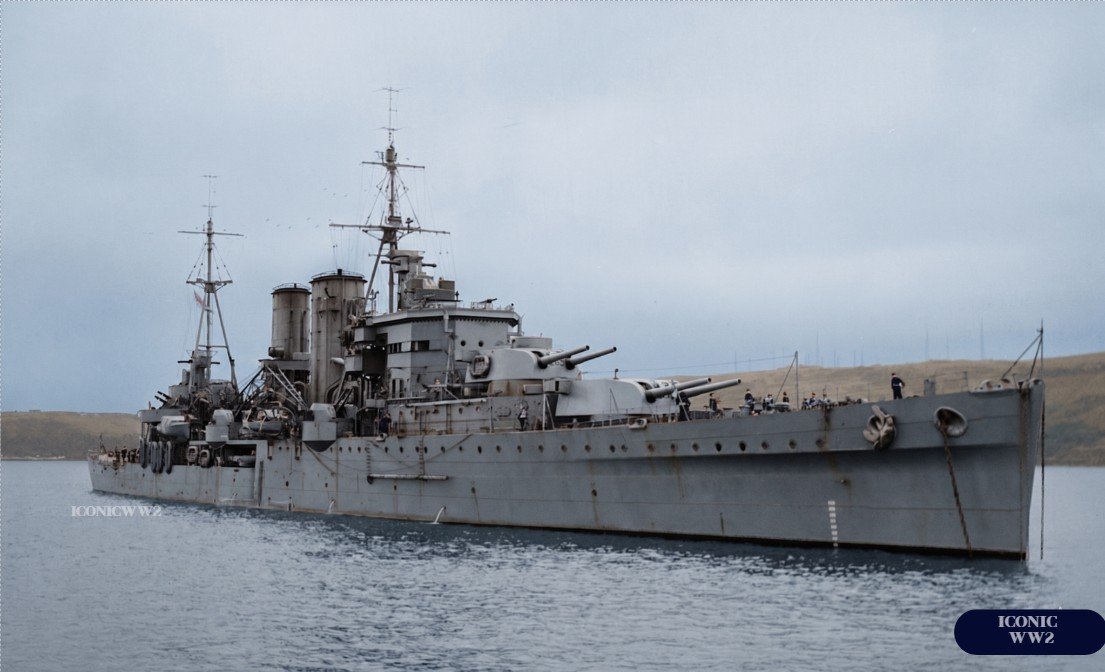
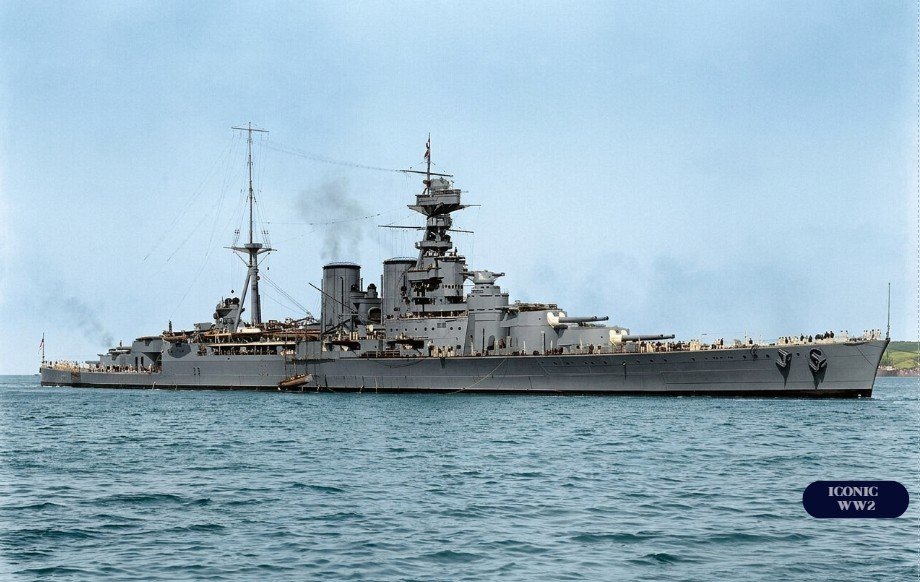
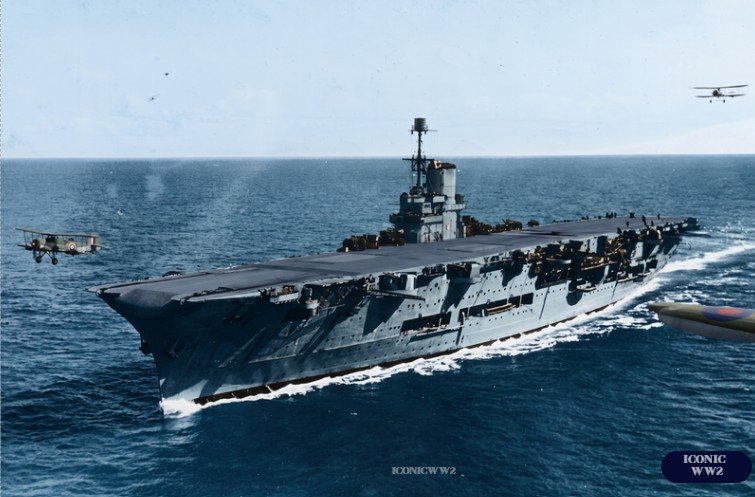
HMS Belfast was one of the two ships of the Edinburgh sub-class, the largest and most powerful of Britain’s inter-war Town-class light cruisers. Built by Harland & Wolff in the city whose name she bore and commissioned on 5 August 1939, she was designed to answer the big new cruisers of Japan and the United States and to protect the trade routes on which Britain depended.
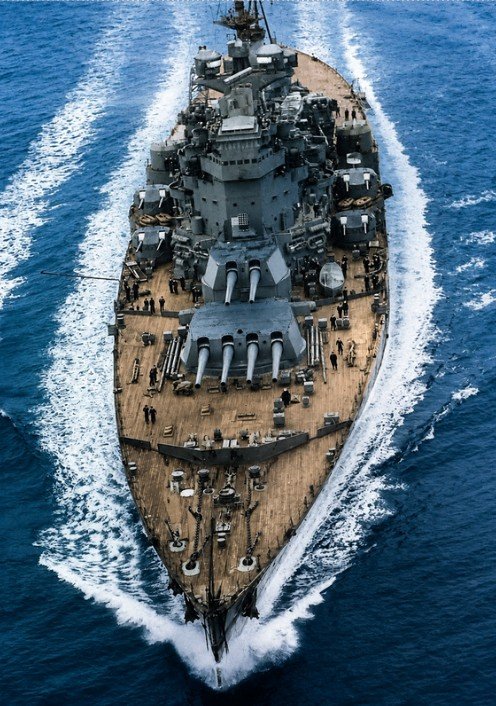
Her main battery was twelve 6-inch (152 mm) guns in four triple turrets — heavy firepower for a light cruiser — backed by a dozen 4-inch anti-aircraft guns and a modern outfit of fire control. On a hull about 187 m long she could make some 32 knots. She entered service just weeks before the outbreak of war, and her career very nearly ended before it had properly begun.
On 21 November 1939, only three months into the war, Belfast was steaming out of the Firth of Forth when she detonated a German magnetic mine. The explosion lifted the ship bodily, broke her keel and buckled her machinery; no one was killed outright, but the damage was so severe that many expected her to be written off.
Instead she was saved by an extraordinary reconstruction that kept her out of the war for nearly three years. She was rebuilt stronger and, with anti-torpedo bulges that widened her hull, more stable — though the added weight cost her a little speed. When she finally returned to service in late 1942, she was in many ways a tougher ship than the one the mine had almost destroyed.
Belfast returned to a hard war in the worst waters of all. As flagship of the 10th Cruiser Squadron she covered the Arctic convoys — the desperate runs carrying supplies to the Soviet Union around the North Cape of Norway, through storms, pack ice and the constant threat of German U-boats, aircraft and heavy warships based in the fjords.
It was brutal, freezing work, fought in the long polar night, and it placed the cruiser squadrons squarely between the convoys and the German surface raiders. In December 1943 that duty brought Belfast to the most important surface action of her career.
On 26 December 1943, the German battleship Scharnhorst sortied to attack a Russia-bound convoy and ran instead into the covering forces. In the Arctic darkness it was Belfast, flagship of the cruiser force, that first found her by radar, shadowed her, and fired the star shell that lit her up for the guns of the squadron.
Driven off from the convoy and steered toward the waiting battleship HMS Duke of York, the Scharnhorst was pounded to a wreck and sank that evening with the loss of nearly 1,900 men — only 36 survived. The Battle of North Cape was one of the Royal Navy’s last great surface victories, and Belfast had been at the very heart of it.
Six months later Belfast opened another kind of battle. On the morning of 6 June 1944 she lay off the Normandy coast as flagship of a bombardment force, and her 6-inch guns fired some of the opening shots of D-Day in support of the British and Canadian landings on Gold and Juno beaches.
She did not fire once and withdraw. For more than five weeks Belfast remained off the coast, dropping salvo after salvo onto German positions inland — one of the hardest-worked bombardment ships of the whole invasion, and a floating battery the soldiers ashore learned to call on when they were pinned down.
Belfast’s war did not end in 1945; late in the conflict she was sent east to the British Pacific Fleet, and after the war she soldiered on for another two decades. She served through the Korean War of 1950–52, bombarding shore targets in support of UN forces and taking a hit from a communist shore battery, before a final modernisation and paying off in 1963.
Then she was spared the breakers. Preserved as a museum ship, Belfast has been moored on the Thames beside Tower Bridge since 1971, part of the Imperial War Museum — one of the very few surviving big-gun warships of the Second World War, and the only one open to the public in Britain.
HMS Belfast is a survivor twice over: of the mine that nearly destroyed her in 1939, and of the scrapyard that claimed almost every one of her sisters. In between she packed a career few cruisers could match — the Arctic convoys, the destruction of the Scharnhorst, and the long bombardment of the Normandy shore.
She endures now not as a wreck or a memory but as a ship you can walk aboard: eleven thousand tons of riveted steel that fought in some of the defining actions of the naval war, and the last of the Royal Navy’s big-gun cruisers still afloat.
- Roger Chesneau (ed.), Conway’s All the World’s Fighting Ships 1922–1946 (Conway Maritime Press).
- Alan Raven & John Roberts, British Cruisers of World War Two (Arms & Armour Press).
Iconic WW2 is free, ad-free and tracker-free — kept going only by the time it takes to research, restore and colorize each machine. If this profile was worth your read, you can help the archive grow.
| Class | Town-class (Edinburgh sub-class) |
| Builder | Harland & Wolff, Belfast |
| Nation | United Kingdom |
| Type | Light cruiser |
| Commissioned | 5 August 1939 |
| Fate | Museum ship, River Thames, since 1971 |
| Main Guns | 12× 6-inch (152 mm) /50 |
| Arrangement | 4 triple turrets |
| Secondary | 12× 4-inch (102 mm) AA |
| Torpedoes | 6× 21-inch tubes |
| Machinery | Geared turbines, 4 shafts |
| Power | ~80,000 shp |
| Max Speed | ~32 knots |
| Range | ~8,600 nmi at 13 kn |
| Length | ~187 m |
| Beam | ~19 m (widened after rebuild) |
| Full Load | ~13,000 t (after rebuild) |
| Crew | ~750–850 |
| 1939 | Back broken by a magnetic mine, Firth of Forth |
| 1943 | North Cape — helped sink the Scharnhorst |
| 1944 | D-Day bombardment, Gold & Juno beaches |
| 1950–52 | Korean War shore bombardment |