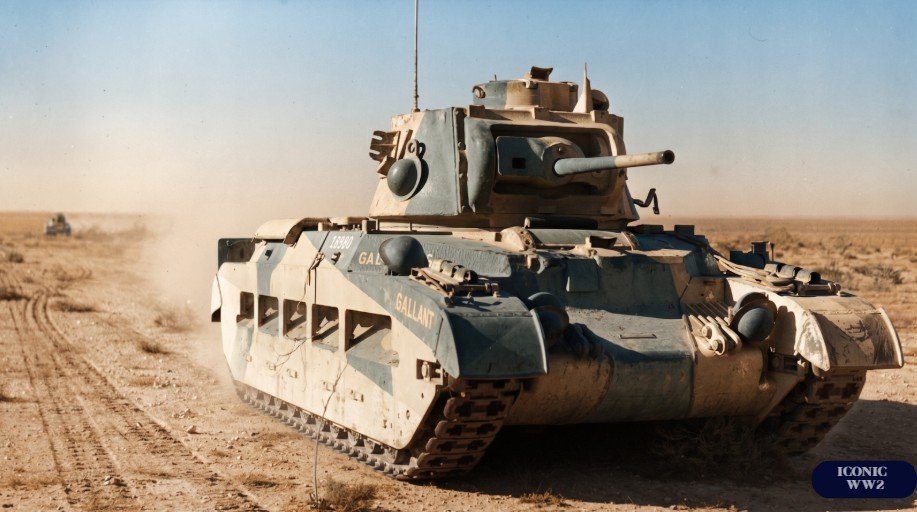
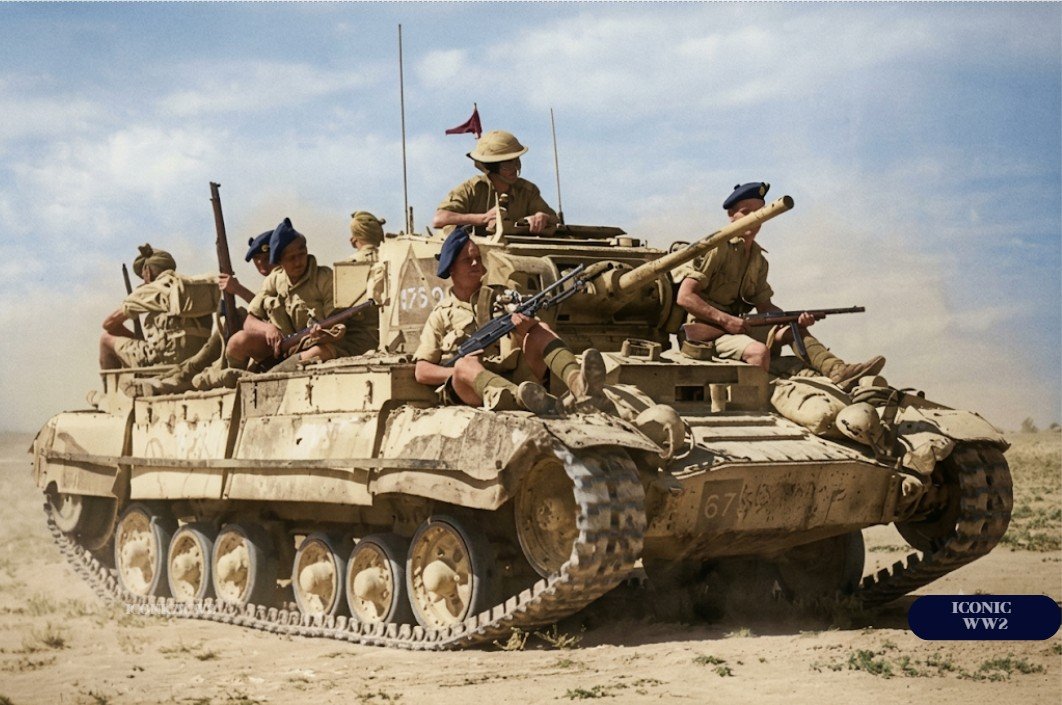
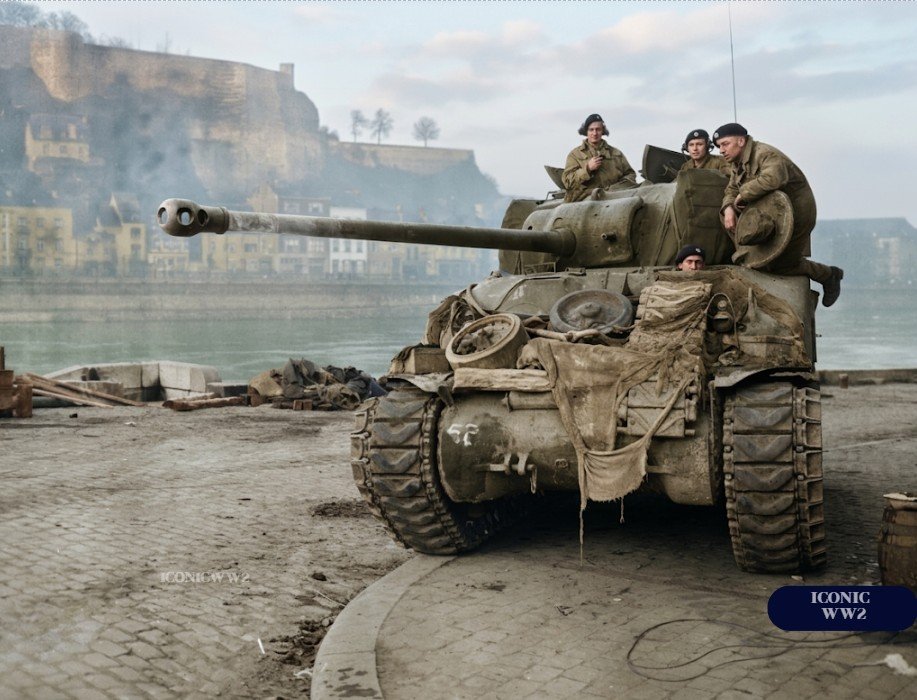
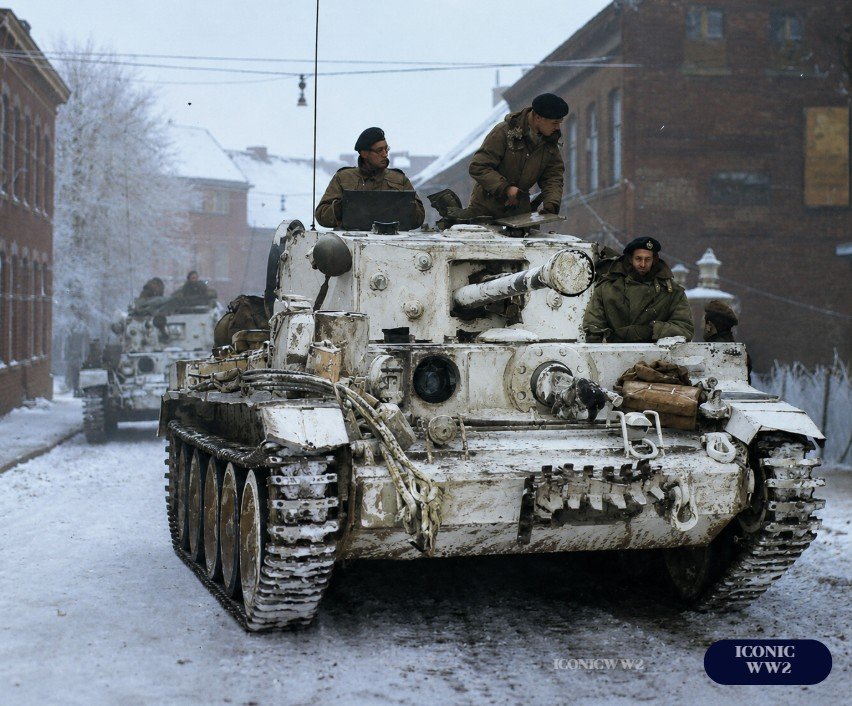
The Churchill was conceived in haste and crisis. As the British Army reeled from the fall of France in 1940 and braced for invasion, it urgently needed a new infantry tank — a heavily-armoured vehicle to advance at a walking pace alongside the foot soldiers and shield them from fire, in the doctrine that had also produced the Matilda. The specification called above all for thick armour and the ability to cross the shell-torn ground of a battlefield reminiscent of the First World War.
Designed by Vauxhall Motors and rushed into production in 1941 as the Infantry Tank Mk IV (A22), it took its name — by happy coincidence — from the Prime Minister. The pressure to field it left no time to iron out its faults, and the early Churchills were so mechanically troubled that the tank's reputation nearly died at birth. Yet it would mature into one of the toughest, most versatile and best-loved British tanks of the war.
The Churchill's defining quality was its armour and its remarkable ability to cross difficult ground. Heavily protected from the outset, its frontal armour grew through successive marks to a colossal 152 mm on the definitive Mk VII — protection on a par with the German Tiger. Its long, all-round tracks and multiple small road wheels gave it an extraordinary capacity to climb steep slopes, cross trenches and claw its way over obstacles that stopped other tanks dead.
Its weaknesses were the mirror of its strengths. All that armour made it ponderously slow — barely 24 km/h on roads — and the early models were dogged by unreliable transmissions and engines that had been rushed into service. And, as with the Matilda, the tank's gun lagged behind its protection: it began with a feeble 2-pounder, progressed to the 6-pounder, and only later mounted a dual-purpose 75 mm gun able to fire a useful high-explosive shell.
What saved the Churchill was steady, determined development. The mechanical bugs were worked out, the armour and armament improved mark by mark, and the design's great virtues — toughness and cross-country ability — were exploited to the full. By the war's later years it had become a thoroughly reliable and respected vehicle, and its capacious, adaptable hull made it the ideal basis for a whole menagerie of special-purpose machines.
The gun-tank line ran from the early Marks I to VI, tracing the upgrade from 2-pounder through 6-pounder to 75 mm, to the heavily-armoured Mk VII of 1944, the definitive battle version with its 75 mm gun and 152 mm frontal armour.
But the Churchill is remembered above all as the workhorse of “Hobart's Funnies” — the specialised armour developed for the D-Day assault. The Churchill Crocodile was a fearsome flamethrower tank towing an armoured fuel trailer; the Churchill AVRE (Armoured Vehicle Royal Engineers) carried a short, heavy Petard spigot mortar to smash bunkers and could lay fascines, bridges and demolition charges. Bridgelayers, carpet-layers and recovery vehicles completed a family that made the Churchill one of the most versatile chassis of the war.
The Churchill’s combat debut was a catastrophe. A handful were committed to the disastrous Dieppe Raid of August 1942, where most bogged down on the shingle beach or were knocked out, and the wreck-strewn shore seemed to confirm every doubt about the design.
Redemption came in Tunisia and Italy, where the Churchill’s astonishing climbing ability let it scale hills and cross terrain the Germans had thought impassable to tanks — famously surprising the enemy by appearing on heights no armour was supposed to reach. In the mountainous Italian campaign especially, its cross-country prowess and thick infantry-tank armour (up to ~152 mm on later marks) made it invaluable in the slow, grinding advance.
The Churchill’s greatest service came in North-West Europe from D-Day onward, and it came in strange shapes. The specialised Churchills of Major-General Percy Hobart’s 79th Armoured Division — the famous “Funnies” — spearheaded the assault on the Normandy beaches: the AVRE with its bunker-busting petard mortar, bridge-layers and fascine-carriers, and the fearsome Crocodile flamethrower.
Burning out strongpoints and blasting through fortifications, the Funnies cracked defences that would have cost an ordinary tank force dearly, all the way from the beaches into Germany. A number of standard Churchills were also supplied to the Soviet Union, where they fought at Kursk and elsewhere. The tank that had failed at Dieppe ended the war as one of the most useful — and most adaptable — the British ever built.
The Churchill overcame one of the worst starts of any tank in the war to become a British favourite — slow and ungainly, but immensely tough, supremely capable across difficult ground, and adaptable to an extraordinary range of tasks. Where the Matilda's career was brief, the Churchill grew and improved until it could stand in the line of battle to the very end.
With around 5,640 built, it is best remembered for two things: its near-impenetrable armour and its role as the chassis of choice for the specialised engineering vehicles that cracked the Atlantic Wall. If it was never a great tank-killer, the Churchill was something arguably more useful — the dependable, heavily-armoured problem-solver that went where other tanks could not and did the jobs no one else could.
- David Fletcher, The Universal Tank / The Great Tank Scandal (HMSO).
- David Fletcher & Steven J. Zaloga, Churchill Infantry Tank 1941–51 (Osprey, New Vanguard).
- Bryan Perrett, The Churchill (Ian Allan).
Iconic WW2 is free, ad-free and tracker-free — kept going only by the time it takes to research, restore and colorize each machine. If this profile was worth your read, you can help the archive grow.
| Manufacturer | Vauxhall Motors |
| Designation | Infantry Tank Mk IV (A22) |
| Nation | United Kingdom |
| Role | Infantry tank |
| Service Entry | 1941 |
| Crew | 5 (commander, gunner, loader, driver, hull gunner) |
| Units Built | ~5,640 |
| Mk I–VI | 2-pdr → 6-pdr → 75 mm evolution |
| Mk VII | 75 mm, 152 mm armour — definitive |
| Churchill Crocodile | Flamethrower tank + fuel trailer |
| Churchill AVRE | Petard mortar — Royal Engineers |
| Bridgelayer / ARK | Assault engineering vehicles |
| Engine | Bedford twin-six |
| Type | Flat-12 petrol |
| Power | ~350 hp |
| Note | Underpowered, but superb climber |
| Road Speed | ~24 km/h |
| Cross-country Speed | ~15 km/h |
| Range (road) | ~145 km |
| Feature | Outstanding obstacle & slope crossing |
| Length | 7.44 m |
| Width | 3.25 m |
| Height | 2.49 m |
| Combat Weight | ~40 t |
| Main Gun | 6-pdr / later 75 mm |
| Secondary | 2× 7.92 mm Besa MG |
| Front Armour | up to 152 mm (Mk VII) |
| Construction | Riveted then welded |