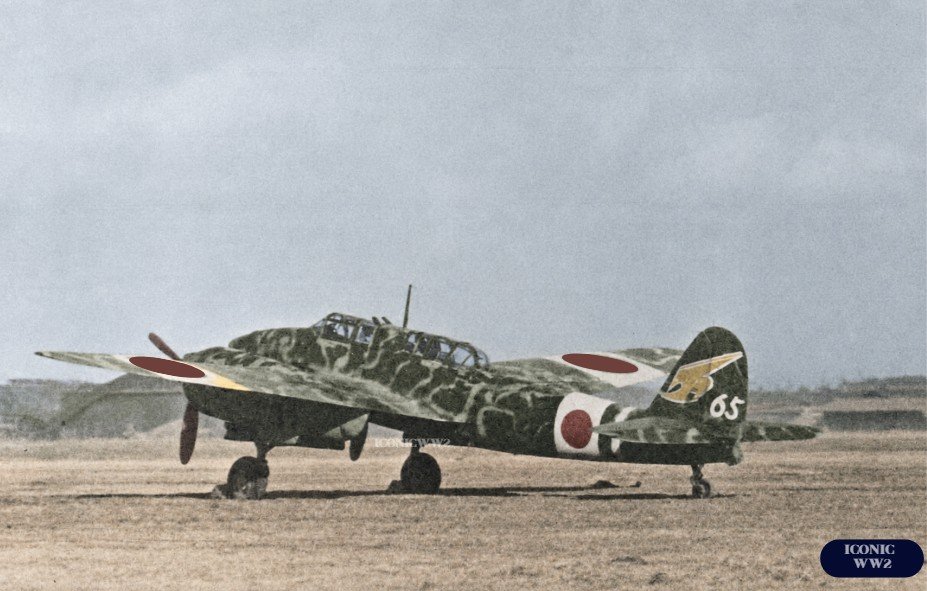
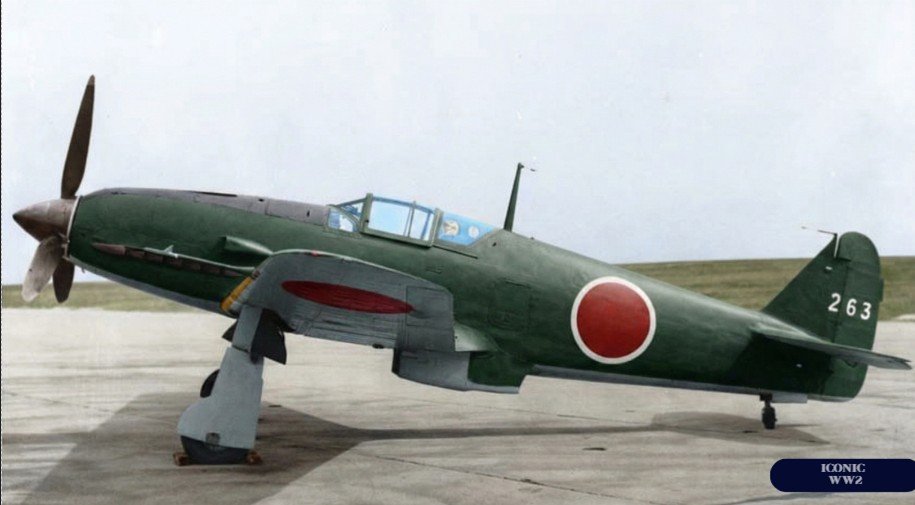
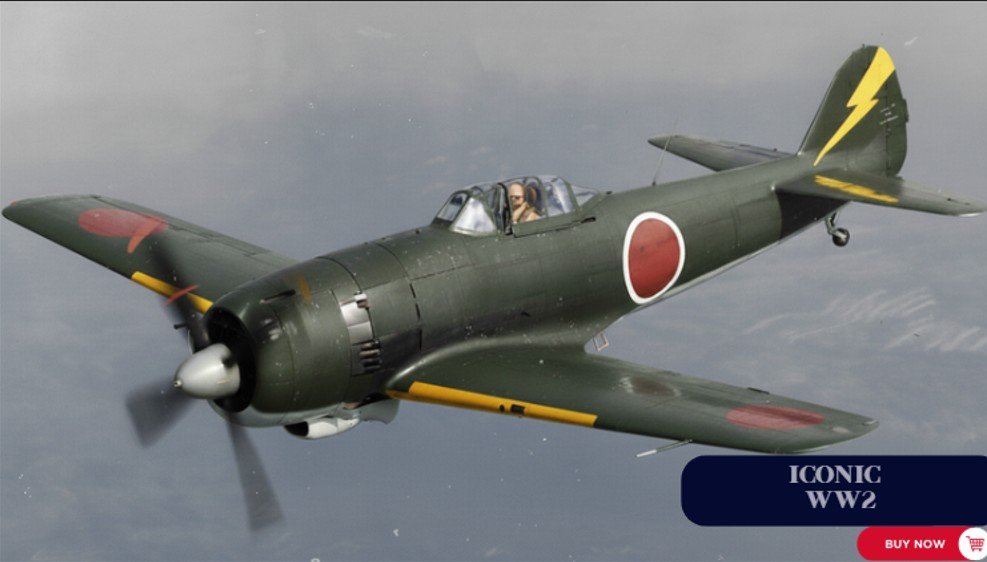
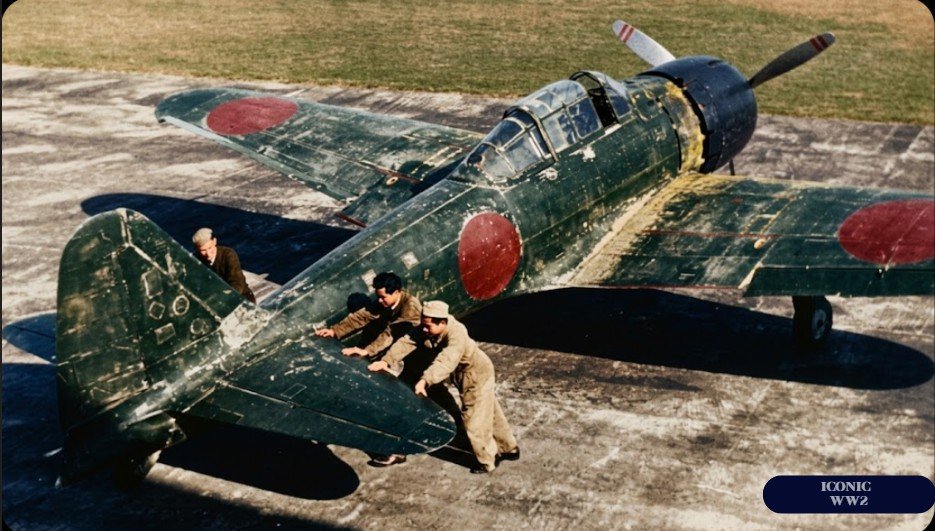
In December 1937 the Imperial Japanese Army Air Force asked Nakajima for a successor to its fixed-undercarriage Ki-27 — a monoplane that could fly faster and farther while preserving the dazzling agility on which Japanese Army fighter doctrine was built. The design fell to a team led by Hideo Itokawa, later famous as the father of Japanese rocketry, who produced a clean, light, retractable-gear monoplane: the Ki-43 Hayabusa, or “Peregrine Falcon”.
The first prototype flew in January 1939, and at once the programme nearly foundered. Service pilots, steeped in the whirling dogfights of the Ki-27, found the heavier, faster Hayabusa disappointingly unresponsive in a turn and were reluctant to accept it. Nakajima's answer was elegant and decisive: a set of “butterfly” combat flaps that could be deployed in a turn to tighten the radius dramatically. With those flaps the Ki-43 could out-turn almost anything in the sky, and the Army's objections evaporated.
The philosophy behind the Hayabusa was the same that shaped the Navy's Zero: agility and range above all else, bought at the price of protection and firepower. Early aircraft were astonishingly light, lacked armour and self-sealing tanks, and carried a feeble armament of just two machine guns — at first a pair of rifle-calibre 7.7mm weapons, soon upgraded to two 12.7mm Ho-103.
Power came from a Nakajima radial of modest output — the early Ha-25 of around 980 hp, later the more powerful Ha-115 — giving a top speed that never rose much above 530 km/h. The Hayabusa was thus always under-gunned and under-powered by Western standards. But it was a delight to fly, superbly manoeuvrable and blessed with long range, and in the opening months of the Pacific war that combination proved devastating.
As the war turned, Nakajima tried to address the type's growing obsolescence. The Ki-43-II introduced a more powerful engine, pilot armour, rudimentary self-sealing tanks and clipped wings for better diving and roll, while the final Ki-43-III squeezed out a little more performance. None of it could disguise the fact that the design had been overtaken by heavier, faster Allied fighters.
The initial production Ki-43-I established the type in 1941. The definitive and most numerous version was the Ki-43-II, which added the uprated Ha-115 engine, armour protection, a reflector gunsight and clipped wingtips, transforming a fragile early fighter into a more survivable combat aircraft.
The late-war Ki-43-III fitted a still more powerful engine in a final attempt to keep the design competitive. In total some 5,900 Hayabusa were completed by Nakajima and Tachikawa, making it the most-produced fighter the Japanese Army ever fielded — second among all Japanese aircraft only to the Navy's Zero.
The Hayabusa was everywhere the Japanese Army fought. It spearheaded the conquest of Malaya, Singapore and Burma, ranged across China and the Dutch East Indies, and battled over New Guinea, the Philippines and the approaches to the Japanese home islands. To Allied pilots its slender silhouette was so easily mistaken for the Navy's Zero that the two were often lumped together in combat reports.
Like the Zero it so resembled, the Hayabusa was built around one quality above all: manoeuvrability. Light, docile and fitted with unique “butterfly” combat flaps that tightened its turn still further, it could out-turn anything the Allies could put against it in 1942 — and in the war’s first year, when Japanese pilots were superbly trained, that made it a deadly opponent across the whole of southern Asia.
Pilots who underestimated it paid dearly: at low and medium speeds the Hayabusa could turn inside virtually any Allied fighter, and several of the IJAAF's highest-scoring aces built their reputations on it. But its weaknesses were merciless. Its two machine guns struggled to bring down rugged American aircraft, and its lack of protection meant that a single well-aimed burst could turn it into a fireball. As the P-38, P-47, P-51 and Spitfire arrived in numbers, Allied pilots learned never to dogfight the “Oscar” but to use speed, the dive and hit-and-run tactics against it.
By 1945 the once-feared Hayabusa was thoroughly outclassed, and like so many Japanese aircraft of the period a number ended their service in the kamikaze role during the defence of Okinawa and the home islands.
The Ki-43 Hayabusa was, for the Japanese Army, exactly what the Zero was for the Navy: the symbol of its air power, the mount of its aces, and a fighter whose early dominance flattered to deceive. Light, agile and long-legged, it ruled the skies of Southeast Asia in 1941–42 and remained a dangerous opponent in a turning fight to the very end.
Yet the same design choices that made it so nimble — minimal armament, no protection, a small light engine — left it fatally exposed once the Allies fielded faster, tougher and more heavily armed fighters. Beloved by its pilots and produced in greater numbers than any other Japanese Army aircraft, the Hayabusa is best remembered as a superb expression of an obsolete idea: the lightweight dogfighter, in an age that had moved on.
- René J. Francillon, Japanese Aircraft of the Pacific War (Putnam).
- Hiroshi Ichimura, Ki-43 ‘Oscar’ Aces of World War 2 (Osprey, Aircraft of the Aces).
- William Green, Warplanes of the Second World War (Macdonald).
Iconic WW2 is free, ad-free and tracker-free — kept going only by the time it takes to research, restore and colorize each machine. If this profile was worth your read, you can help the archive grow.
| Manufacturer | Nakajima Aircraft Company |
| Designer | Hideo Itokawa |
| Nation | Japan |
| Role | Fighter |
| First Flight | January 1939 |
| Service Entry | 1941 |
| Allied Codename | "Oscar" |
| Units Built | ~5,900 |
| Ki-43-I | Early model, 1941 |
| Ki-43-II | Armour, clipped wings, most-produced |
| Ki-43-III | Uprated engine, late-war |
| Engine | Nakajima Ha-115 |
| Type | 14-cyl air-cooled radial |
| Power | ~1,150 hp |
| Feature | “Butterfly” combat flaps |
| Max Speed | 536 km/h @ 6,000 m |
| Service Ceiling | ~11,200 m |
| Range | ~1,760 km (combat) |
| Climb Rate | ~16 m/s |
| Wingspan | 10.84 m |
| Length | 8.92 m |
| Height | 3.27 m |
| Wing Area | 21.40 m² |
| Empty Weight | 1,910 kg |
| Max Takeoff | 2,925 kg |
| Machine Guns | 2× 12.7mm Ho-103 |
| Bombs (optional) | 2× 250 kg |