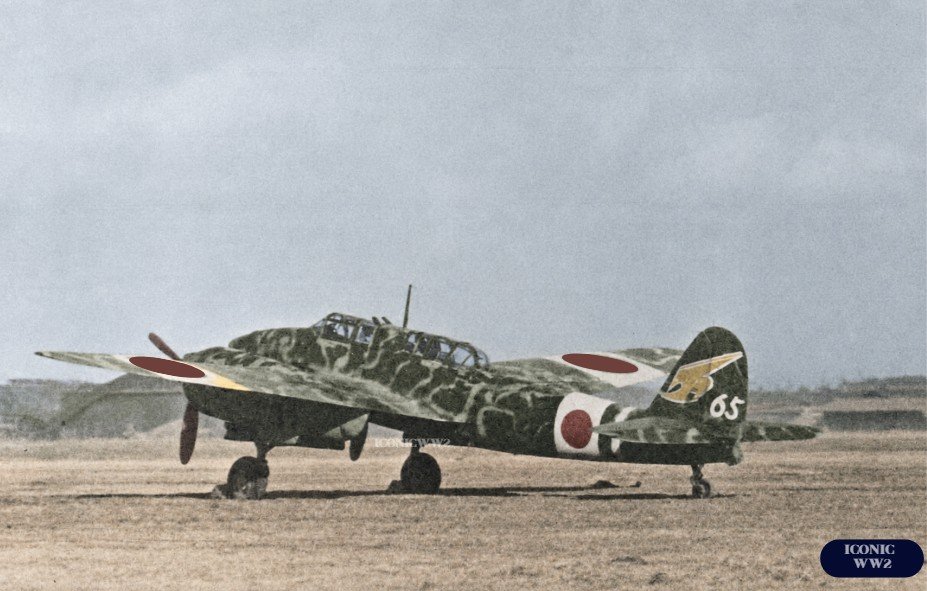
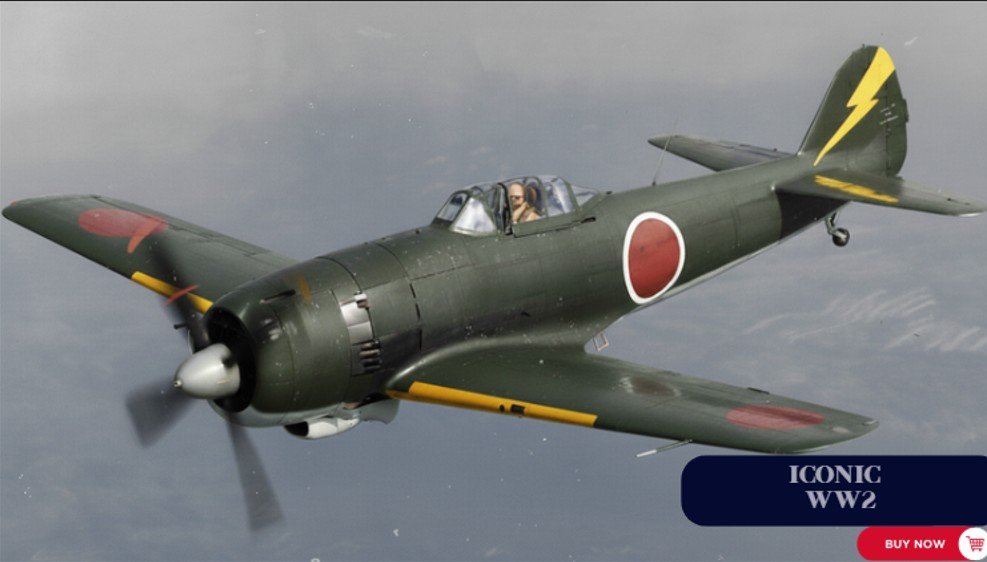
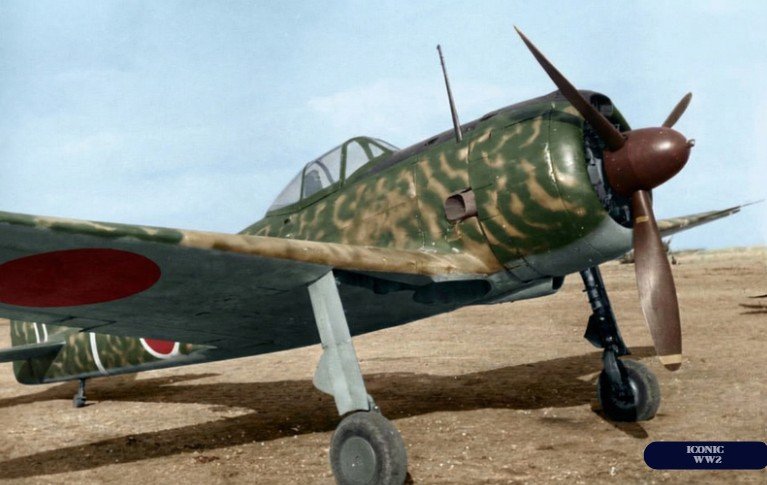
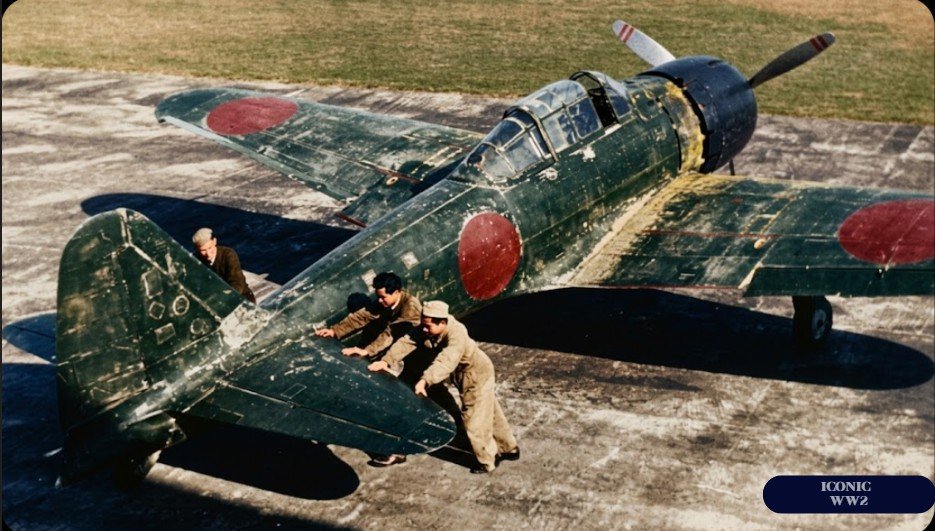
Among the fighters Japan flew in the Second World War, the Kawasaki Ki-61 Hien (“Flying Swallow”) was the odd one out. Where the Mitsubishi A6M Zero, the Nakajima Ki-43 and almost every other Japanese fighter was built around an air-cooled radial engine, the Ki-61 alone carried a sleek, liquid-cooled inline V12 — the only Japanese fighter of the war to see mass service so powered. Its long, pointed nose gave it a silhouette utterly unlike its stablemates.
It was the work of Kawasaki and its chief designer Takeo Doi, who favoured the clean lines a liquid-cooled engine allowed. The result, first flown in December 1941, looked more like a European fighter than a Japanese one — and that resemblance would soon cause the Allies real confusion.
The heart of the Hien was the Kawasaki Ha-40, a licence-built copy of the German Daimler-Benz DB 601A — the same inverted-V12 that powered the Bf 109E, the Macchi C.202 and the Reggiane Re.2001. Rated at around 1,175 hp, it drove the Ki-61 to about 590 km/h and, crucially, gave it something the Zero conspicuously lacked: the ability to dive hard and fast without shedding its wings.
Doi paired that engine with another break from Japanese practice. Where earlier fighters had traded protection for agility, the Ki-61 carried pilot armour and self-sealing fuel tanks from the outset, making it far tougher than the fragile Zero. It was heavier and less nimble in a turn than its radial-engined cousins, but it could take punishment, dive away from trouble and come back — a genuinely modern fighter by the standards of 1943.
When the Hien first appeared over New Guinea in 1943, Allied pilots and intelligence officers were baffled. Its inline engine and slender nose looked nothing like a Japanese design, and the first reports insisted it must be a licence-built Messerschmitt Bf 109 or an imported Italian fighter. Convinced it was of European origin, Allied intelligence gave the apparently Italian machine the codename “Tony.”
The mistake was understandable. Japan had indeed bought the DB 601 licence from Germany, and the Ki-61 was the closest thing in the Pacific to the inline-engined fighters of Europe. Only later did the Allies grasp that “Tony” was wholly Japanese — a Kawasaki design around a German engine, built in Japan, and one of the more dangerous opponents they would meet in the south-west Pacific.
The Hien entered combat in the spring of 1943 with the 68th and 78th Sentai over the brutal air battles of New Guinea — Wewak, Rabaul and the Huon Peninsula. There it met the American P-38 Lightning and P-47 Thunderbolt, fast, heavy fighters that could dive away from a Zero at will. Against them the Ki-61 was the first Japanese Army fighter that could actually follow — diving, chasing and trading blows on something like even terms.
Its ruggedness earned respect: a Hien could absorb hits that would have destroyed a Zero and still bring its pilot home. But New Guinea was a graveyard of Japanese air power, and the type suffered as much from the climate and the collapsing supply chain as from the enemy. Serviceability was poor, the liquid-cooled engine demanded maintenance that forward strips could not provide, and attrition steadily ground the units down.
The Hien’s Achilles’ heel was always its engine. The improved Ki-61-II needed the more powerful Ha-140, but that engine proved troublesome — and then catastrophe struck. In January 1945 American B-29s bombed the Kawasaki engine works at Akashi, and Ha-140 production stopped, leaving around 275 finished Ki-61-II airframes standing at the factory with no engines to fit.
The solution was inspired improvisation. Kawasaki grafted a compact Mitsubishi Ha-112 radial onto the orphaned inline airframes — and the resulting Ki-100 proved to be one of the finest fighters Japan built in the entire war: lighter, reliable and superb at altitude against the B-29. The Hien’s greatest legacy, in a bitter irony, was the radial-engined fighter born from its own failure.
As the war closed in on Japan, the surviving Hien were pulled back for the home defence of the Home Islands. The most famous of these units, the 244th Sentai defending Tokyo, threw its Ki-61s against the high-flying B-29 Superfortresses pounding the capital in 1944–45 — one of the very few Army fighters with the altitude performance to reach them at all.
Even then the bombers flew high and fast, and a stripped, lightened Hien clawing for height often got only a single firing pass. Some pilots resorted to taiatari — deliberate ramming — hurling their fighters into the bombers when guns alone would not do. It was a measure both of the Hien’s limits at extreme altitude and of the desperation of Japan’s final defence.
The Ki-61 Hien was the most conventional of Japan’s wartime fighters and, in some ways, the most European: armoured, rugged, fast in a dive and built around a borrowed German engine. It was never the finest dogfighter in the Pacific, but it was among the toughest and most balanced fighters Japan fielded — and unlike the Zero, it could meet the heavy American fighters of 1943–44 on terms it could survive.
Its story is one of promise held back by a single weakness: an engine its industry could never reliably build or maintain. Around 3,000 Hien were completed, and their finest hour came second-hand, in the radial-engined Ki-100 that rose from their engineless airframes. It was the only Japanese fighter of the war to see mass service on an inline engine, and the only one whose production was ended by the bombing of an engine factory rather than by any fault of the airframe.
- René J. Francillon, Japanese Aircraft of the Pacific War (Putnam).
- William Green, Warplanes of the Second World War (Macdonald).
- Bill Gunston, The Illustrated Encyclopedia of Combat Aircraft of World War II (Salamander Books).
Iconic WW2 is free, ad-free and tracker-free — kept going only by the time it takes to research, restore and colorize each machine. If this profile was worth your read, you can help the archive grow.
| Manufacturer | Kawasaki Aircraft Industries |
| Designer | Takeo Doi |
| Nation | Japan |
| Role | Fighter / Interceptor |
| First Flight | December 1941 |
| Service Entry | 1942 (combat 1943) |
| Allied Codename | "Tony" |
| Units Built | ~3,000 |
| Ki-61-I | 2× 12.7mm + 2× 7.7mm (early) |
| Ki-61-I KAI | 2× 20mm + 2× 12.7mm |
| Ki-61-II KAI | Ha-140 engine, ~1,500 hp |
| Ki-100 | Radial conversion, 1945 |
| Engine | Kawasaki Ha-40 |
| Type | Inverted V12, licence-built DB 601A |
| Power | ~1,175 hp |
| Note | Japan’s only mass inline fighter engine |
| Max Speed | ~590 km/h @ ~5,000 m |
| Service Ceiling | ~10,000 m |
| Range | ~1,100 km |
| Strengths | Fast dive, armour, self-sealing tanks |
| Wingspan | 12.00 m |
| Length | 8.75 m |
| Height | 3.70 m |
| Wing Area | 20.0 m² |
| Empty Weight | ~2,210 kg |
| Max Takeoff | ~3,470 kg |
| Cannon | 2× 20mm Ho-5 (KAI) |
| Machine Guns | 2× 12.7mm Ho-103 |
| Early model | 4× MG (2× 12.7 + 2× 7.7mm) |
| Bombs (optional) | 2× 250 kg |