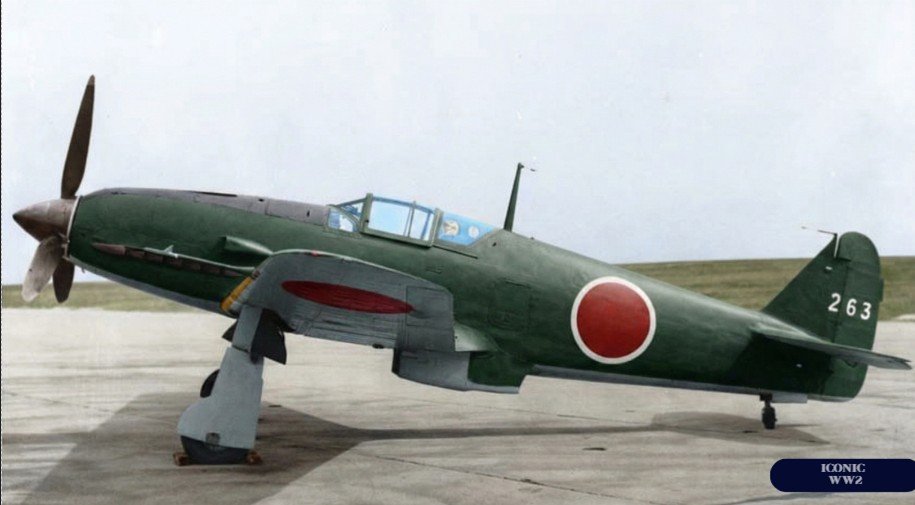
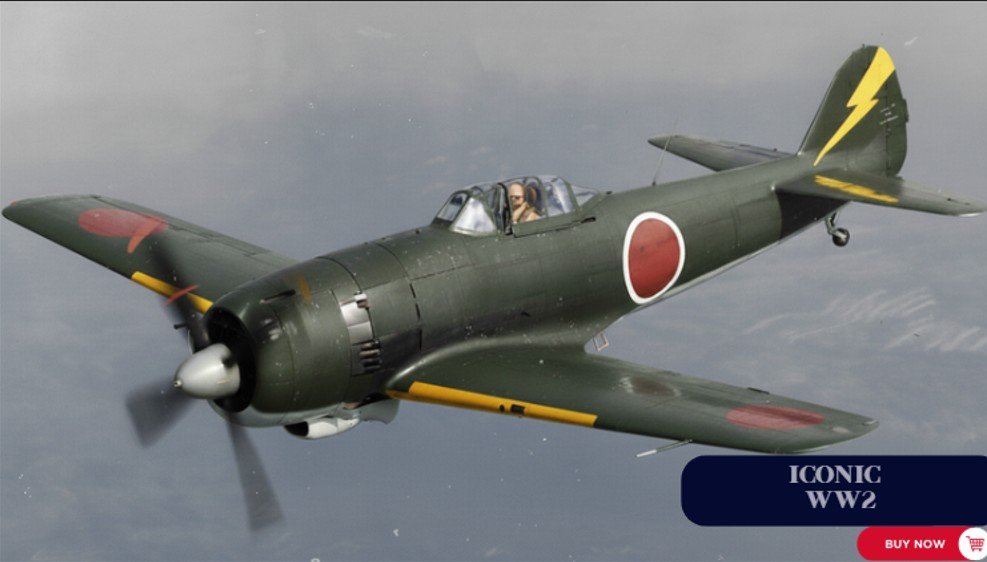
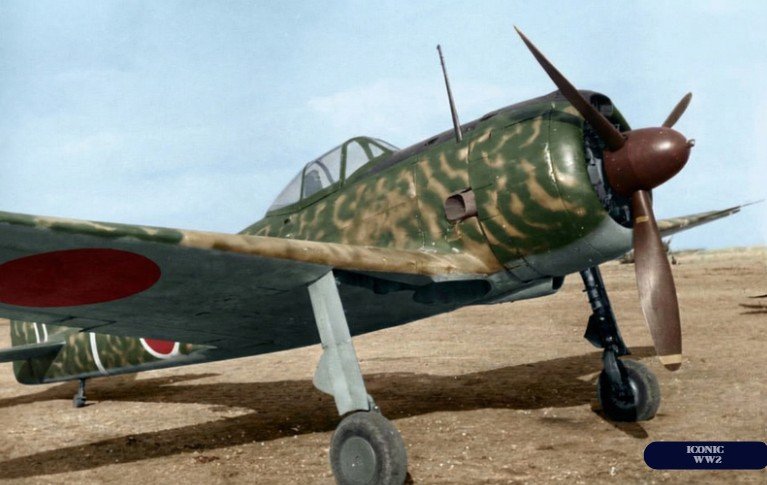
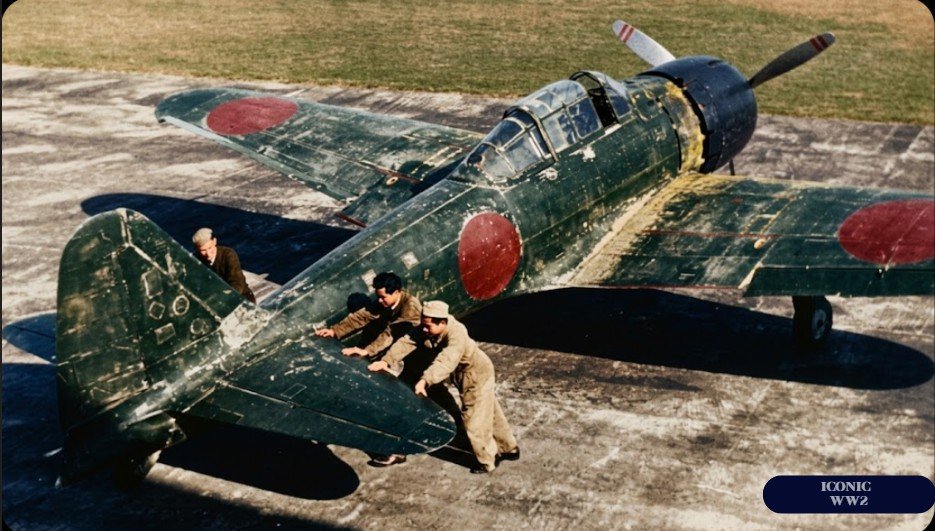
The Kawasaki Ki-45 Toryu (“Dragon Slayer”) was Japan’s answer to an idea that fascinated every major air force in the late 1930s: the twin-engine heavy fighter. Like the German Bf 110 Zerstörer it resembled, it was meant to be a long-range escort and bomber-destroyer — fast, heavily armed, and able to range far beyond the reach of single-engine fighters.
The design came from Kawasaki and the same chief engineer who would create the Ki-61 Hien, Takeo Doi. But where the Hien was elegant, the Toryu was a brute, and its path into service was long and difficult. The Army issued the requirement in 1937, and it took years of redesign before the aircraft was fit to fight.
The first prototypes, flown from January 1939, were underpowered and troublesome, their engines and retractable radiators giving endless trouble. The programme was very nearly abandoned. What saved it was a thorough redesign around a pair of reliable Mitsubishi Ha-102 radials of about 1,080 hp each — a marked contrast to the temperamental liquid-cooled engine that would plague its stablemate the Ki-61.
The reworked aircraft, the Ki-45 KAI, finally entered service in 1942, some five years after the requirement was written. By then the pure escort-fighter concept it had been built around was already discredited — but the sturdy, roomy airframe that emerged proved unexpectedly adaptable, and it was this versatility that would define the Toryu’s career.
What set the Toryu apart was its firepower. The standard Ki-45 KAI carried a nose battery that could include a heavy 37 mm cannon alongside twin 20 mm cannon — a punch heavy enough to wreck a bomber or a landing craft in a single pass, and far beyond anything Japan’s nimble single-seat fighters could carry.
Performance was modest by 1943 standards — around 540 km/h and unremarkable agility — and against Allied single-engine fighters the Toryu, like the Bf 110 before it, was dangerously outclassed in a straight dogfight. But as a stable gun platform hauling a heavy cannon armament, it was formidable in the roles that did not require it to turn with a Hellcat or a Mustang.
Denied its intended escort role, the Toryu found work wherever a rugged, hard-hitting twin-engine aircraft was useful. It flew ground-attack and anti-shipping missions over Burma, New Guinea and China, turning its cannon against troops, transport and coastal shipping, and served as a long-range patrol fighter across the sprawling Pacific and South-East Asian fronts.
In these roles its weaknesses mattered less and its strengths told. It could carry bombs, absorb damage on its two engines, and range over distances a single-engine fighter could not. Crews valued its toughness and firepower, and for two years it soldiered on as one of the Army’s more useful second-line combat aircraft — until a new and terrible target gave it a purpose it was almost perfectly suited to.
That target was the B-29. When the Superfortresses began their raids on Japan, the Toryu came into its own as a bomber-destroyer in the home-defence squadrons. Its heavy cannon could reach out and hurt the big bombers, and its two engines gave it the endurance to loiter and the climb to reach them — qualities the lightweight Army fighters lacked.
Most striking were the dedicated night-fighter versions, which mounted upward-firing oblique cannon behind the cockpit — Japan’s equivalent of the German Schräge Musik — to fire into a bomber’s belly from below. Before airborne radar reached Japanese units, the Toryu was among the most effective interceptors the home-defence force possessed, and it scored steadily against the B-29 raids of 1944–45.
As the raids grew heavier, some Toryu units turned to taiatari — ramming. It was a Ki-45 of the 4th Sentai that brought down one of the very first B-29s lost over Japan, ramming it during a raid on the Yawata steelworks in August 1944; from there, specialist air-to-air ramming flights went on to hurl their heavy fighters into the bomber streams when guns alone could not stop them. It was a measure of both the B-29’s dominance and the desperation of Japan’s final defence — a grim turn for an aircraft that had begun life as a sleek pre-war escort fighter.
Around 1,700 Toryu were built. It was never a great fighter, and the escort role it was designed for was a dead end — but in adversity it became something more useful than its designers had intended: a versatile heavy fighter, a capable ground-attacker, and finally one of the mainstays of Japan’s defence against the bombers burning its cities. The Dragon Slayer earned its name late, against the Superfortress.
- René J. Francillon, Japanese Aircraft of the Pacific War (Putnam).
- William Green, Warplanes of the Second World War (Macdonald).
- Bill Gunston, The Illustrated Encyclopedia of Combat Aircraft of World War II (Salamander Books).
Iconic WW2 is free, ad-free and tracker-free — kept going only by the time it takes to research, restore and colorize each machine. If this profile was worth your read, you can help the archive grow.
| Manufacturer | Kawasaki Aircraft Industries |
| Designer | Takeo Doi |
| Nation | Japan |
| Role | Twin-engine heavy fighter / night fighter |
| First Flight | January 1939 (KAI: 1940) |
| Service Entry | 1942 |
| Allied Codename | "Nick" |
| Units Built | ~1,700 |
| Ki-45 KAI-a | Nose 20mm + 37mm cannon |
| Ki-45 KAI-b | Ground-attack / anti-shipping |
| Ki-45 KAI-c | Bomber-destroyer, oblique cannon |
| Ki-45 KAI-d | Night fighter |
| Engines | 2× Mitsubishi Ha-102 |
| Type | 14-cyl twin-row radial |
| Power | 2× ~1,080 hp |
| Note | Reliable radials, unlike the Ki-61’s inline |
| Max Speed | ~540 km/h |
| Service Ceiling | ~10,000 m |
| Range | ~2,000 km |
| Roles | Heavy fighter, ground attack, night interception |
| Wingspan | 15.02 m |
| Length | 11.00 m |
| Height | 3.70 m |
| Wing Area | 32.0 m² |
| Empty Weight | ~4,000 kg |
| Max Takeoff | ~5,500 kg |
| Nose cannon | 1× 37mm Ho-203 |
| Cannon | 2× 20mm Ho-5 |
| Oblique (night fighter) | 2× 20mm upward-firing |
| Rear gun | 1× 7.9mm (flexible) |