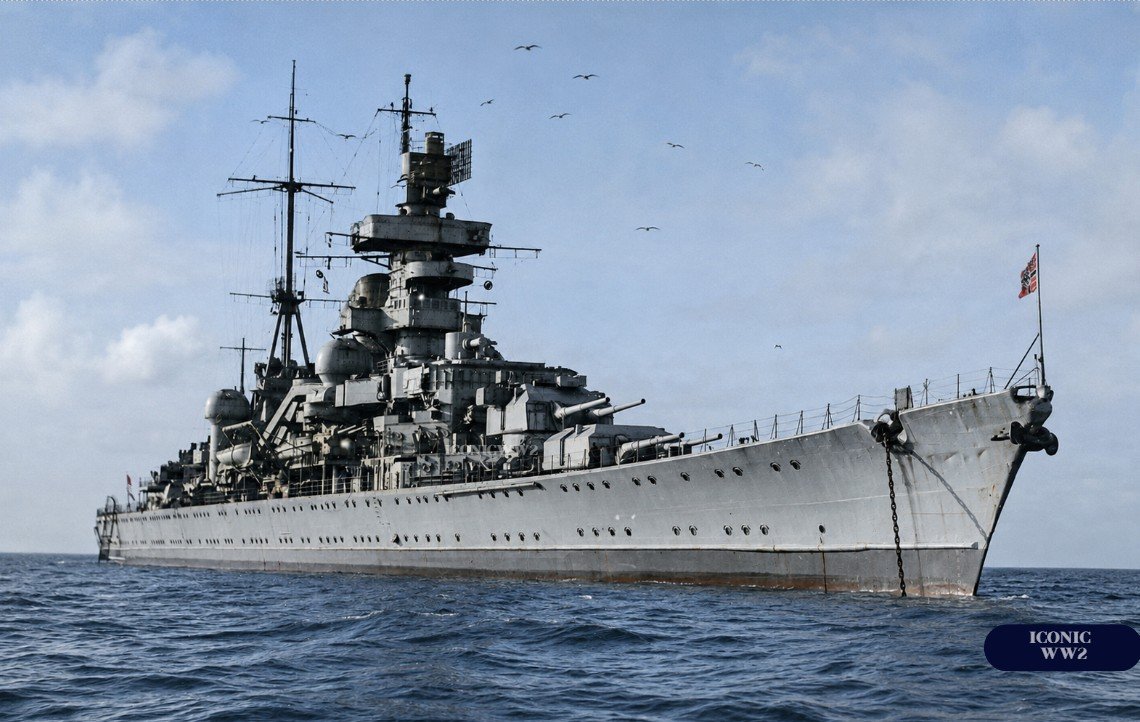
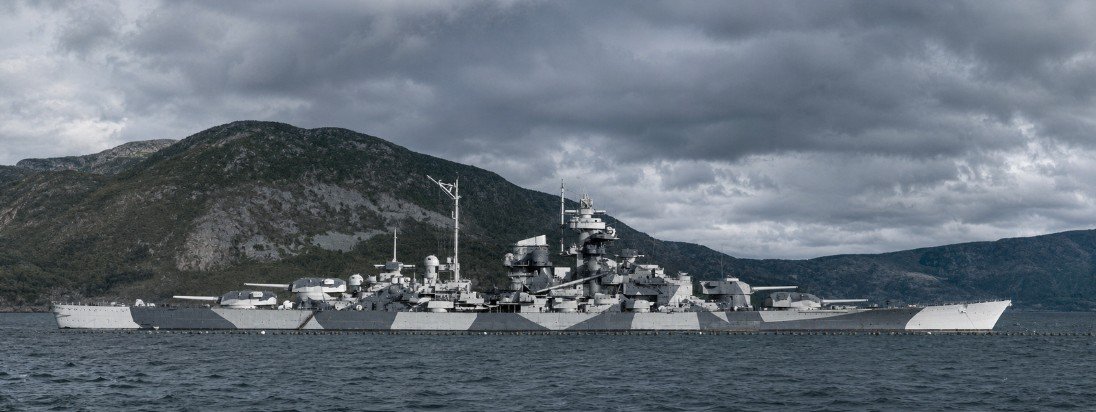
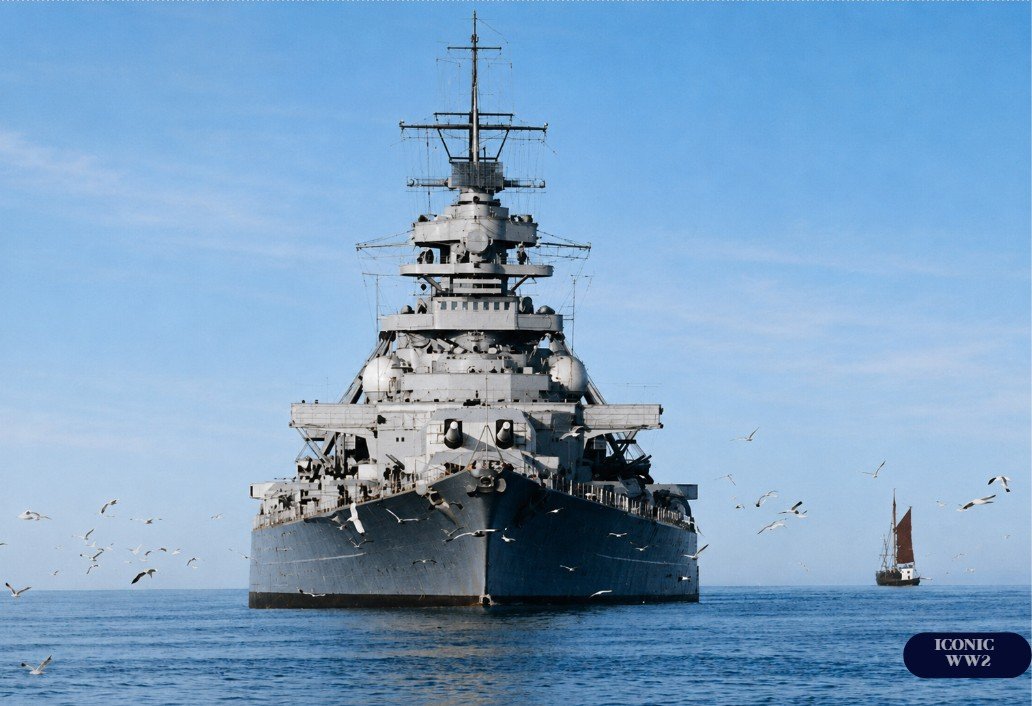
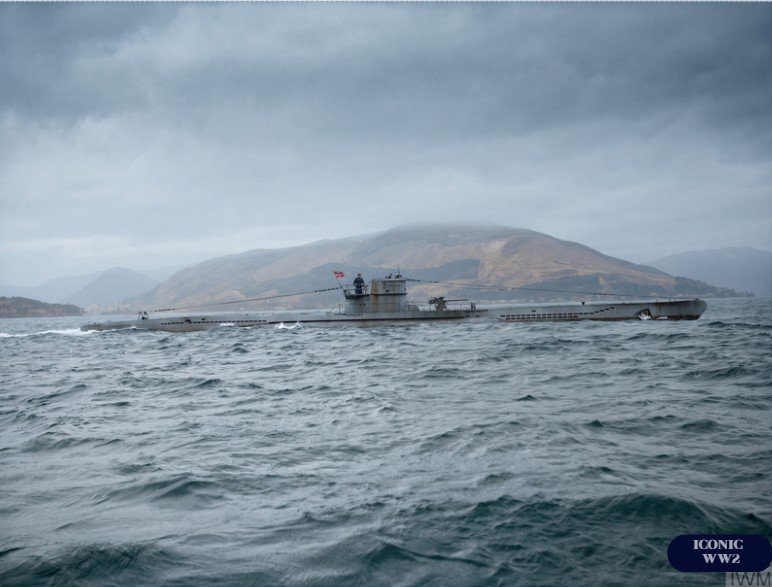
The Graf Spee was a child of the Treaty of Versailles. Forbidden from building warships larger than 10,000 tons after the First World War, German naval designers faced an impossible-looking problem: how to build a ship within that limit that could still dominate the seas. Their ingenious answer was a vessel that broke the usual rules — more powerfully gunned than any cruiser, yet faster than any battleship that could match its firepower.
The result was the Deutschland class of Panzerschiffe (“armoured ships”), which the British press quickly and memorably dubbed “pocket battleships.” Admiral Graf Spee, the third and finest of the three, was commissioned in 1936, named for the admiral who had commanded Germany's East Asia Squadron in the First World War. She was conceived not to fight fleets, but for a single deadly purpose: to range across the oceans as a commerce raider, severing the trade routes of Germany's enemies.
The pocket battleship was an exercise in clever compromise. Graf Spee carried six 28 cm (283 mm) guns in two triple turrets — far heavier than the 8-inch guns of any treaty cruiser — and could therefore outshoot any cruiser afloat. To stay within the weight limit she sacrificed the thick armour of a true battleship, relying instead on her guns and her speed to keep her enemies at arm's length.
Her most unusual feature was her propulsion. In place of steam turbines she was driven by diesel engines, which gave her an enormous cruising range — the ability to stay at sea for months and roam the South Atlantic and Indian Oceans without refuelling, exactly what a commerce raider needed. She could make around 28.5 knots, fast enough to run from a battleship and to chase down a merchantman.
But the compromise had a cost. Faster ships — the battlecruisers — could catch her, and ships with heavier armour could survive her fire long enough to close the range. Her own armour was thin for a capital ship, leaving her vulnerable once an enemy forced a sustained gun duel. The pocket battleship was a superb lone raider, but a dangerous thing to commit to a stand-up fight against concentrated opposition.
Three pocket battleships were built: Deutschland (later renamed Lützow, for fear of the propaganda blow should a ship named “Germany” be sunk), Admiral Scheer and Admiral Graf Spee. Together they were the pride of the rebuilt Kriegsmarine and the embodiment of its raiding strategy in the years before the great battleships Bismarck and Tirpitz were ready.
Admiral Scheer would go on to enjoy the most successful raiding career of the three. But it was Graf Spee, on the very first commerce-raiding sortie of the war, who would write the class's most famous chapter — and meet the most dramatic end.
Graf Spee sailed into the South Atlantic before war even broke out, and from late September 1939 she began her hunt. Over three months she ranged across the South Atlantic and into the Indian Ocean, sinking nine Allied merchant ships totalling some 50,000 tons — and doing so with a chivalry rare in the war that followed.
Her captain, Hans Langsdorff, was scrupulous in taking the crews of his victims safely aboard before sinking their ships, and not a single merchant sailor lost his life to Graf Spee's raids. But each sinking drew the net tighter: the Royal Navy and French Navy formed numerous hunting groups, scouring the oceans for the raider that was sinking ships and, just as damagingly, sowing fear and disruption across the trade routes.
On 13 December 1939, off the estuary of the River Plate between Uruguay and Argentina, one of those hunting groups found her. A British squadron of three cruisers — the heavy cruiser HMS Exeter and the light cruisers HMS Ajax and HMNZS Achilles — closed in. In the first major naval battle of the war, they attacked from multiple directions, splitting Graf Spee's fire.
Graf Spee battered Exeter almost to a wreck, but the British cruisers pressed home their attack with great courage, and the pocket battleship took damage that, while not crippling, wrecked her fuel-processing system and other vital equipment. Langsdorff broke off and ran for the neutral port of Montevideo to make repairs — but international law allowed him only a brief stay, and skilful British deception convinced him that a far superior force, including a battlecruiser and a carrier, lay waiting beyond the estuary.
Believing escape impossible and unwilling to send his crew to certain death, Langsdorff took his ship out into the estuary on 17 December 1939 and scuttled her, blowing her up in full view of watching crowds. Three days later, in a Buenos Aires hotel room, he wrapped himself in the old Imperial German naval ensign and took his own life.
Admiral Graf Spee was one of the most original warships of her age — a clever, treaty-bending answer to an impossible design brief, and for three months in 1939 the most feared commerce raider on the oceans. Her brief career, conducted with a notable humanity toward her victims, and her dramatic end at the River Plate made her one of the most famous ships of the early war.
Her loss was a propaganda triumph for Britain in the bleak opening months of the conflict, and a sign of things to come: the lone raider, however ingenious, could be hunted down by patient, co-ordinated sea power. The pocket battleship had proved a brilliant idea with a fatal flaw — too lightly armoured to fight, too valuable to risk — and Graf Spee's blazing wreck in the shallows off Montevideo became the enduring image of that paradox.
- Roger Chesneau (ed.), Conway’s All the World’s Fighting Ships 1922–1946 (Conway Maritime Press).
- M. J. Whitley, German Cruisers of World War Two (Arms & Armour Press).
- Gordon Williamson, German Pocket Battleships 1939–45 (Osprey, New Vanguard).
Iconic WW2 is free, ad-free and tracker-free — kept going only by the time it takes to research, restore and colorize each machine. If this profile was worth your read, you can help the archive grow.
| Class | Deutschland (Panzerschiff) |
| Builder | Reichsmarinewerft, Wilhelmshaven |
| Nation | Germany |
| Type | Pocket battleship |
| Commissioned | 6 January 1936 |
| Scuttled | 17 December 1939 (River Plate) |
| Crew | ~1,150 |
| Ships in Class | 3 |
| Graf Spee | Scuttled off Montevideo, 1939 |
| Deutschland / Lützow | Lead ship; renamed for propaganda |
| Admiral Scheer | Most successful raider of the three |
| Captain | Hans Langsdorff |
| Machinery | 8× MAN diesel engines |
| Type | Diesel drive (unusual) |
| Power | ~54,000 shp |
| Shafts | 2 |
| Max Speed | ~28.5 knots |
| Range | ~16,300 nmi at 18 kn (huge) |
| Standard Displacement | ~12,540 t |
| Full Load | ~16,000 t |
| Length | 186 m |
| Beam | 21.7 m |
| Draught | ~7.3 m |
| Main Battery | 6× 283 mm /52 (2×3) |
| Secondary | 8× 150 mm + AA & torpedoes |
| Belt Armour | up to 80–100 mm |
| Famous Action | Battle of the River Plate, 1939 |