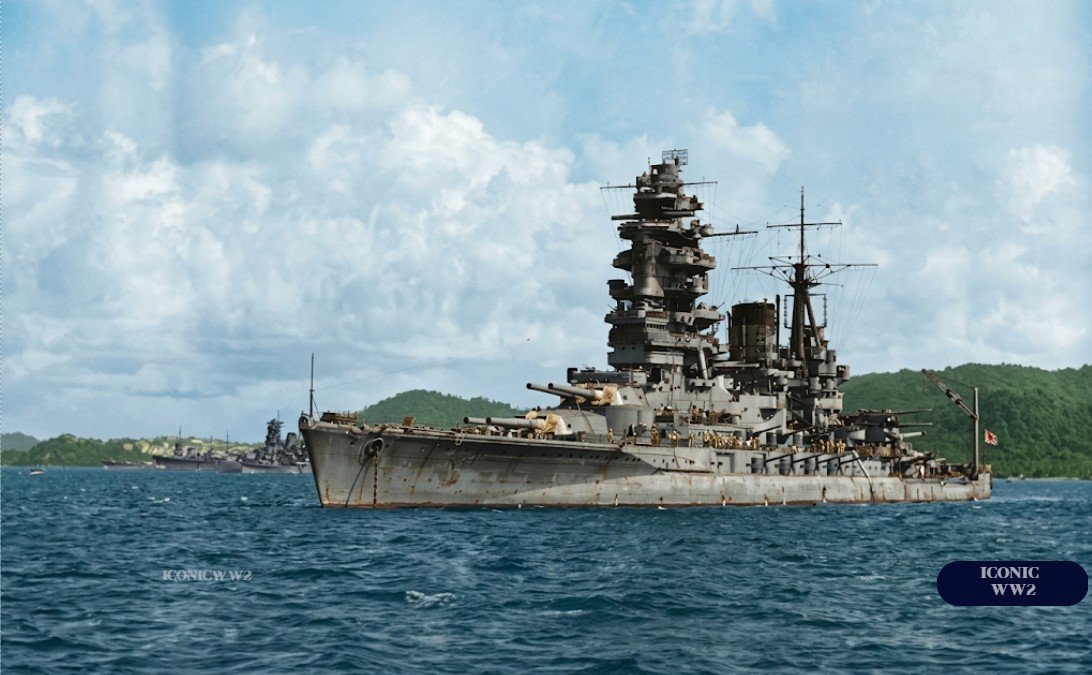
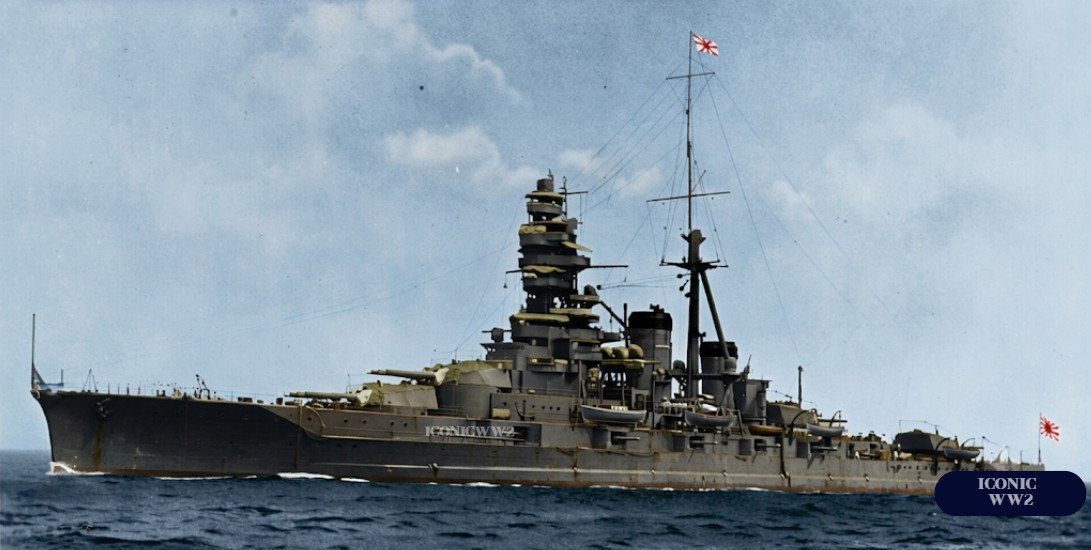
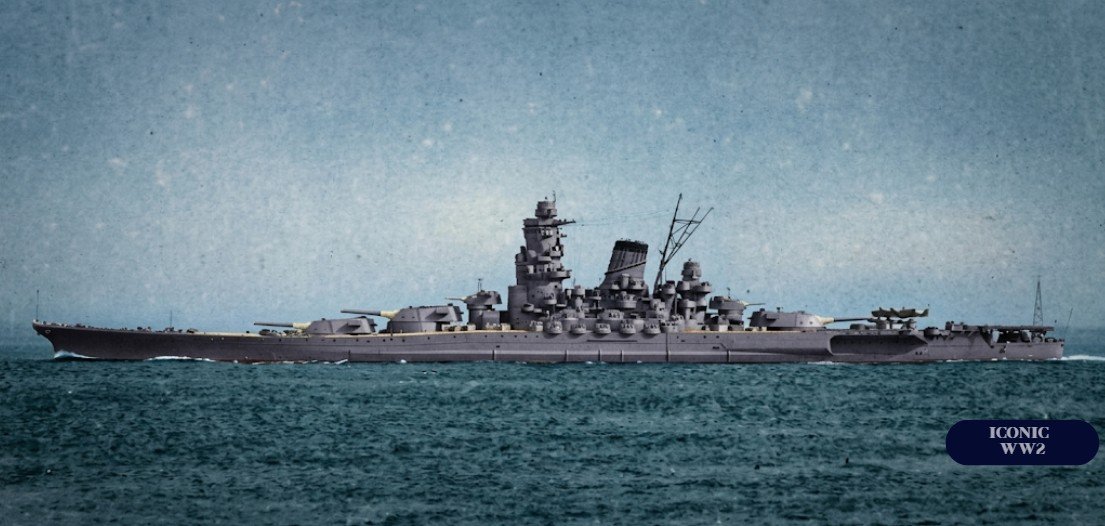
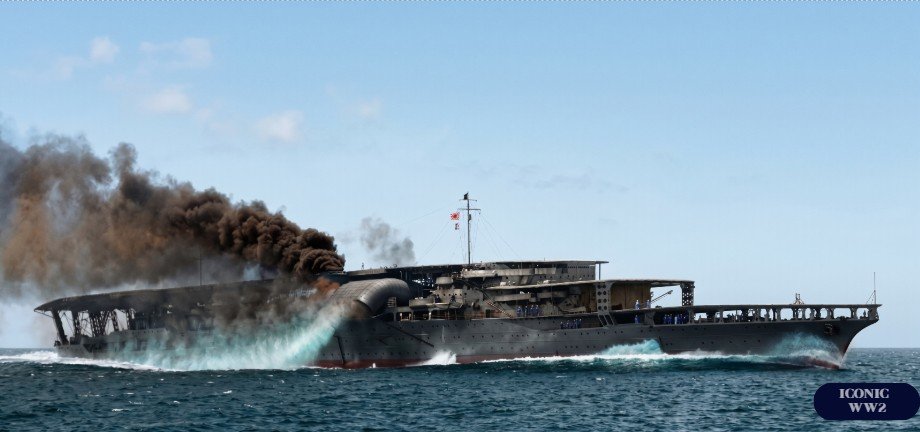
By the late 1930s Japan faced a strategic dilemma. It could never hope to match the industrial might of the United States in sheer numbers of warships, so its naval planners reached for a different answer: quality over quantity. If each Japanese battleship were individually so powerful that it could defeat two or three American ships at once, the numerical gap might be overcome. From this thinking sprang the most colossal warships ever conceived.
Designed in the deepest secrecy and built behind elaborate concealment at the Kure Naval Arsenal, Yamato was the lead ship of a class intended to be the ultimate expression of the battleship. Named for the ancient province at the heart of the Japanese nation, she was commissioned in December 1941 — just days after the attack on Pearl Harbor that her own navy had launched, and which, ironically, had already begun to render her kind obsolete.
Yamato was a ship of staggering dimensions and power. She displaced over 70,000 tons at full load — far larger than any other battleship ever built — and carried the most powerful naval guns ever mounted afloat: nine 460mm (18.1-inch) guns, each capable of hurling a 1.5-ton shell over 40 kilometres. A single one of her three triple turrets weighed more than an entire destroyer.
She was armoured to match. Her belt and turret faces were of immense thickness, designed to withstand the fire of her own gigantic guns, making her arguably the most heavily protected warship in history. To Japanese strategists she embodied the long-cherished dream of the “decisive battle” — a single climactic fleet engagement in which her overwhelming firepower would annihilate the American battle line.
But that battle would never come. Even as Yamato was being completed, the carrier strikes at Pearl Harbor and Taranto, and the sinking of Force Z off Malaya, proved that the aircraft, not the big gun, now ruled the sea. Yamato was the supreme example of a weapon perfected at the very moment it became obsolete — a magnificent answer to a question the war had already stopped asking.
Yamato had one completed sister, Musashi, equally vast and equally powerful. A third hull, Shinano, was converted during construction into a giant aircraft carrier — a tacit admission of where naval power now lay — only to be sunk by an American submarine days after commissioning.
For much of the war the two giant battleships lay at the great anchorage of Truk and in home waters, hoarded for the decisive battle that never materialised. Their crews and the fuel they consumed earned them a sardonic nickname in the rest of the fleet: the “Hotel Yamato” and “Hotel Musashi,” floating palaces that seemed to contribute little while smaller ships did the dying.
Yamato's combat career was strikingly brief for so mighty a ship. She served as flagship of the Combined Fleet, present but largely inactive at Midway in 1942. Her one major surface action came at Leyte Gulf in October 1944, where she finally fired her 460mm guns at enemy ships, engaging American escort carriers and destroyers off Samar before the Japanese force inexplicably turned away on the brink of a breakthrough.
Her sister Musashi had already shown the family's fate: at Leyte she was overwhelmed and sunk by relentless American carrier air attack, absorbing an extraordinary number of bombs and torpedoes before going down. The lesson — that no amount of armour could save a battleship from massed aircraft — would soon be visited upon Yamato herself.
In April 1945, with the Americans landing on Okinawa, Yamato was sent on a final, deliberately sacrificial mission: Operation Ten-Go. With only enough fuel for a one-way voyage, she was to fight her way to Okinawa and beach herself as an unsinkable gun battery to support the island's defenders — a suicide sortie in the spirit of the kamikaze.
She never arrived. On 7 April 1945, American carriers launched hundreds of aircraft against her. For two hours Yamato endured a hurricane of bombs and torpedoes, her great guns unable to fend off the swarming attackers. Listing ever further as compartment after compartment flooded, she finally capsized and her magazines exploded in a blast so enormous it was seen and heard for miles, sending up a mushroom cloud thousands of metres high. Of her crew of nearly 3,000, only a few hundred survived.
With Yamato died the last great battleship sortie of the war, and with it the battleship era itself.
IJN Yamato was the largest, heaviest and most powerfully armed battleship ever built — the ultimate refinement of a type of warship that the very war she was built for had already made obsolete. She fired her colossal guns at the enemy only once, and was destroyed not by another battleship but by aircraft, in a one-way suicide mission that achieved nothing militarily.
And yet she endures as one of history's most haunting warships. To Japan she became a symbol of national pride, sacrifice and the tragic futility of the war's end — a meaning that still resonates in Japanese culture today. Yamato is remembered less for what she did than for what she represented: the magnificent, doomed apotheosis of the battleship, sunk at the dawn of the age of air and sea power that swept her kind from the oceans forever.
- Janusz Skulski, The Battleship Yamato (Anatomy of the Ship, Conway) — the definitive structural study.
- Russell Spurr, A Glorious Way to Die: The Kamikaze Mission of the Battleship Yamato (1981).
- William H. Garzke & Robert O. Dulin, Battleships: Axis and Neutral Battleships in World War II (Naval Institute Press).
- Jonathan Parshall & Anthony Tully, Shattered Sword (Potomac, 2005) — for the Japanese fleet in context.
Iconic WW2 is free, ad-free and tracker-free — kept going only by the time it takes to research, restore and colorize each machine. If this profile was worth your read, you can help the archive grow.
| Class | Yamato |
| Builder | Kure Naval Arsenal |
| Nation | Japan |
| Type | Battleship |
| Commissioned | 16 December 1941 |
| Sunk | 7 April 1945 (Op. Ten-Go) |
| Crew | ~2,750–3,000 |
| Ships in Class | 2 (Yamato, Musashi) |
| Yamato | Sunk off Okinawa, 1945 |
| Musashi | Sister; sunk at Leyte Gulf, 1944 |
| Shinano | 3rd hull — converted to carrier |
| Distinction | Largest battleship ever built |
| Machinery | 4× geared steam turbines |
| Boilers | 12 Kampon |
| Power | ~150,000 shp |
| Shafts | 4 |
| Max Speed | ~27 knots |
| Range | ~7,200 nmi at 16 kn |
| Standard Displacement | ~65,000 t |
| Full Load | ~72,800 t |
| Length | 263 m |
| Beam | 38.9 m |
| Draught | ~11 m |
| Main Battery | 9× 460 mm /45 (3×3) |
| Secondary | 6× 155 mm + heavy AA battery |
| Belt Armour | up to 410 mm |
| Shell Weight | ~1,460 kg per round |