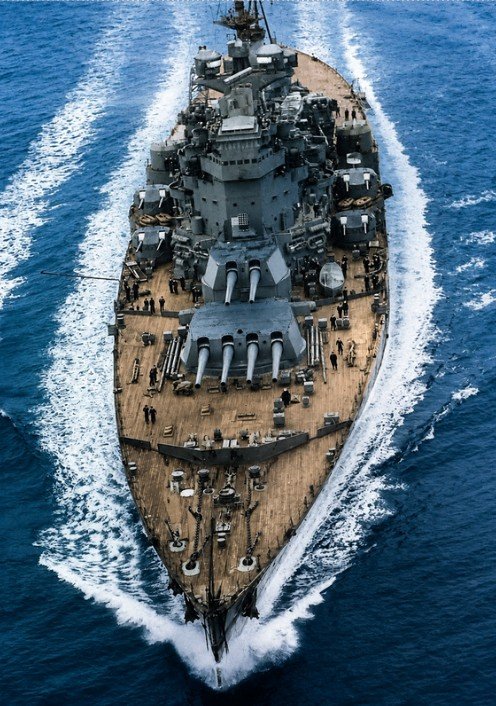
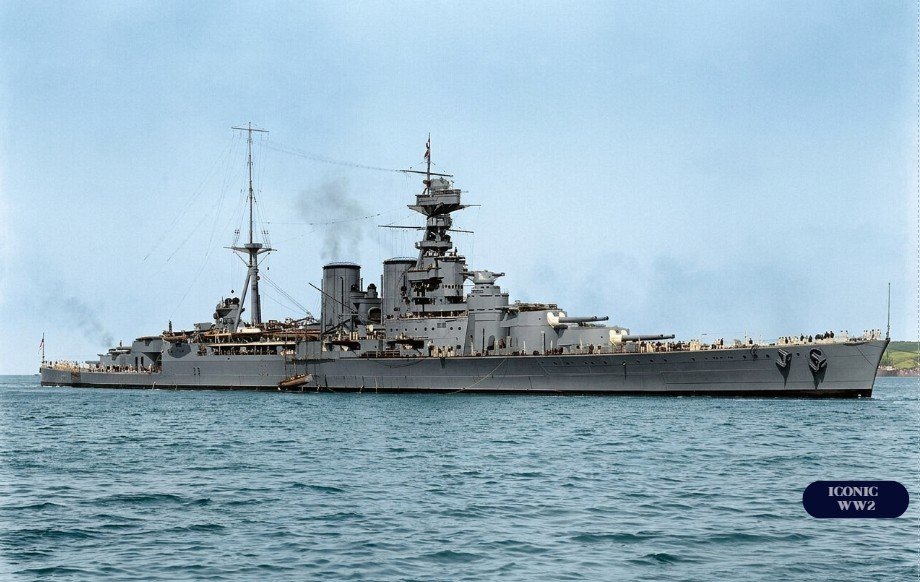
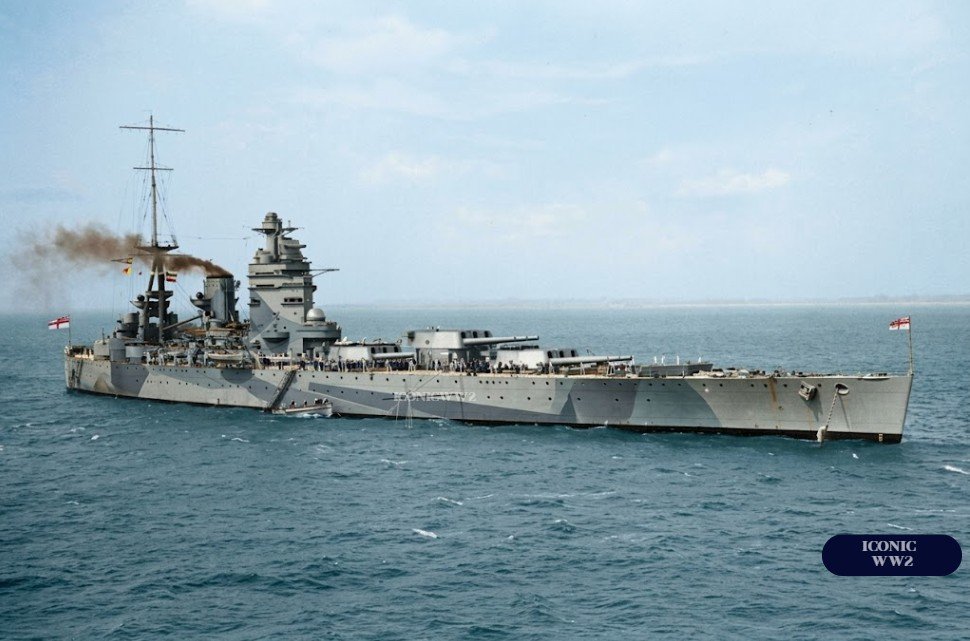
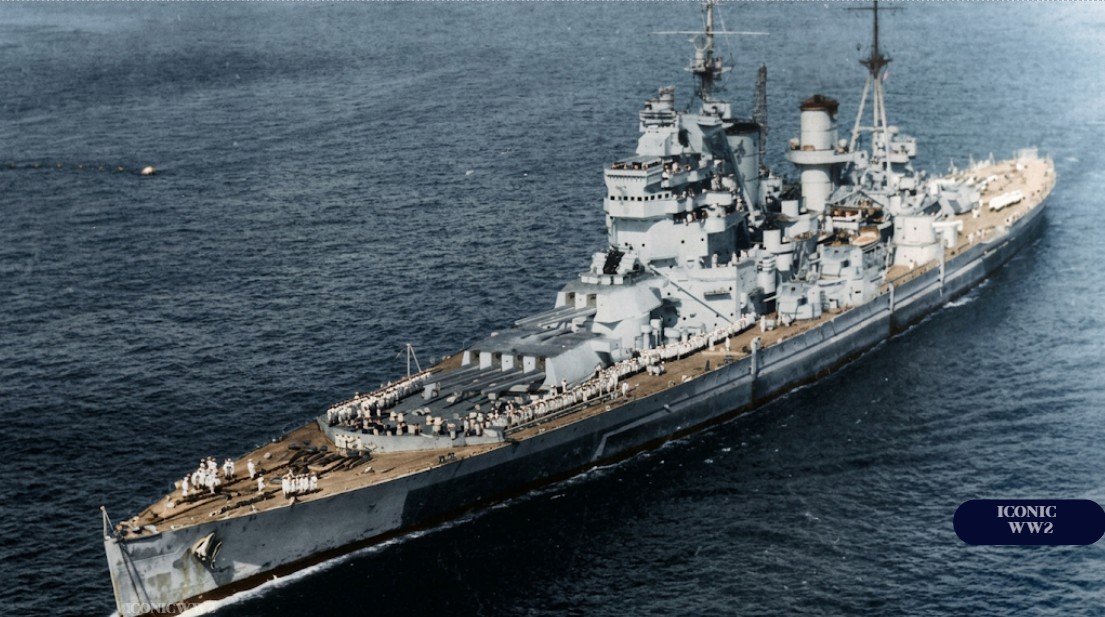
Laid down in 1912, HMS Warspite was one of five Queen Elizabeth-class battleships — the world's first fast battleships, conceived by the Admiralty under Winston Churchill and Admiral Fisher to combine the heaviest guns afloat with a speed no existing dreadnought could match. The key decision was to abandon coal for oil firing, which gave the new ships around 24 knots against the 21 of earlier battleships.
Their other revolution was the gun: a new 15-inch (381 mm) /42 weapon, gambled into production before a prototype had even been proven. It worked superbly, and eight of them in four twin turrets made the Queen Elizabeths the most powerful capital ships of their day. Warspite commissioned in March 1915 and would serve, almost without interruption, for the next three decades.
As built, Warspite displaced about 33,000 tons standard, carried a main belt up to 330 mm (13 in) thick, and made ~24 knots on roughly 56,000 shp. By the 1930s she was a generation old, and between 1934 and 1937 she underwent one of the most thorough reconstructions the Royal Navy ever attempted.
New geared turbines and boilers of about 80,000 shp were fitted, the deck armour was thickened against plunging fire and air attack, the main guns' elevation was increased to extend their range beyond 30,000 m, and a modern superstructure and anti-aircraft battery were added. The rebuild effectively gave the old hull a second life, turning a First World War dreadnought into a battleship fit to fight a second world war.
Five ships were completed: Queen Elizabeth, Warspite, Barham, Valiant and Malaya. All served in both world wars, and as a class they formed the backbone of the Royal Navy's fast battle line for thirty years.
Of the five, Warspite became by far the most celebrated, amassing more battle honours than any other ship in Royal Navy history. Barham met the most dramatic end, blown apart by a U-boat’s torpedoes off the Egyptian coast in 1941 — her magazine explosion famously caught on film.
The Narvik action deserves its own telling. Steaming up the confined Ofotfjord behind a screen of nine destroyers, Warspite brought her eight 15-inch guns into waters where a battleship had no business surviving — and in a single afternoon the force annihilated eight German destroyers, half the Kriegsmarine’s entire destroyer arm, a loss that crippled German surface operations for the rest of the Norwegian campaign.
The day also produced a footnote unique in naval aviation: Warspite’s own Swordfish floatplane, scouting ahead of the force, bombed and sank U-64 at her anchorage — the first U-boat destroyed by a Fleet Air Arm aircraft in the Second World War, claimed not by a carrier but by a battleship’s catapult biplane.
Warspite first tasted battle at Jutland in 1916, where a jammed rudder sent her circling helplessly under heavy German fire; she took some fifteen hits and survived. But her finest gunnery came a war later, in the Mediterranean. At Calabria on 9 July 1940 she straddled and struck the Italian battleship Giulio Cesare at roughly 24,000 m — among the longest-range gunnery hits on a moving warship ever recorded, and enough to send the Italian fleet turning for home.
The night of 28 March 1941 off Cape Matapan showed the other face of her power. Guided by radar to point-blank range in the dark, Warspite and her sisters opened fire on an unsuspecting Italian squadron and, in a few shattering minutes, reduced the heavy cruisers Zara and Fiume to blazing wrecks. It was one of the most one-sided battleship actions of the war.
The reach of air power soon caught up with her. Badly damaged by German bombers off Crete in 1941, she was mauled far more seriously at Salerno in September 1943, when a German Fritz X radio-guided glide bomb plunged through her decks and nearly sank her — one of the first warships crippled by a guided weapon.
Patched up yet again, the old battleship bombarded the Normandy beaches on D-Day in June 1944 and the German coast beyond, adding to a tally of 14 battle honours spanning two world wars — more than any other ship in Royal Navy history. Even her end was defiant: under tow to the breakers in 1947 the “Grand Old Lady” broke free in a gale and ran aground off Cornwall, and had to be scrapped where she lay.
HMS Warspite is, by common consent, the most famous and most decorated warship in the history of the Royal Navy. Across thirty years and two world wars she fought in the North Sea, the Arctic, the Atlantic, the Mediterranean and off the Normandy coast, surviving battle damage, mines and a guided bomb that would have finished a lesser ship.
She embodied the soundness of the Queen Elizabeth design and the value of her 1930s reconstruction — proof that a well-built capital ship, modernised and well led, could remain a front-line weapon for a generation. The 'Grand Old Lady' remains the yardstick by which Royal Navy battleships are measured.
- Iain Ballantyne, Warspite (Warships of the Royal Navy, Pen & Sword).
- S. W. Roskill, The War at Sea 1939–1945 (HMSO) — the official history.
- William H. Garzke & Robert O. Dulin, British, Soviet, French and Dutch Battleships of World War II (Naval Institute Press).
Iconic WW2 is free, ad-free and tracker-free — kept going only by the time it takes to research, restore and colorize each machine. If this profile was worth your read, you can help the archive grow.
| Class | Queen Elizabeth |
| Builder | Devonport Dockyard |
| Nation | United Kingdom |
| Type | Fast battleship |
| Commissioned | 8 March 1915 |
| Reconstructed | 1934–1937 |
| Crew | ~1,120 (post-refit) |
| Ships in Class | 5 |
| Queen Elizabeth | Lead ship; mined at Alexandria 1941 |
| Warspite | Most decorated RN ship |
| Valiant | Served Med & Far East |
| Barham | Magazine explosion, 1941 |
| Malaya | Atlantic & Med convoys |
| Machinery | 4× geared steam turbines |
| Boilers | 6 Admiralty (post-refit) |
| Power | ~80,000 shp (rebuilt) |
| Shafts | 4 |
| Max Speed | ~24 knots |
| Range | ~8,600 nmi at 12.5 kn |
| Standard Displacement | ~33,400 t |
| Full Load | ~36,000 t |
| Length | 196.8 m |
| Beam | 31.7 m (post-refit) |
| Draught | ~9.3 m |
| Main Battery | 8× 381 mm /42 (4×2) |
| Secondary | 8× 152 mm + 8× 102 mm AA |
| Belt Armour | up to 330 mm |
| Deck Armour | up to ~127 mm (rebuilt) |